
UX/UI CASE STUDY
UX/UI CASE STUDY
Quork - Find the Right Place to Work, Faster
A location-based discovery platform designed to help students, freelancers, and remote workers
A location-based discovery platform designed
to help students, freelancers, and remote workers
quickly find quiet and productive places to work.
quickly find quiet and productive places to work.
Product
Consumer Mobile App
Product
Consumer
Mobile App
Target Audience
Target Audience
Students, Freelancers & Remote Workers
Students, Freelancers
& Remote Workers
Project
Project
Location Discovery Platform
Location Discovery Platform
01. Background
01. Background
The Search for a Workspace
The Search for a
Difficult
Workspace
Difficult
Than Expected
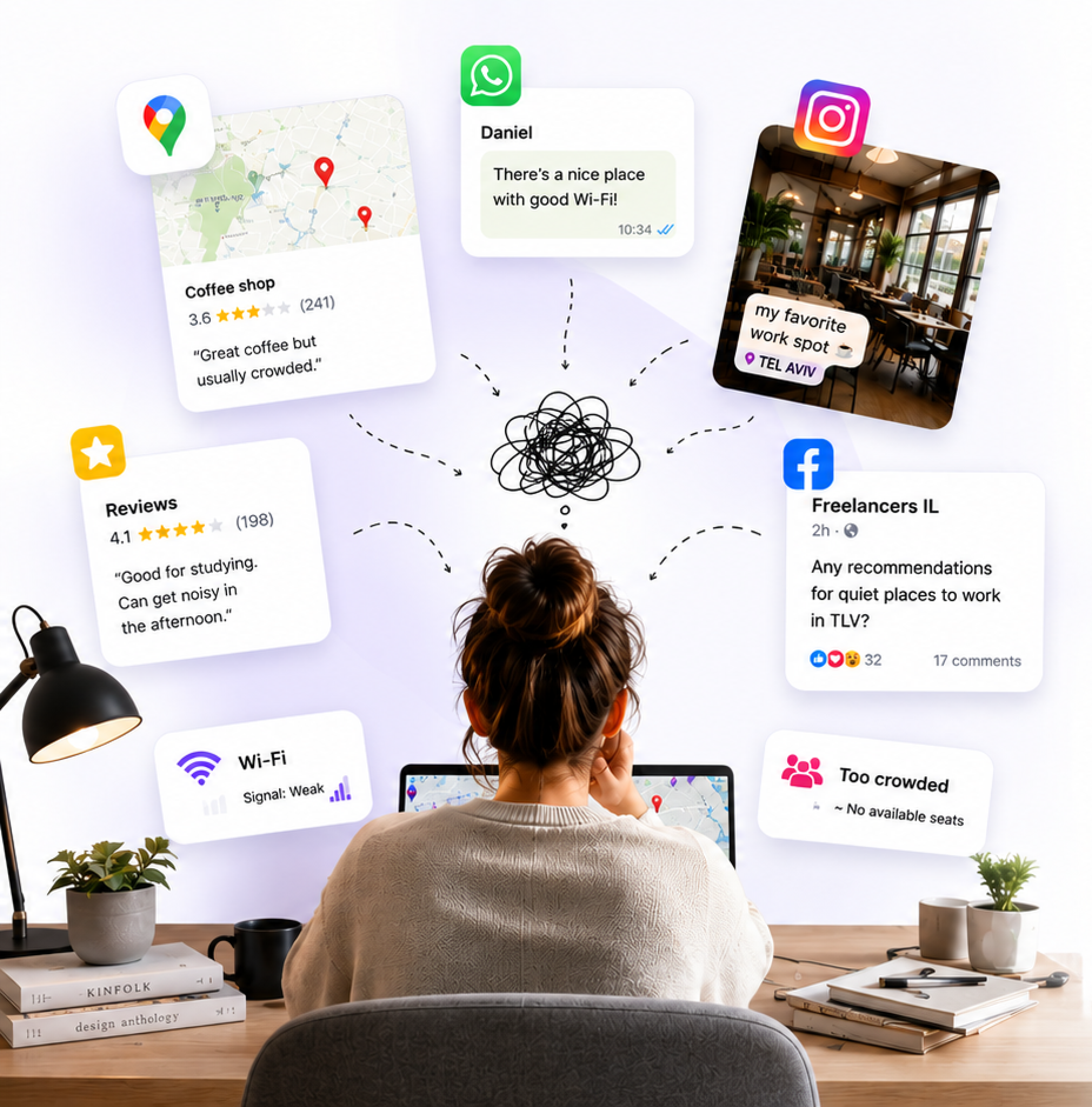
Users often need a quiet, comfortable place to study or work, yet existing tools provide incomplete information about what a location is actually like.
As a result, people waste time, arrive at unsuitable places, and repeatedly switch locations before finding one that fits their needs.
Users often need a quiet, comfortable place to study or work, yet existing tools provide incomplete information about what a location
is actually like.
As a result, people waste time, arrive at unsuitable places, and repeatedly switch locations before finding one that fits their needs.
💡
Finding a workspace wasn't the
challenge, choosing the right one was
Finding a workspace wasn't
the challenge, choosing the
right one was
02. The Problem
02. The Problem
Every Workspace Visit
Every Workspace
Visit was a
Was a
Gamble
Users often chose cafés, libraries, or coworking spaces
without knowing what the actual experience would be like.
A highly rated location could still be noisy, overcrowded,
lacking power outlets, or unsuitable for focused work.
Without reliable information, people wasted time
moving between places instead of being productive.
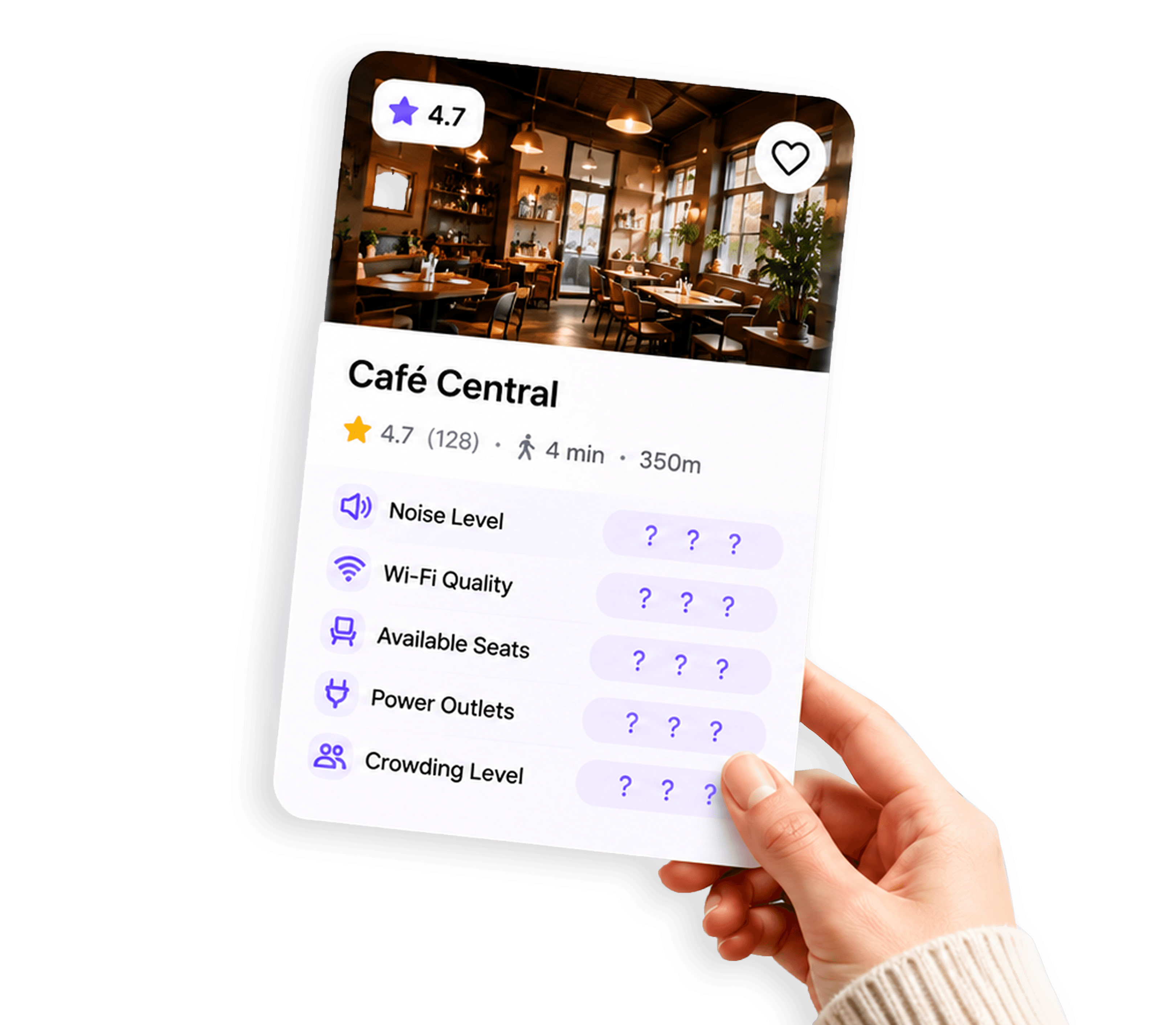
Users often chose cafés, libraries, or coworking spaces without knowing what the actual experience would be like.
A highly rated location could still be noisy, overcrowded, lacking power outlets, or unsuitable for focused work.
Without reliable information, people wasted time
moving between places instead of being productive.
💡
The problem wasn't finding places.
It was knowing what to expect before arriving
03. The Challenge
03. The Challenge
Making Workspace Decisions
Making Workspace
Decisions Without
Without
Making Workspace
Decisions Without
Information Overload
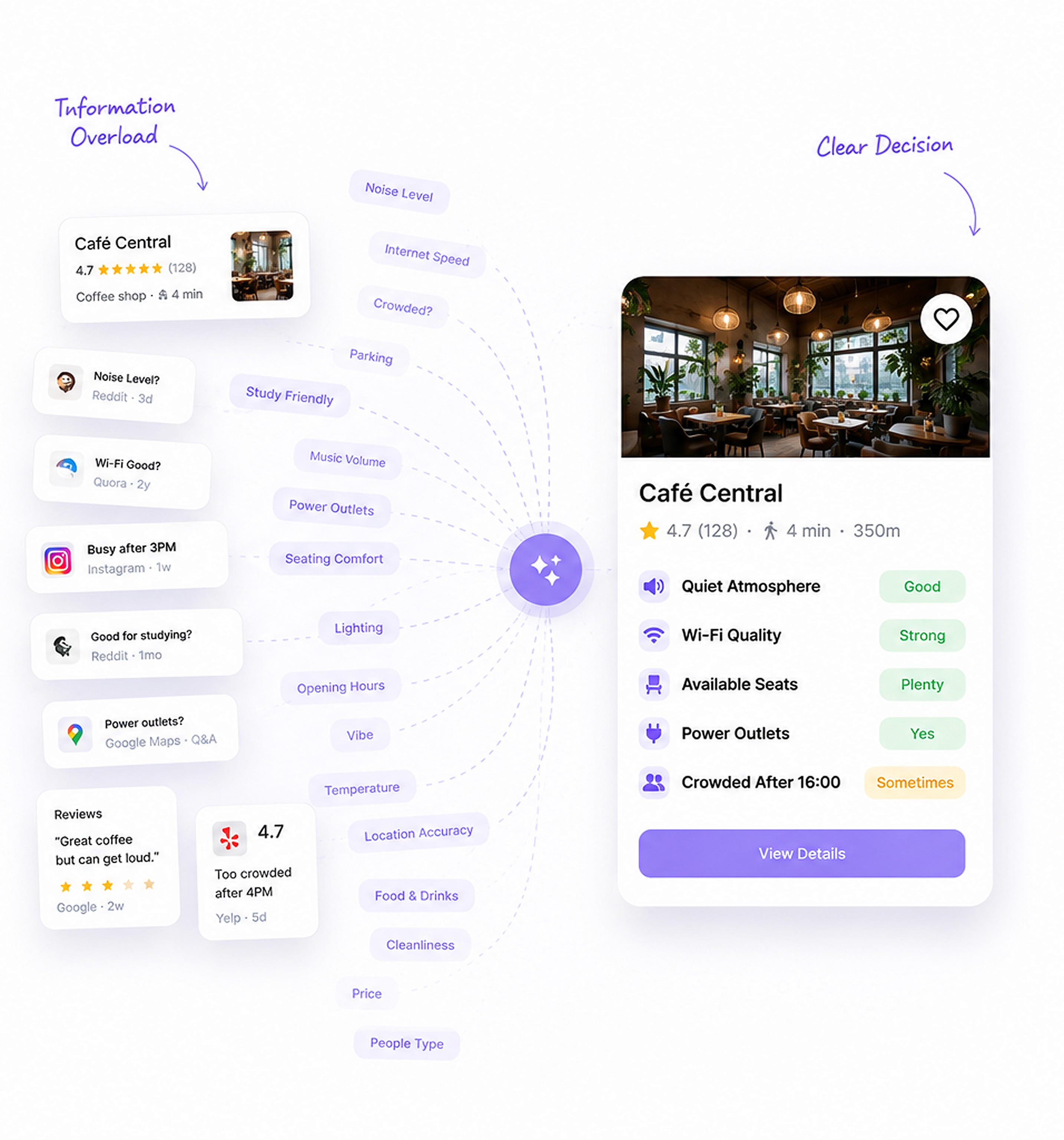
Users needed more than a list of nearby places.
They wanted reliable information about noise levels, Wi-Fi quality, seating availability, and overall suitability for focused work.
The challenge was presenting all this context in a way that felt fast, intuitive, and easy to scan while on the move.
💡
Provide enough information to build confidence,
without turning the experience into research
Provide enough information to build
confidence, without turning the
experience into research
Provide enough information to build confidence, without turning the experience into research
04. COMPETITORS ANALYSIS
04. COMPETITORS ANALYSIS
Existing Tools Weren't Built For
Existing Tools
Weren't Built For
Finding A Workspace
Most users relied on a mix of maps, review platforms and trial and error
when searching for a place to work or study.
While each tool solved part of the problem, none provided real time workspace
information such as noise levels, available seating and power outlets in one place.
💡
Provide enough information to build confidence,
without turning the experience into research
Provide enough information to build confidence, without turning the experience into research
Feature
Feature
Location Discovery
Location Discovery
Real-Time Noise Levels
Available Seating
Power Outlet Availability
Workspace Filters
Workspace Filters
Google Maps
Great for finding places
Not available
Not available
Not available
Limited filters
Not available

Gable
Great for discovering
Not available
Not available
Not available
Limited filters
Not available
Built for workspaces
Live crowd & noise data
Live seat availability
Real-time power info
Advanced filters
Personal & relevant
Feature
Location Discovery
Real-Time Noise Levels
Available Seating
Power Outlet Availability
Workspace Filters
Workspace Filters
Google Maps
Great for finding places
Not available
Not available
Not available
Limited filters
Not available
Gable
Great for discovering
Not available
Not available
Not available
Limited filters
Not available
Built for workspaces
Live crowd & noise data
Live seat availability
Real-time power info
Advanced filters
Personal & relevant
This sign represents a very limited feature
This sign represents a very limited feature
05. User Research
Understanding How People
Choose A
Workspace
To understand the challenges people face when searching
for a place to work or study, I conducted a survey among
students, freelancers and remote workers.

40
Survey Respondents
Students, Freelancers
& Remote workers
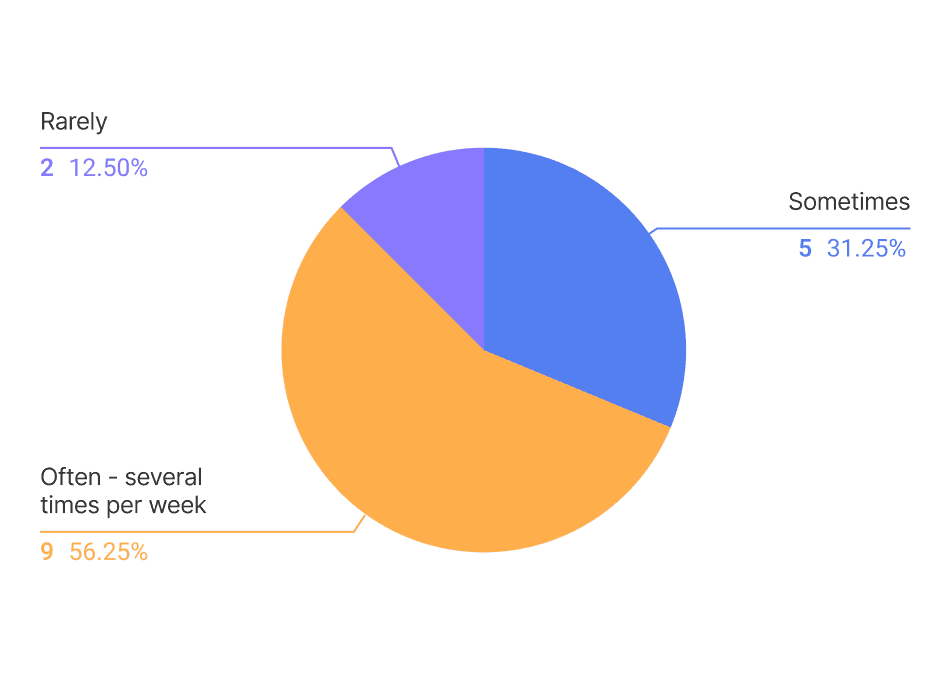
1
Finding a workspace
is a recurring need
38% of participants search for a workspace several times each week
💡
Key Insight
Users don't need more places.
They need confidence in their choice
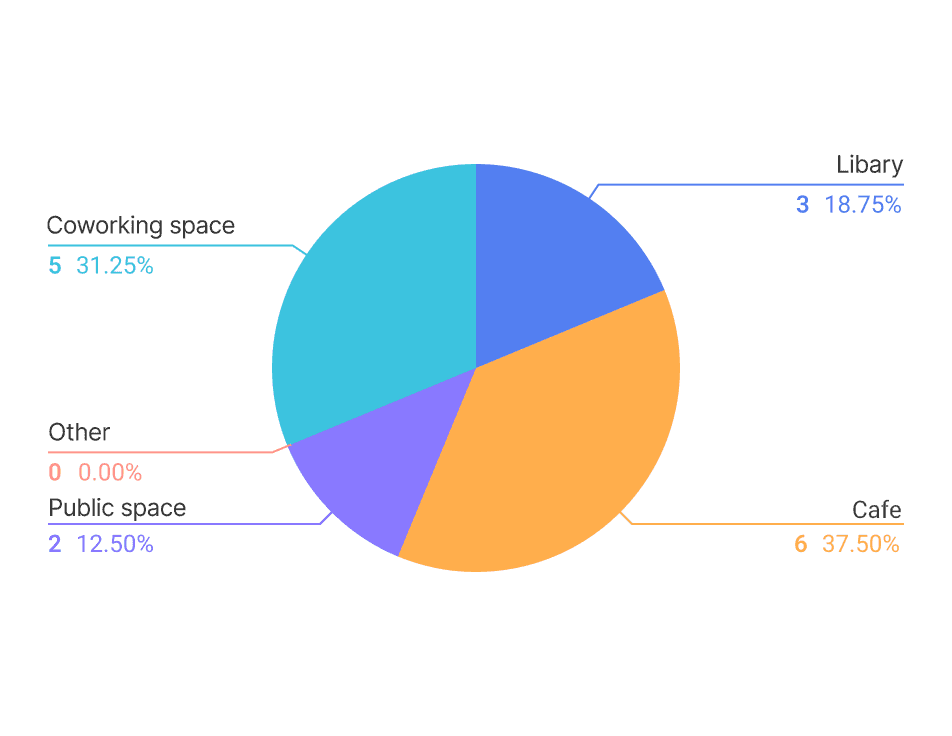
2
Cafés are the most
popular workspace
56% of participants prefer working from cafés and informal spaces
💡
Key Insight
The challenge isn't finding cafés.
It's knowing which one fits their needs
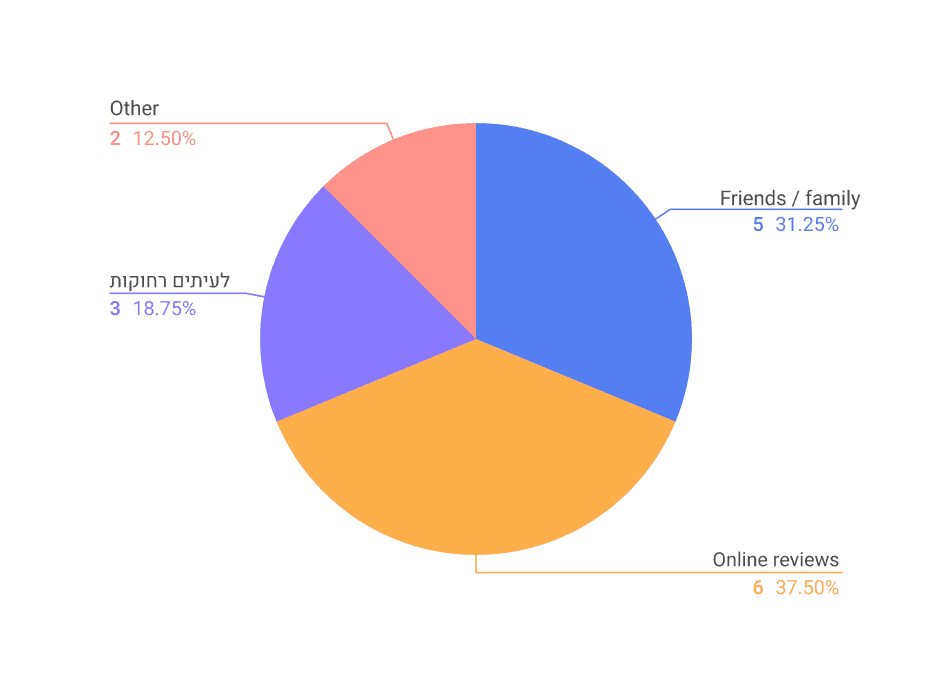
3
People trust
recommendations
Users rely heavily on friends, communities and online reviews before visiting a location
💡
Key Insight
Trust reduces uncertainty
and drives decisions
4
Practical information
is often missing
Participants said the following information is hardest to find before arriving
💡
Key Insight
Productivity depends on details
users can't verify in advance
Research Conclusions
Users need workspace
specific information
Real-time conditions affect productivity and satisfaction
Practical details matter
more than ratings
Recommendations increase
trust and confidence
05. User Research
Understanding How
People Choose A
Workspace
To understand the challenges people face when searching for a place to work or study,
I conducted a survey among students, freelancers and remote workers.
40
Survey Respondents
Students, Freelancers
& Remote workers
1
Finding a workspace
is a recurring need
38% of participants search for a workspace several times each week
💡
Key Insight
Users don't need more places.
They need confidence in their choice
2
Cafés are the most
popular workspace
56% of participants prefer working from cafés and informal spaces
💡
Key Insight
The challenge isn't finding cafés.
It's knowing which one fits their needs
3
People trust
recommendations
Users rely heavily on friends, communities and online reviews before visiting a location
💡
Key Insight
Trust reduces uncertainty
and drives decisions
4
Practical information
is often missing
Participants said the following information is hardest to find before arriving
💡
Key Insight
Productivity depends on details
users can't verify in advance
Research Conclusions
Users need workspace
specific information
Real-time conditions affect productivity and satisfaction
Practical details matter
more than ratings
Recommendations increase
trust and confidence
05. User Research
Understanding How
People Choose A
Workspace
To understand the challenges people face when searching for a place to work or study,
I conducted a survey among students, freelancers and remote workers.
40
Survey Respondents
Students, Freelancers
& Remote workers
1
Finding a workspace
is a recurring need
38% of participants search for a workspace several times each week
💡
Key Insight
Users don't need more places.
They need confidence in their choice
2
Cafés are the most
popular workspace
56% of participants prefer working from cafés and informal spaces
💡
Key Insight
The challenge isn't finding cafés.
It's knowing which one fits their needs
3
People trust
recommendations
Users rely heavily on friends, communities and online reviews before visiting a location
💡
Key Insight
Trust reduces uncertainty
and drives decisions
4
Practical information
is often missing
Participants said the following information is hardest to find before arriving
💡
Key Insight
Productivity depends on details
users can't verify in advance
Research Conclusions
Users need workspace
specific information
Real-time conditions affect productivity and satisfaction
Practical details matter
more than ratings
Recommendations increase
trust and confidence
07. PERSONA
07. PERSONA
Different Needs
Different Ways of Working
Not everyone looks for the same workspace experience.
Some users need complete silence and focus, while others value flexibility, comfort, and reliable amenities. Through interviews and research, two recurring user types emerged each with different goals, habits, and frustrations.
Understanding these differences helped shape Quork into a tool that supports multiple work styles rather than a single ideal workspace.

Eden, 27
Eden, 27
Freelance Designer
Freelance Designer
"Finding a quiet place to work
shouldn't take longer than the work itself"
"Finding a quiet place to work
shouldn't take longer than the work itself"
Goal
Goal
Find quiet workspaces quickly
Find quiet workspaces quickly
Reliable Wi-Fi and power outlets
Reliable Wi-Fi and power outlets
Work distraction-free
Work distraction-free
Discover new productive environments
Discover new productive environments
Behavior
Behavior
Works from cafés and coworking spaces
Works from cafés and coworking spaces
Searches before leaving home
Searches before leaving home
Changes locations frequently
Changes locations frequently
Relies on reviews and recommendations
Relies on reviews and recommendations
Pain Points
Pain Points
Unexpected noise
Unexpected noise
Limited workspace information
Limited workspace information
No seating availability data
No seating availability data
Time wasted moving between locations
Time wasted moving between locations

Ethan, 24
Ethan, 24
Computer Science Student
Computer Science Student
"I need a place where I can focus,
not another distraction"
"I need a place where I can focus,
not another distraction"
Goal
Goal
Study efficiently
Study efficiently
Find available seating
Find available seating
Stable internet connection
Stable internet connection
Access charging points
Access charging points
Behavior
Behavior
Studies outside home regularly
Studies outside home regularly
Uses libraries and cafés
Uses libraries and cafés
Works for long sessions
Works for long sessions
Compares several locations before choosing
Compares several locations before choosing
Pain Points
Pain Points
Full libraries
Full libraries
Unpredictable noise levels
Unpredictable noise levels
Outdated reviews
Outdated reviews
Difficult location comparison
Difficult location comparison
08. USER FLOW
Finding A Workspace
Should Feel
Effortless
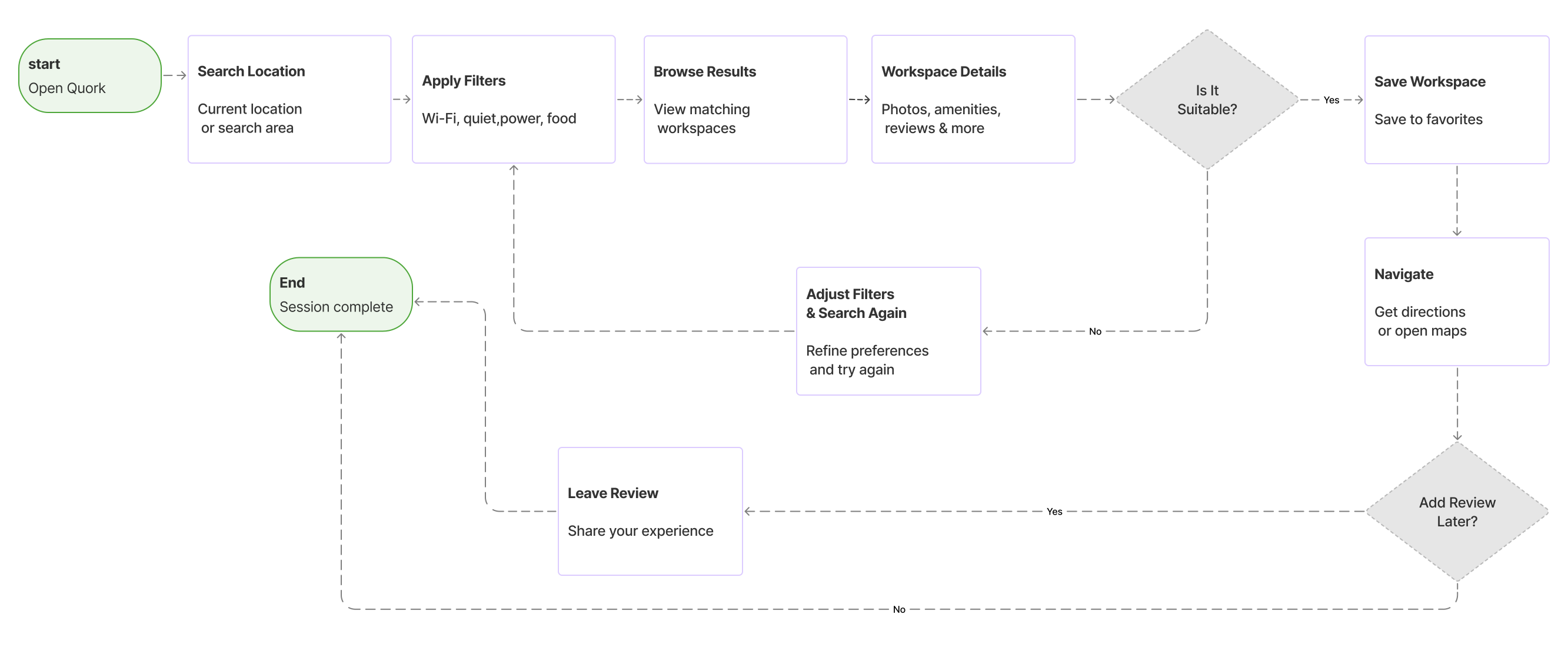
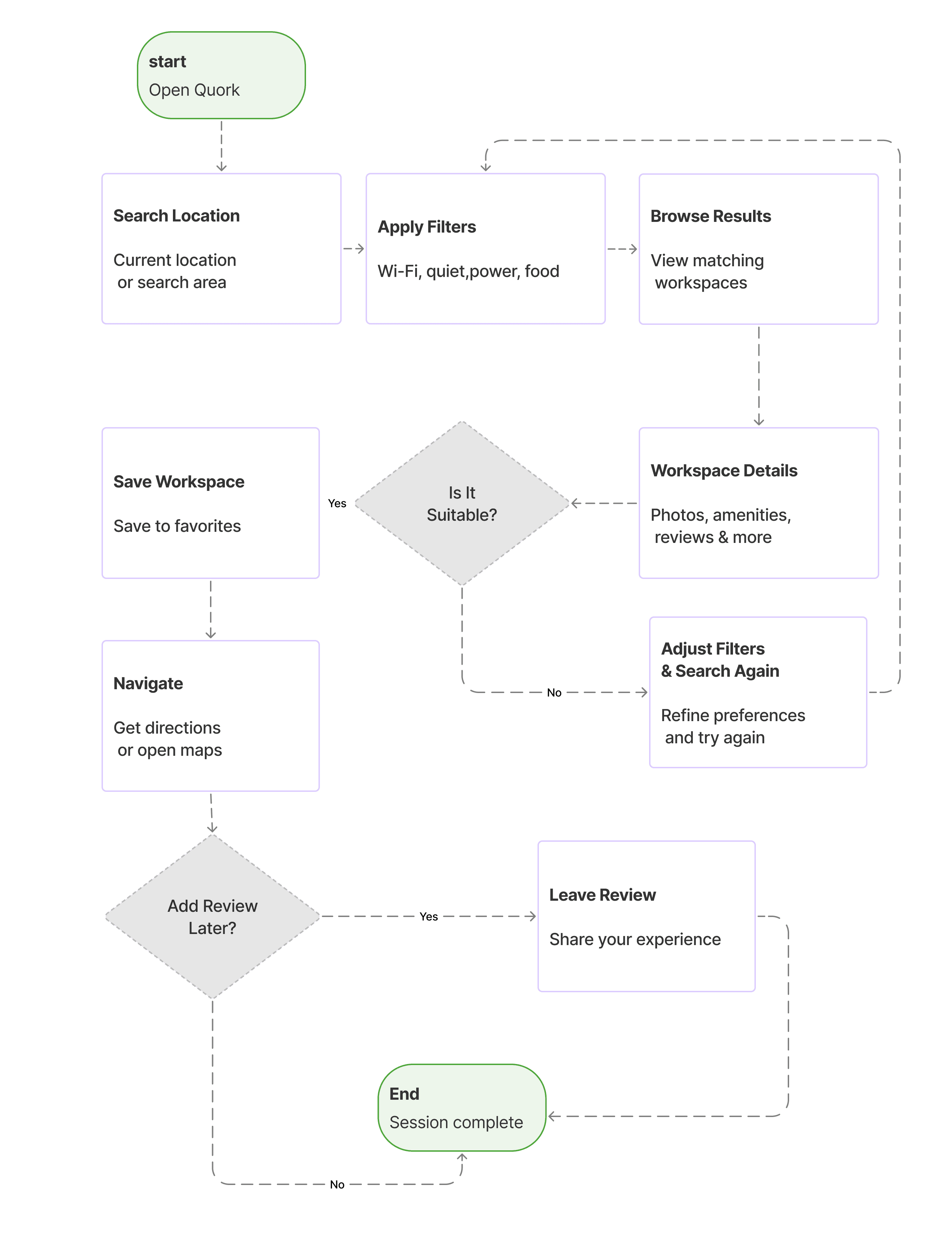
Users can search, compare and choose a workspace in just a few simple steps.
The flow was designed to help users move from a need for focus to a suitable workspace in just a few steps. Filters, live information, and detailed workspace profiles reduce uncertainty and help users make confident decisions faster.
08. USER FLOW
Finding A Workspace
Should Feel
Effortless
Users can search, compare and choose a workspace in just a few simple steps.
The flow was designed to help users move from a need for focus to a suitable workspace in just a few steps. Filters, live information, and detailed workspace profiles reduce uncertainty and help users make confident decisions faster.
Eden, 27
Freelance Designer
09. USER SCENARIO
A Day In
Eden's
Search
Users can search, compare and choose a workspace in just a few simple steps.
Eden is a freelance designer who needs a quiet, reliable place to work.
Here's how she uses Quork to find her ideal workspace.

10. LOW-FIDELITY EXPLORATION
From rough sketches
to
focused workspaces
Before designing the final experience, I explored multiple navigation structures, filtering systems,
and workspace discovery patterns through quick hand-drawn sketches.
This allowed me to test ideas fast, compare different flows, and focus on what
truly helps users find the right place without friction.
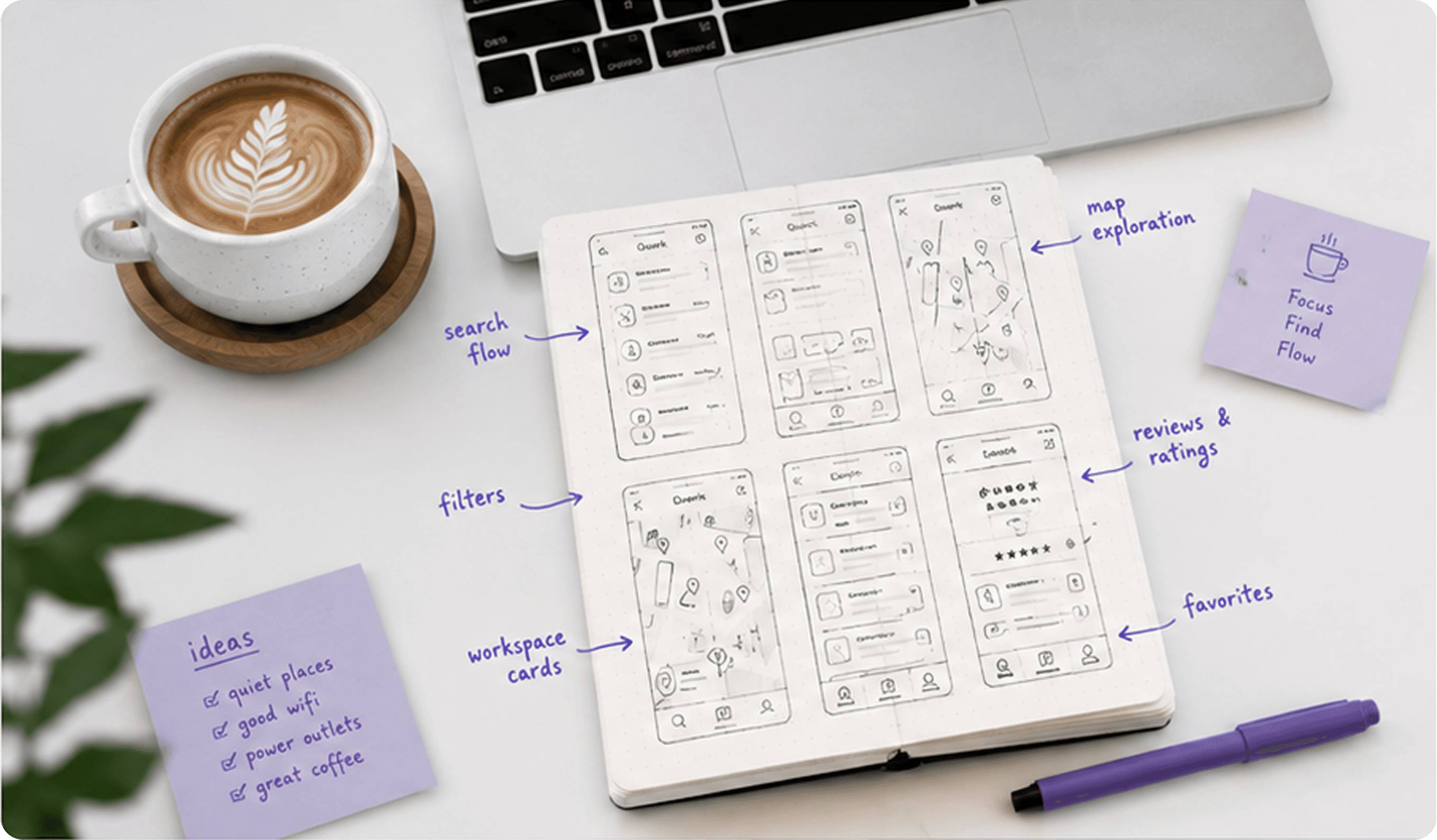
Early concepts explored:
Search & discovery flow
Filtering & sorting options
Reviews & ratings
Favorites & saved places
Map exploration
User journey variations
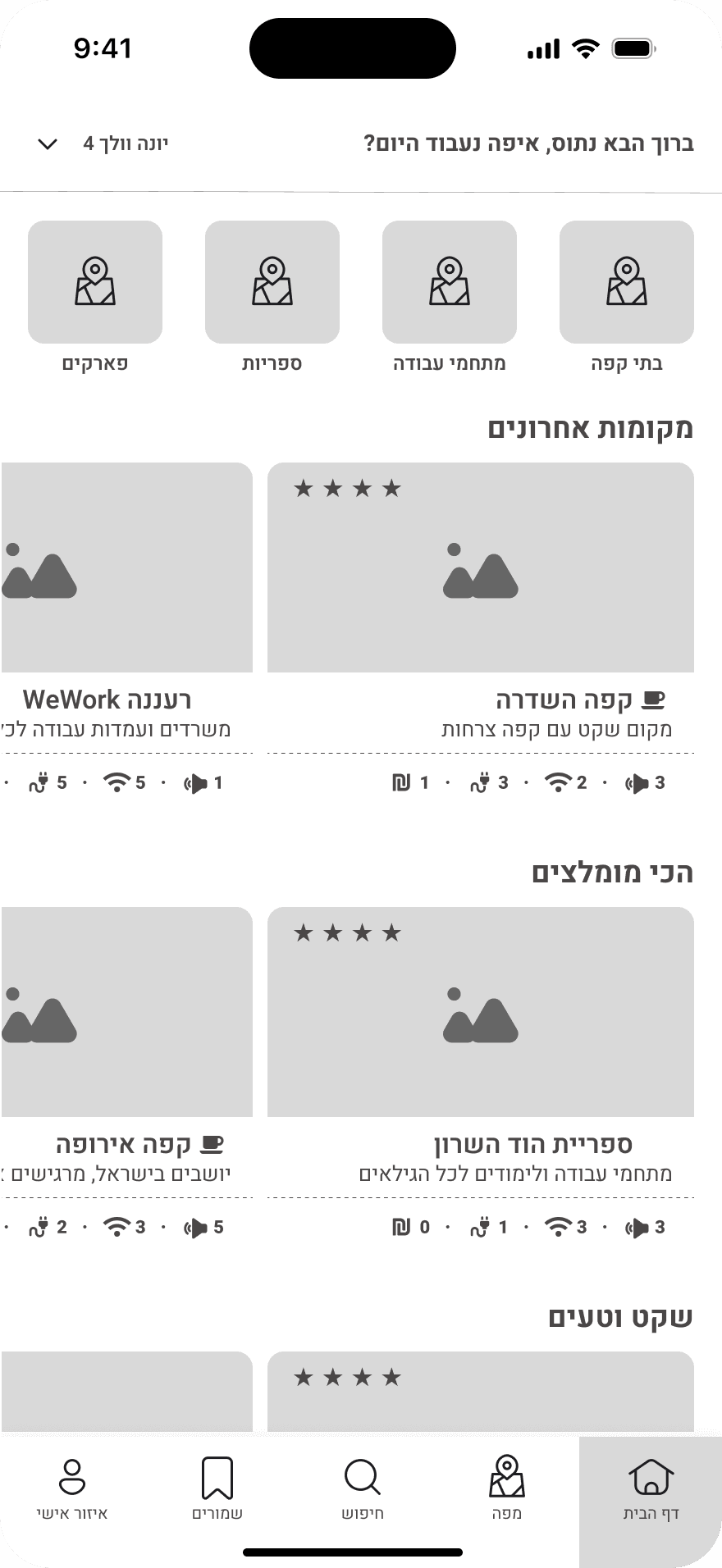
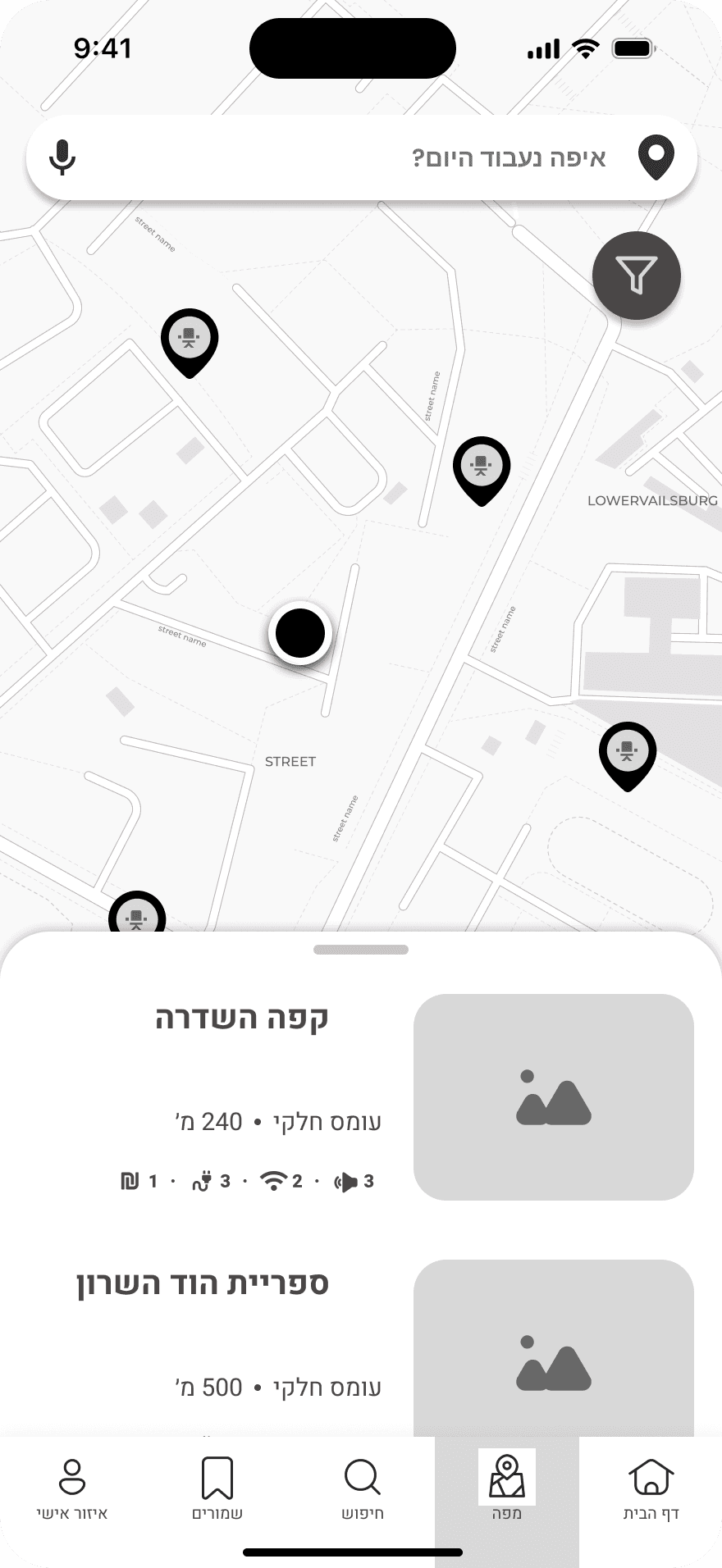
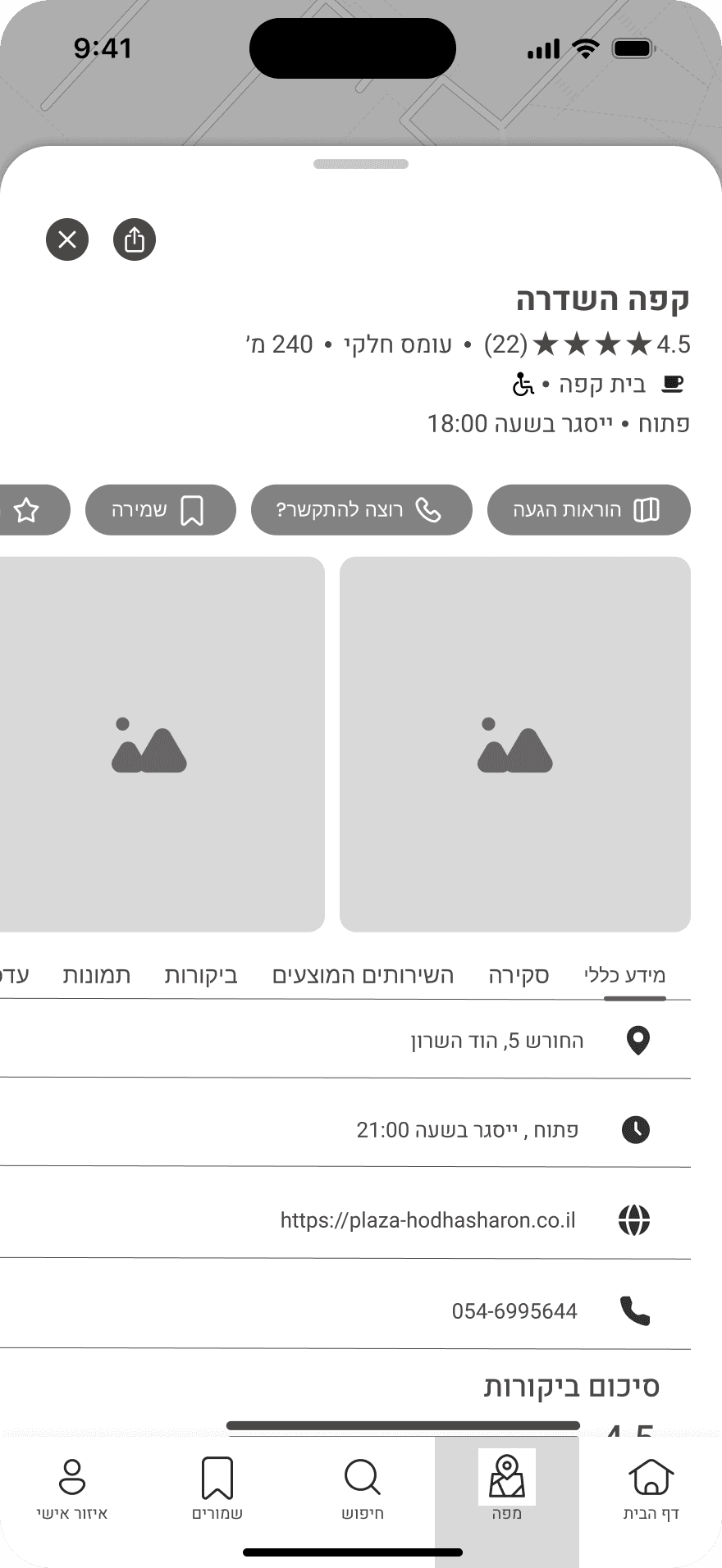
From Sketch
To Wireframe
Turning ideas into structure
Eden, 27
Freelance Designer
09. USER SCENARIO
A Day In
Eden's
Search
Users can search, compare and choose a workspace in just a few simple steps.
Eden is a freelance designer who needs a quiet, reliable place to work.
Here's how she uses Quork to find her ideal workspace.
10. LOW-FIDELITY EXPLORATION
From rough sketches
to
focused workspaces
Before designing the final experience, I explored multiple navigation structures, filtering systems,
and workspace discovery patterns through quick hand-drawn sketches.
This allowed me to test ideas fast, compare different flows, and focus on what
truly helps users find the right place without friction.
Early concepts explored:
Search & discovery flow
Filtering & sorting options
Reviews & ratings
Favorites & saved places
Map exploration
User journey variations
From Sketch
To Wireframe
Turning ideas into structure
07. PERSONA
Different Needs
Different Ways of
Working
Not everyone looks for the same workspace experience.
Some users need complete silence and focus, while others value flexibility, comfort, and reliable amenities. Through interviews and research, two recurring user types emerged each with different goals, habits, and frustrations.
Understanding these differences helped shape Quork into a tool that supports multiple work styles rather than a single ideal workspace.
Eden, 27
Freelance Designer
"Finding a quiet place to work
shouldn't take longer than the work itself"
Goal
Find quiet workspaces quickly
Reliable Wi-Fi and power outlets
Work distraction-free
Discover new productive environments
Behavior
Works from cafés and coworking spaces
Searches before leaving home
Changes locations frequently
Relies on reviews and recommendations
Pain Points
Unexpected noise
Limited workspace information
No seating availability data
Time wasted moving between locations
Ethan, 24
Computer Science Student
"I need a place where I can focus,
not another distraction"
Goal
Study efficiently
Find available seating
Stable internet connection
Access charging points
Behavior
Studies outside home regularly
Uses libraries and cafés
Works for long sessions
Compares several locations before choosing
Pain Points
Full libraries
Unpredictable noise levels
Outdated reviews
Difficult location comparison
Eden, 27
Freelance Designer
09. USER SCENARIO
A Day In
Eden's
Search
Users can search, compare and choose a workspace in just a few simple steps.
Eden is a freelance designer who needs a quiet, reliable place to work.
Here's how she uses Quork to find her ideal workspace.

08. USER FLOW
Finding A Workspace
Should Feel
Effortless
Users can search, compare and choose a workspace in just a few simple steps.
The flow was designed to help users move from a need for focus to a suitable workspace in just a few steps. Filters, live information, and detailed workspace profiles reduce uncertainty and help users make confident decisions faster.
10. LOW-FIDELITY EXPLORATION
From rough sketches to
focused workspaces
Before designing the final experience, I explored multiple navigation structures, filtering systems,
and workspace discovery patterns through quick hand-drawn sketches.
This allowed me to test ideas fast, compare different flows, and focus on what
truly helps users find the right place without friction.
Early concepts explored:
Search & discovery flow
Filtering & sorting options
Reviews & ratings
Favorites & saved places
Map exploration
User journey variations
From Sketch
To Wireframe
Turning ideas into structure
10. THE SOLUTION
Finding the right workspace
shouldn't require guesswork
Quork was designed to remove uncertainty from workspace discovery.
Instead of relying on scattered reviews, social media recommendations, or trial-and-error visits, users can compare, evaluate, and choose workspaces based on the factors that matter most to them.
From Wi-Fi quality and noise levels to power outlets, pricing, and amenities, every detail is organized in one place helping users make faster and more confident decisions before leaving home.
The experience combines smart filtering, community insights, and detailed workspace profiles into a simple and intuitive flow.
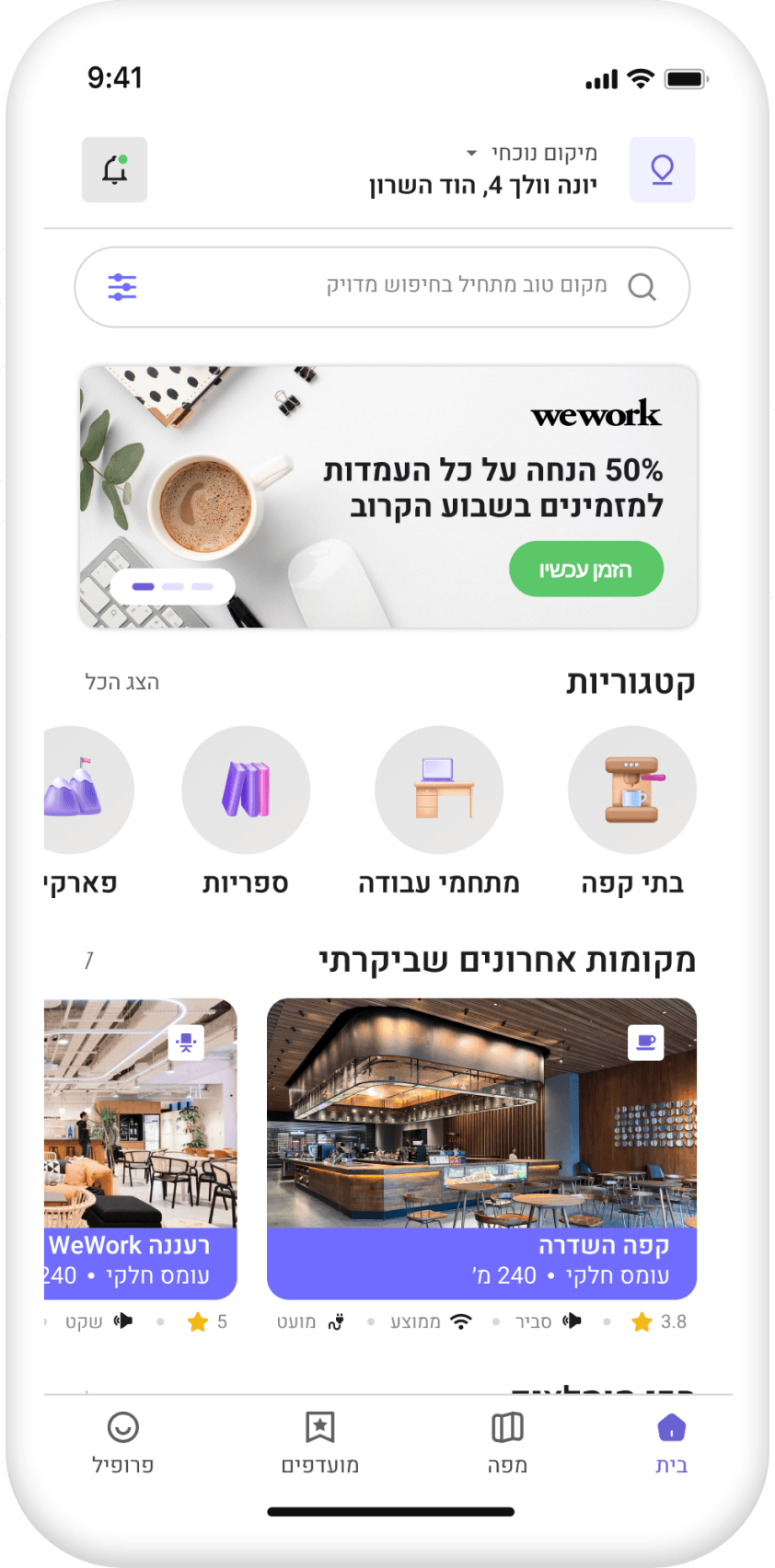
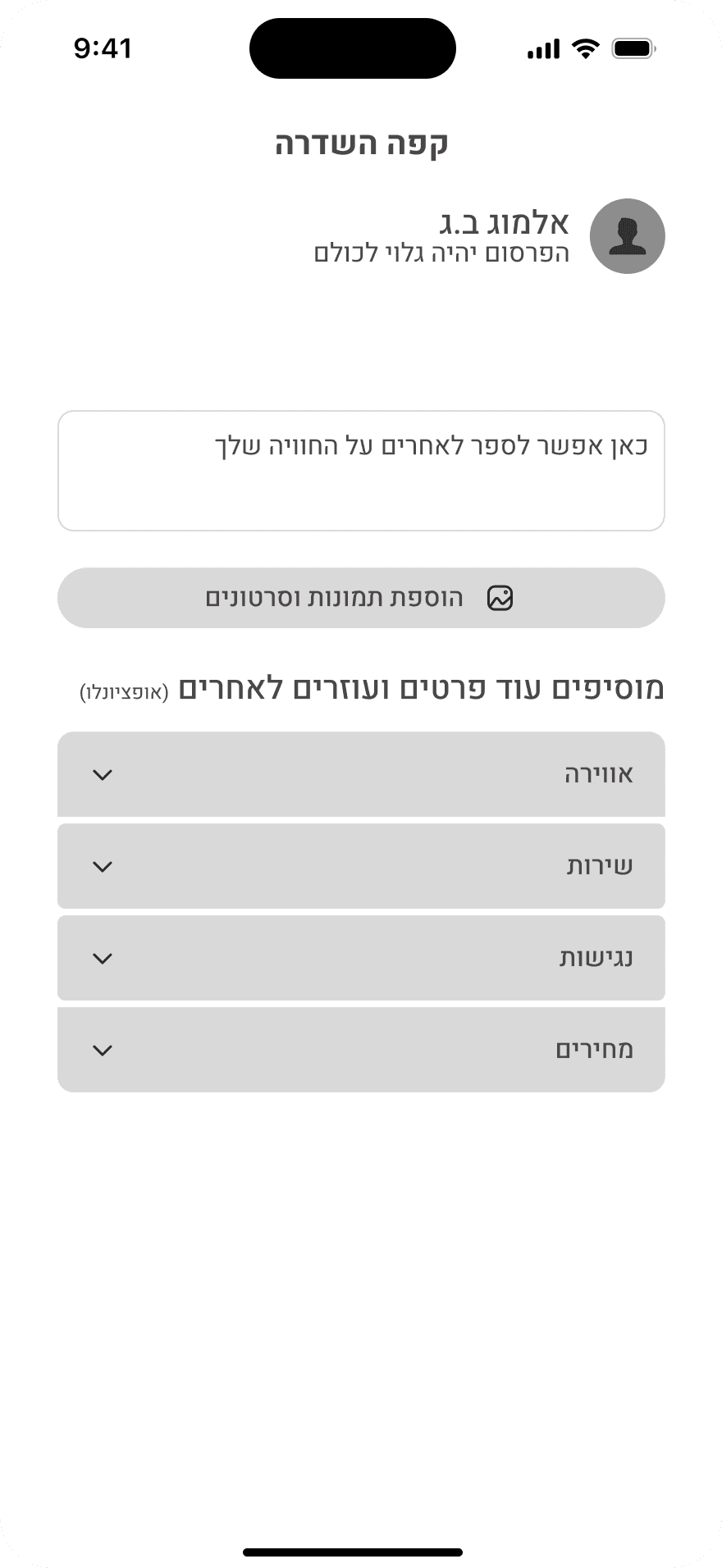
01
Home
Personalized workspace discovery
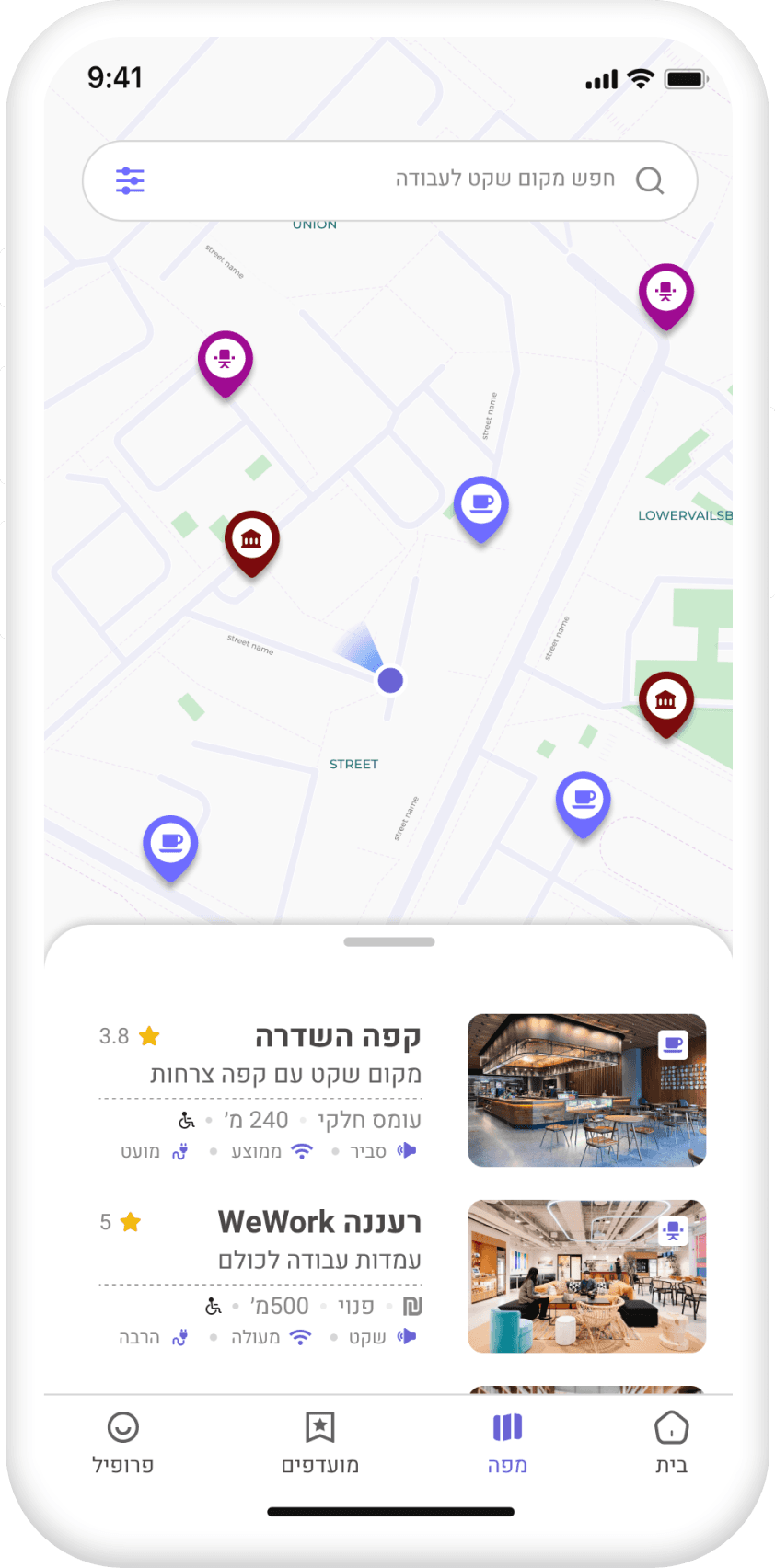
02
Map Discovery
Explore workspaces visually
03
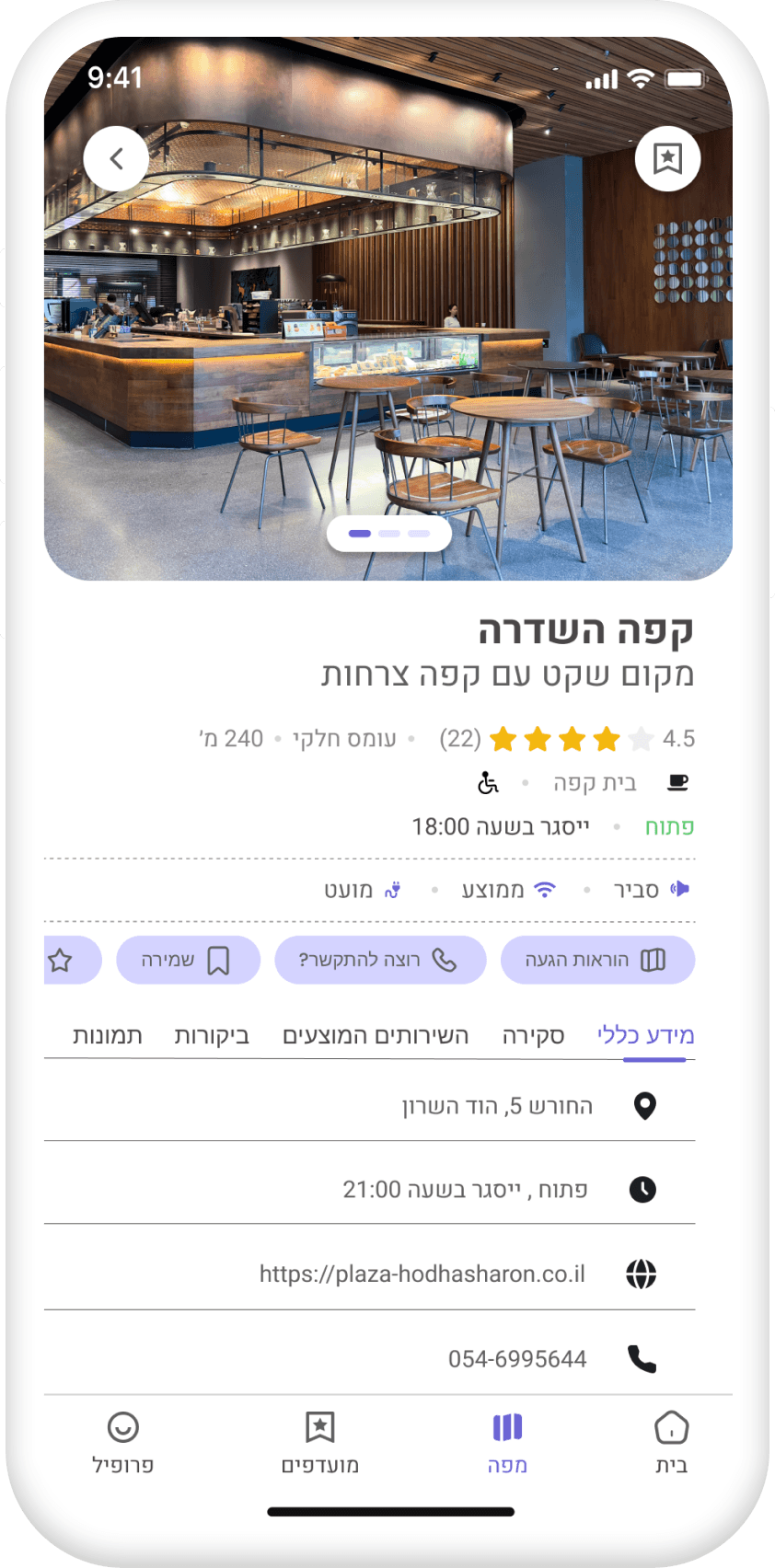
Workspace Details
Know exactly what to expect
11. KEY FEATURES
Everything you need before you go
Smart Filtering
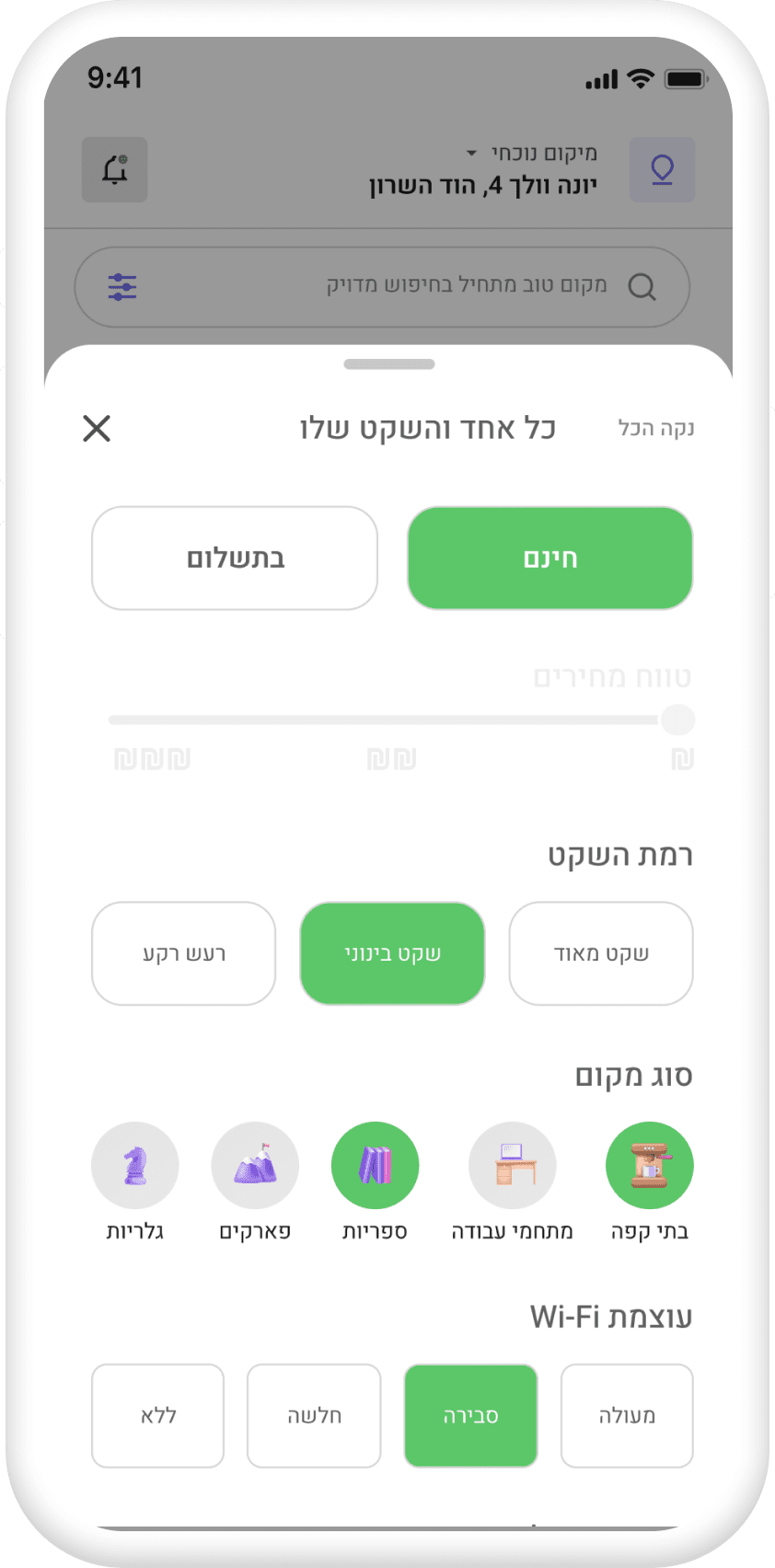
Find locations that match your exact needs using filters such as atmosphere, Wi-Fi quality, noise level, amenities, accessibility, and price.
Community Reviews
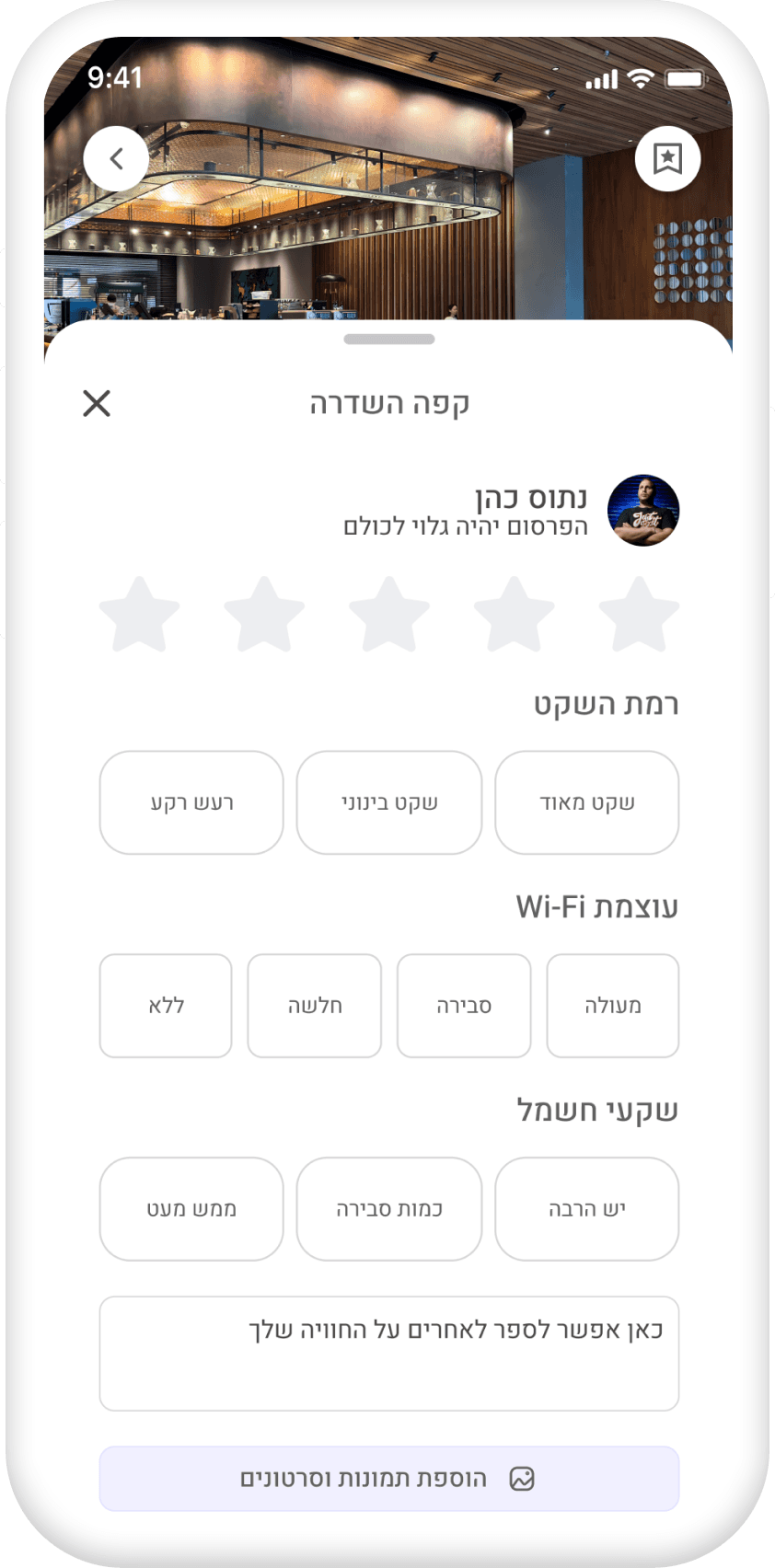
Read authentic reviews from real visitors and understand what the workspace experience is actually like before you arrive.
Detailed Workspace Profiles
Browse comprehensive information including photos, services, opening hours, facilities, accessibility details, and contact information.
Map-Based Discovery
Explore nearby workspaces visually and compare multiple options directly from the map interface.
12. FINAL SCREENS
Designed to remove uncertainty
from
workspace discovery
Every screen was crafted to help users make informed workspace decisions quickly and confidently.
By combining detailed information, community feedback, and intuitive navigation, Quork transforms the search for a place to work into a simple and reliable experience.
10. THE SOLUTION
Finding the right workspace
shouldn't require guesswork
Quork was designed to remove uncertainty from workspace discovery.
Instead of relying on scattered reviews, social media recommendations, or trial-and-error visits, users can compare, evaluate, and choose workspaces based on the factors that matter most to them.
From Wi-Fi quality and noise levels to power outlets, pricing, and amenities, every detail is organized in one place helping users make faster and more confident decisions before leaving home.
The experience combines smart filtering, community insights, and detailed workspace profiles into a simple and intuitive flow.
01
Home
Personalized workspace discovery
02
Map Discovery
Explore workspaces visually
03
Workspace Details
Know exactly what to expect
11. KEY FEATURES
Everything you need before you go
Smart Filtering
Find locations that match your exact needs using filters such as atmosphere, Wi-Fi quality, noise level, amenities, accessibility, and price.
Community Reviews
Read authentic reviews from real visitors and understand what the workspace experience is actually like before you arrive.
Detailed Workspace Profiles
Browse comprehensive information including photos, services, opening hours, facilities, accessibility details, and contact information.
Map-Based Discovery
Explore nearby workspaces visually and compare multiple options directly from the map interface.
12. FINAL SCREENS
Designed to remove uncertainty
from
workspace discovery
Every screen was crafted to help users make informed workspace decisions quickly and confidently.
By combining detailed information, community feedback, and intuitive navigation, Quork transforms the search for a place to work into a simple and reliable experience.
10. THE SOLUTION
Finding the right
workspace
shouldn't require
guesswork
Quork was designed to remove uncertainty from workspace discovery.
Instead of relying on scattered reviews, social media recommendations, or trial-and-error visits, users can compare, evaluate, and choose workspaces based on the factors that matter most to them.
From Wi-Fi quality and noise levels to power outlets, pricing, and amenities, every detail is organized in one place helping users make faster and more confident decisions before leaving home.
The experience combines smart filtering, community insights, and detailed workspace profiles into a simple and intuitive flow.
01
Home
Personalized workspace discovery
02
Map Discovery
Explore workspaces visually
03
Workspace Details
Know exactly what to expect
11. KEY FEATURES
Everything you need
before you go
Smart Filtering
Find locations that match your exact needs using filters such as atmosphere, Wi-Fi quality, noise level, amenities, accessibility, and price.
Community Reviews
Read authentic reviews from real visitors and understand what the workspace experience is actually like before you arrive.
Detailed Workspace Profiles
Browse comprehensive information including photos, services, opening hours, facilities, accessibility details, and contact information.
Map-Based Discovery
Explore nearby workspaces visually and compare multiple options directly from the map interface.
12. FINAL SCREENS
Designed to remove
uncertainty from
workspace discovery
Every screen was crafted to help users make informed workspace decisions quickly and confidently.
By combining detailed information, community feedback, and intuitive navigation, Quork transforms the search for a place to work into a simple and reliable experience.
11. SELF REFLECTION
Designing productivity
for people who don’t
always feel productive.
This project became personal very quickly.
As someone who spent years working as a freelancer, I constantly found myself searching for quiet places to work cafés that weren’t too noisy, libraries with available seating, or workspaces where I could actually focus for a few hours.
Most of the time, finding the right place meant opening multiple apps, reading scattered reviews, checking Wi-Fi comments, guessing how crowded the place might be, and sometimes arriving only to realize it simply didn’t fit my needs.
That frustration became the starting point for Quork.
Rather than designing another “places app,” I wanted to create a tool that helps people feel more confident before leaving home reducing uncertainty and making workspace discovery faster, calmer, and more intentional.
What this project taught me?
1
Good productivity starts with comfort
People work differently.
Some need silence, others need atmosphere, flexibility, or social energy. Designing for productivity means designing for different human needs.
2
Small details
build trust
Information like Wi-Fi quality, outlet availability, noise levels, or seating comfort may seem small but these details heavily influence decision making and user confidence.
3
Reducing uncertainty is valuable UX
Sometimes the best user experience isn’t adding more features it’s helping users feel more certain, prepared, and comfortable before taking action.
Good design doesn’t only help people do things faster. Sometimes it helps them feel more comfortable doing them
11. SELF REFLECTION
Designing productivity
for people who don’t
always feel productive.
This project became personal very quickly.
As someone who spent years working as a freelancer, I constantly found myself searching for quiet places to work cafés that weren’t too noisy, libraries with available seating, or workspaces where I could actually focus for a few hours.
Most of the time, finding the right place meant opening multiple apps, reading scattered reviews, checking Wi-Fi comments, guessing how crowded the place might be, and sometimes arriving only to realize it simply didn’t fit my needs.
That frustration became the starting point for Quork.
Rather than designing another “places app,” I wanted to create a tool that helps people feel more confident before leaving home reducing uncertainty and making workspace discovery faster, calmer, and more intentional.
What this project
taught me?
1
Good productivity starts with comfort
People work differently.
Some need silence, others need atmosphere, flexibility, or social energy. Designing for productivity means designing for different human needs.
2
Small details
build trust
Information like Wi-Fi quality, outlet availability, noise levels, or seating comfort may seem small but these details heavily influence decision making and user confidence.
3
Reducing uncertainty is valuable UX
Sometimes the best user experience isn’t adding more features it’s helping users feel more certain, prepared, and comfortable before taking action.
Good design doesn’t only help people do things faster.
Sometimes it helps them feel more comfortable doing them
Still scrolling?
Good. There’s more
11. SELF REFLECTION
Designing productivity
for people who don’t
always feel productive.
This project became personal very quickly.
As someone who spent years working as a freelancer, I constantly found myself searching for quiet places to work cafés that weren’t too noisy, libraries with available seating, or workspaces where I could actually focus for a few hours.
Most of the time, finding the right place meant opening multiple apps, reading scattered reviews, checking Wi-Fi comments, guessing how crowded the place might be, and sometimes arriving only to realize it simply didn’t fit my needs.
That frustration became the starting point for Quork.
Rather than designing another “places app,” I wanted to create a tool that helps people feel more confident before leaving home reducing uncertainty and making workspace discovery faster, calmer, and more intentional.
What this project
taught me?
1
Good productivity starts with comfort
People work differently.
Some need silence, others need atmosphere, flexibility, or social energy. Designing for productivity means designing for different human needs.
2
Small details
build trust
Information like Wi-Fi quality, outlet availability, noise levels, or seating comfort may seem small but these details heavily influence decision making and user confidence.
3
Reducing uncertainty is valuable UX
Sometimes the best user experience isn’t adding more features it’s helping users feel more certain, prepared, and comfortable before taking action.
Good design doesn’t only help people do things faster.
Sometimes it helps them feel more comfortable doing them
Still scrolling?
Good. There’s more