
UX/UI CASE STUDY
UX/UI CASE STUDY
let’s - Social Coordination, Simplified
let’s - Social Coordination, Simplified
A lightweight social coordination app designed to reduce planning friction and encourage spontaneous real-world connections.
A lightweight social coordination app designed to reduce planning
A lightweight social coordination app
designed to reduce planning
Product
Consumer Mobile App
Product
Consumer
Mobile App
Target Audience
Target Audience
Young Adults & Groups
Young Adults
& Groups
Project
Project
Startup Product
Startup
Product
01. Background
01. Background
Making Plans
Shouldn’t Feel
Exhausting
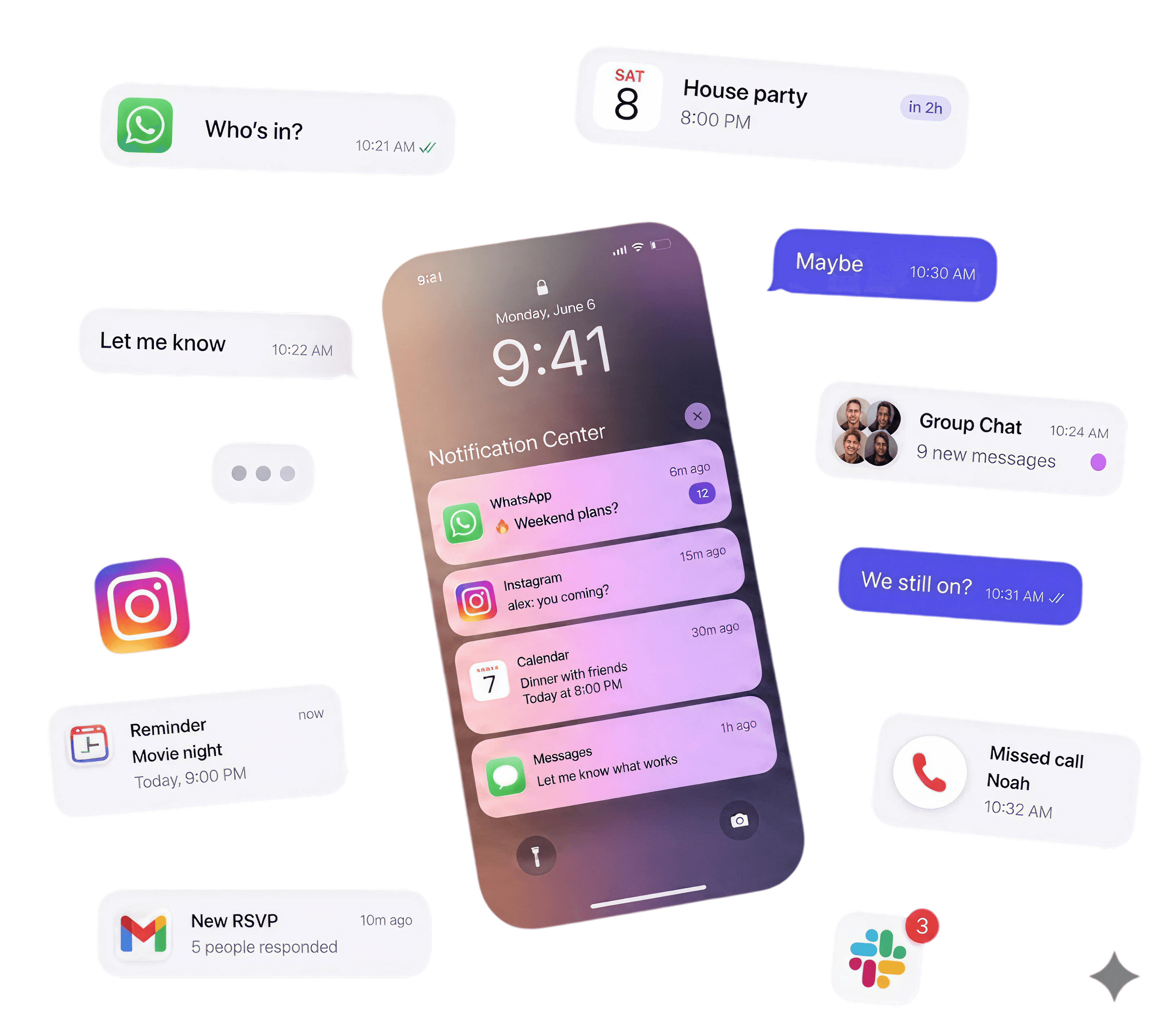
Planning simple meetups slowly became emotionally draining.
Too many chats, unanswered messages, changing schedules,
and constant coordination turned spontaneous plans into effort.
The challenge wasn’t meeting people,
it was coordinating them effortlessly.
The challenge wasn’t
meeting people, it was
coordinating them effortlessly.
The challenge wasn’t meeting people, it was coordinating them effortlessly.
02. The Problem
02. The Problem
Coordination was spread
Coordination
was spread
across
too many places
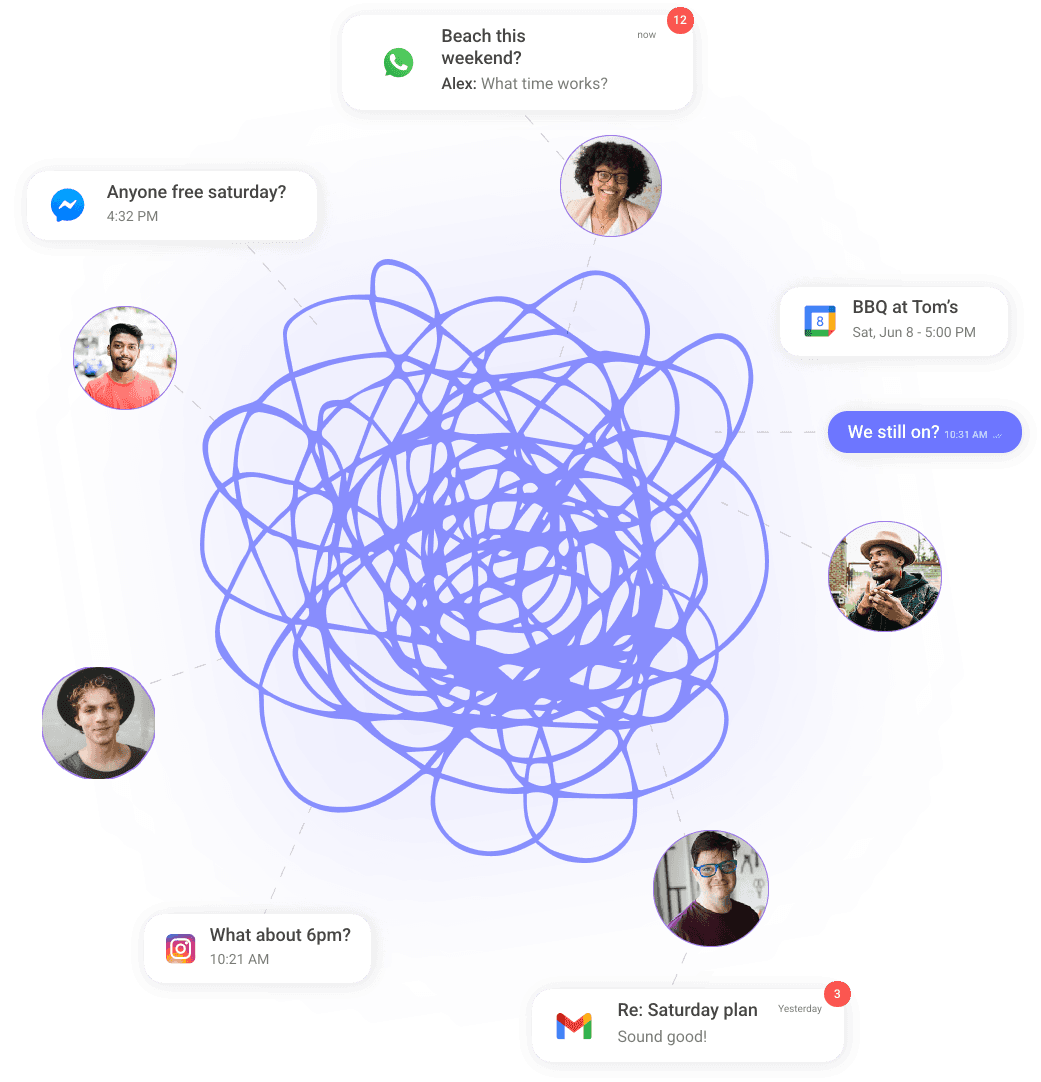
Conversations happened in WhatsApp.
Dates lived in calendars.
Locations were buried in chats.
Responses were impossible to track.
Nothing was centralized, making even
simple plans hard to manage.
People weren’t struggling to socialize
they were struggling to coordinate.
People weren’t struggling to
socialize they were
struggling to coordinate.
03. The Challenge
03. The Challenge
Fast Enough for Spontaneity.
Fast Enough for
Simple Enough for
Fast Enough
for Spontaneity.
Simple Enough for
Everyone.
The challenge was designing a system that could reduce social friction without feeling overwhelming or structured.
The experience needed to feel lightweight, natural, and instant while still helping users organize people, time, and decisions effortlessly.
A tool that organizes social coordination
without making it feel like work.
A tool that organizes social
coordination
without making it feel like work.
A tool that organizes
social coordination
without making it feel like work.
04. COMPETITORS ANALYSIS
04. COMPETITORS ANALYSIS
Existing Tools Weren’t Built
for
Spont neous
Social Planning
Most existing platforms focus on messaging, scheduling, or event management separately forcing users to jump between multiple apps just to coordinate one simple activity.
While these tools are powerful individually, none were designed around lightweight, real-time social coordination.
The problem wasn’t communication
it was fragmentation.
The problem wasn’t
communication it was fragmentation.
Feature
Feature
Group chat
Group chat
Real - time responses
Easy planning
Polls / Decisions
Built for social
spontaneity
Great for chatting
Manual & scattered
No structure
No native polls
Too messy
for spontaneity
Good for DMs
Not built for
responses
No planning
tools
Limited
features
Not designed
for plans
Calendar
Not designed
for group chat
No response
tracking
Great for
scheduling
No voting
capabilities
Too formal for
casual plans

Eventbrite
Not a chat
experience
One-way
RSVPs only
Good for
events
Has ticket
& poll features
Too event
heavy & formal
Built specifically
for groups
Live RSVP
tracking
Fast, simple,
intuitive
Built-in polls
& decisions
Made for
spontaneous
social plans
Feature
Group chat
Real - time responses
Easy planning
Polls / Decisions
Built for social
spontaneity
Great for chatting
Manual & scattered
No structure
No native polls
Too messy
for spontaneity
Good for DMs
Not built for
responses
No planning
tools
Limited
features
Not designed
for plans
Calendar
Not designed
for group chat
No response
tracking
Great for
scheduling
No voting
capabilities
Too formal for
casual plans
Eventbrite
Not a chat
experience
One-way
RSVPs only
Good for
events
Has ticket
& poll features
Too event
heavy & formal
Built specifically
for groups
Live RSVP
tracking
Fast, simple,
intuitive
Built-in polls
& decisions
Made for
spontaneous
social plans
This sign represents a very limited feature
This sign represents a very limited feature
05. User Behavior Research
05. User Behavior Research
Why Planning
Feels
Why Planning
Exhausting?
To better understand why casual plans often fail, I conducted user research focused on social coordination habits, communication patterns, and decision-making friction.
The goal wasn’t to study event management but to uncover why spontaneous plans become overwhelming so quickly.
To better understand why casual plans often fail,
I conducted user research focused on social coordination habits, communication patterns, and decision-making friction.
The goal wasn’t to study event management but to uncover why spontaneous plans become overwhelming so quickly.
“Wait… who already
confirmed?”
“I thought someone
else was organizing it.”
“We spent more time
planning han actually meeting.”
Research Goal
Research Goal
Research Goal
Understand how people coordinate social activities today, where communication breaks down, and what creates hesitation, uncertainty,
or decision fatigue during planning.
Participants
Participants
Participants
• Young adults (18–34)
• Friend groups
• Students & young professionals
• Socially active users
• Users with ADHD / FOMO tendencies
Method & Tools
Method & Tools
Method & Tools
• Online surveys
• Social behavior interviews
• WhatsApp group analysis
• Planning flow observations
• UX pattern comparison
85%
85%
of users said social plans get lost between multiple apps and chats.
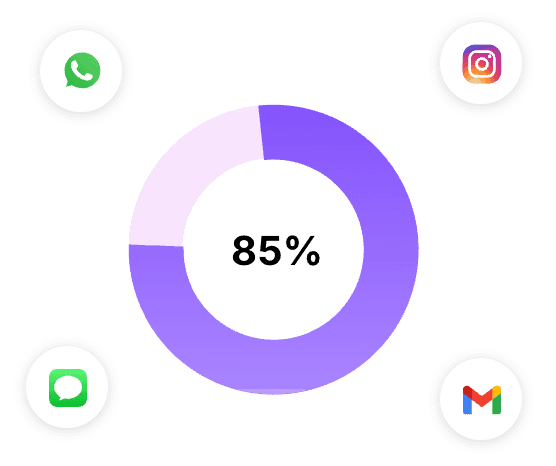
"Too many placses, nothing is clear."
70%
70%
reported uncertainty
about who’s actually attending.
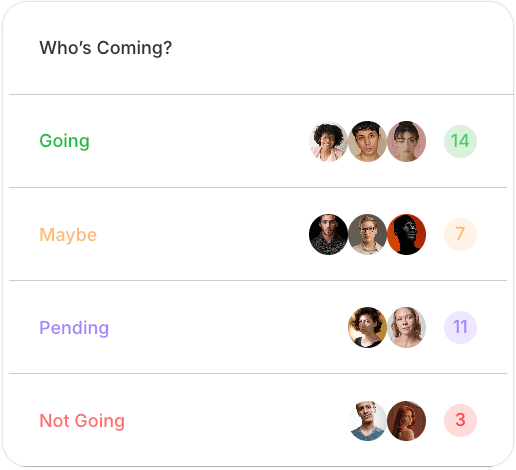
"I never know who's in or out."
90%
90%
preferred having one dedicated space for planning casual activities.
"One place for evreything? Yes, please"
85%
of users said social plans get lost between multiple apps and chats.
85%
"Too many placses, nothing is clear."
70%
reported uncertainty
about who’s actually attending.
who’s coming?
Going



14
maybe


7
pending

11
not going

3
"I never know who's in or out."
90%
preferred having one dedicated space for planning casual activities.
"One place for evreything? Yes, please"
06. KEY INSIGHTS
06. KEY INSIGHTS
Planning Wasn’t Difficult.
Coordination Was
Our research revealed that the real friction wasn’t coming from planning itself but from how people coordinate with each other across multiple apps, messages, and unclear responses.
😵💫
78%
Users felt overwhelmed
switching between chats,
calendars, DMs, and reminders.
Fragmented
Coordination
Planning happened across too
many disconnected places,
making even simple activities
feel exhausting.
😵💫
78%
Users felt overwhelmed
switching between chats,
calendars, DMs, and reminders.
Fragmented
Coordination
Planning happened across too
many disconnected places,
making even simple activities
feel exhausting.
64%
Users were unsure who actually confirmed, declined,
or even saw the plan.
🤔
beach day 🏝️
you
Going
maya
maybe
tom
seen
lior
not reply
RSVP
Uncertainty
Lack of clear response tracking
created hesitation, confusion,
and repeated conversations.
64%
Users were unsure who actually confirmed, declined,
or even saw the plan.
🤔
beach day 🏝️
you
Going
maya
maybe
tom
seen
lior
not reply
RSVP
Uncertainty
Lack of clear response tracking
created hesitation, confusion,
and repeated conversations.
52%
Many spontaneous plans simply faded away before decisions
were made.
⏰
friday night plan
3 days ago
anyone free friday?
what are we doing?
......
Decision
Fatigue
Too much coordination friction
slowed momentum and reduced
eal-world social interaction.
🤔
64%
Users were unsure who actually confirmed, declined,
or even saw the plan.
beach day 🏝️
you
Going
maya
maybe
tom
seen
lior
not reply
RSVP
Uncertainty
Lack of clear response tracking created hesitation,
confusion, and repeated conversations.
⏰
52%
Many spontaneous plans simply faded away before decisions
were made.
friday night plan
3 days ago
anyone free friday?
what are we doing?
......
Decision
Fatigue
Too much coordination friction slowed momentum
and reduced real-world social interaction.
The insight is clear: people don’t need more tools.
They need one space that makes coordination effortless.
07. PERSONA
07. PERSONA
Different People.
Different
Different People.
Different
Social Frictions
Planning looks different for every person.
Some struggle with coordination, others with decision fatigue,
social anxiety, or keeping up with multiple conversations.
To better understand these behaviors, I created personas
based on recurring social patterns uncovered during research.
Planning looks different for every person.
Some struggle with coordination, others with decision fatigue,
social anxiety, or keeping up with multiple conversations.
To better understand these behaviors,
I created personas
based on recurring social patterns
uncovered during research.
Maya, 26
Social Planner
“I’m always the one
organizing everything.”
Goal
Keep plans moving quickly without
chasing everyone for answers.
Behavior
Creates group chats, sends reminders,
coordinates locations and times.
Pain Points
Too many unanswered messages,
unclear RSVPs, repeated conversations.
Maya, 26
Social Planner
“I’m always the one
organizing everything.”
Goal
Keep plans moving quickly without
chasing everyone for answers.
Behavior
Creates group chats, sends reminders,
coordinates locations and times.
Pain Points
Too many unanswered messages,
unclear RSVPs, repeated conversations.
Daniel, 24
Overwhelmed Participant
“I saw the message…
then completely forgot to answer.”
Goal
Stay socially connected without
feeling overwhelmed by notifications.
Behavior
Jumps between chats,
forgets details, responds late.
Pain Points
Decision fatigue, message
overload, social pressure.
Noa, 29
Spontaneous Friend
“I want plans to feel casual
not like managing a project.”
Goal
Join spontaneous activities
without complicated coordination.
Behavior
Prefers quick decisions,
simple flows, minimal texting.
Pain Points
Long discussions, fragmented
communication, unclear outcomes.
😵💫
78%
Users felt overwhelmed
switching between chats,
calendars, DMs, and reminders.
Fragmented
Coordination
Planning happened across too
many disconnected places,
making even simple activities
feel exhausting.
64%
Users were unsure who actually confirmed, declined,
or even saw the plan.
🤔
beach day 🏝️
you
Going
maya
maybe
tom
seen
lior
not reply
RSVP
Uncertainty
Lack of clear response tracking
created hesitation, confusion,
and repeated conversations.
64%
Users were unsure who actually confirmed, declined,
or even saw the plan.
🤔
beach day 🏝️
you
Going
maya
maybe
tom
seen
lior
not reply
RSVP
Uncertainty
Lack of clear response tracking
created hesitation, confusion,
and repeated conversations.
52%
Many spontaneous plans simply faded away before decisions
were made.
⏰
friday night plan
3 days ago
anyone free friday?
what are we doing?
......
Decision
Fatigue
Too much coordination friction
slowed momentum and reduced
eal-world social interaction.
The insight is clear:
people don’t need more tools.
They need one space that makes coordination effortless.
Daniel, 24
Overwhelmed Participant
“I saw the message…
then completely forgot to answer.”
Goal
Stay socially connected without
feeling overwhelmed by notifications.
Behavior
Jumps between chats,
forgets details, responds late.
Pain Points
Decision fatigue, message
overload, social pressure.
Daniel, 24
Overwhelmed Participant
“I saw the message…
then completely forgot to answer.”
Goal
Stay socially connected without
feeling overwhelmed by notifications.
Behavior
Jumps between chats,
forgets details, responds late.
Pain Points
Decision fatigue, message
overload, social pressure.
Noa, 29
Spontaneous Friend
“I want plans to feel casual
not like managing a project.”
Goal
Join spontaneous activities
without complicated coordination.
Behavior
Prefers quick decisions,
simple flows, minimal texting.
Pain Points
Long discussions, fragmented
communication, unclear outcomes.
Noa, 29
Spontaneous Friend
“I want plans to feel casual
not like managing a project.”
Goal
Join spontaneous activities
without complicated coordination.
Behavior
Prefers quick decisions,
simple flows, minimal texting.
Pain Points
Long discussions, fragmented
communication, unclear outcomes.
08. USER FLOW
08. USER FLOW
Different plans.
One
One
lightweight experience
experience
let’s was designed to support different social behaviors creating spontaneous group activities, responding to invitations in real time, or simply organizing personal plans without the chaos of multiple apps.
Each flow reduces friction while keeping the experience fast, intuitive, and social-first.
08. USER FLOW
Different plans.
Different plans.
One
lightweight
experience
let’s was designed to support different social behaviors creating spontaneous group activities, responding to invitations in real time, or simply organizing personal plans without the chaos of multiple apps.
Each flow reduces friction while keeping the experience fast, intuitive, and social-first.
FLOW 1
Create Activity
Create and send a new activity invitation to friends or groups.
start
new activity
start
new activity
2. Activity Details
Name, date, time,
location & notes
2. Activity Details
Name, date, time,
location & notes
3. Activity Type
Choose a
category
3. Activity Type
Choose a
category
4. Response Time
Set time for
guests to respond
4. Response Time
Set time for
guests to respond
5. Review
Set time for
guests to respond
5. Review
Set time for
guests to respond
6. Send Invite
Invitations
are sent!
6. Send Invite
Invitations
are sent!
end
invites send
end
invites send
FLOW 02
Join Activity
Respond to an invitation, coordinate with others, and stay updated.
Not enough responses
Not enough responses
1. Receive Invite
Get invited to
an activity
1. Receive Invite
Get invited to
an activity
2. Respond
Choose your
response
2. Respond
Choose your
response
3. Suggest Alternative
Propose another
date or time
3. Suggest Alternative
Propose another
date or time
4. Activity Confirmed
When enough
people respond
4. Activity Confirmed
When enough
people respond
5. Live Activity Hub
Everything in
one place
5. Live Activity Hub
Everything in
one place
End
Enjoy the
activity!
End
Enjoy the
activity!
FLOW 3
Solo Activity
Plan something for yourself. Focus on you.
start
plan for me
start
plan for me
1. Choose Activity
Pick what you
want to do
1. Choose Activity
Pick what you
want to do
2. Set Date & Time
Schedule
your activity
2. Set Date & Time
Schedule
your activity
3. Add Details
Location, notes
or reminder
3. Add Details
Location, notes
or reminder
4. Reminder
We’ll remind you
before it starts
4. Reminder
We’ll remind you
before it starts
5. Done
Great job!
See you next time
5. Done
Great job!
See you next time
end
Activity
completed
end
Activity
completed
FLOW 1
Create Activity
Create and send a new activity
invitation to friends or groups.
start new activity
2. Activity Details
Name, date, time, location & notes
3. Activity Type
Choose a category
4. Response Time
Set time for guests to respond
5. Review
Set time for guests to respond
6. Send Invite
Invitations are sent!
end invites send
FLOW 02
Join Activity
Respond to an invitation,
coordinate with others, and stay updated.
Not enough
responses
1. Receive Invite
Get invited to an activity
2. Respond
Choose your response
3. Suggest Alternative
Propose another date or time
4. Activity Confirmed
When enough
people respond
5. Live Activity Hub
Everything in
one place
End. Enjoy the activity!
FLOW 3
Solo Activity
Plan something for yourself. Focus on you.
start plan for me
1. Choose Activity
Pick what you want to do
2. Set Date & Time
Schedule your activity
3. Add Details
Location, notes or reminder
4. Reminder
We’ll remind you before it starts
5. Done
Great job! See you next time
end Activity completed
09. LOW-FIDELITY EXPLORATION
From rough ideas
to
structured experiences
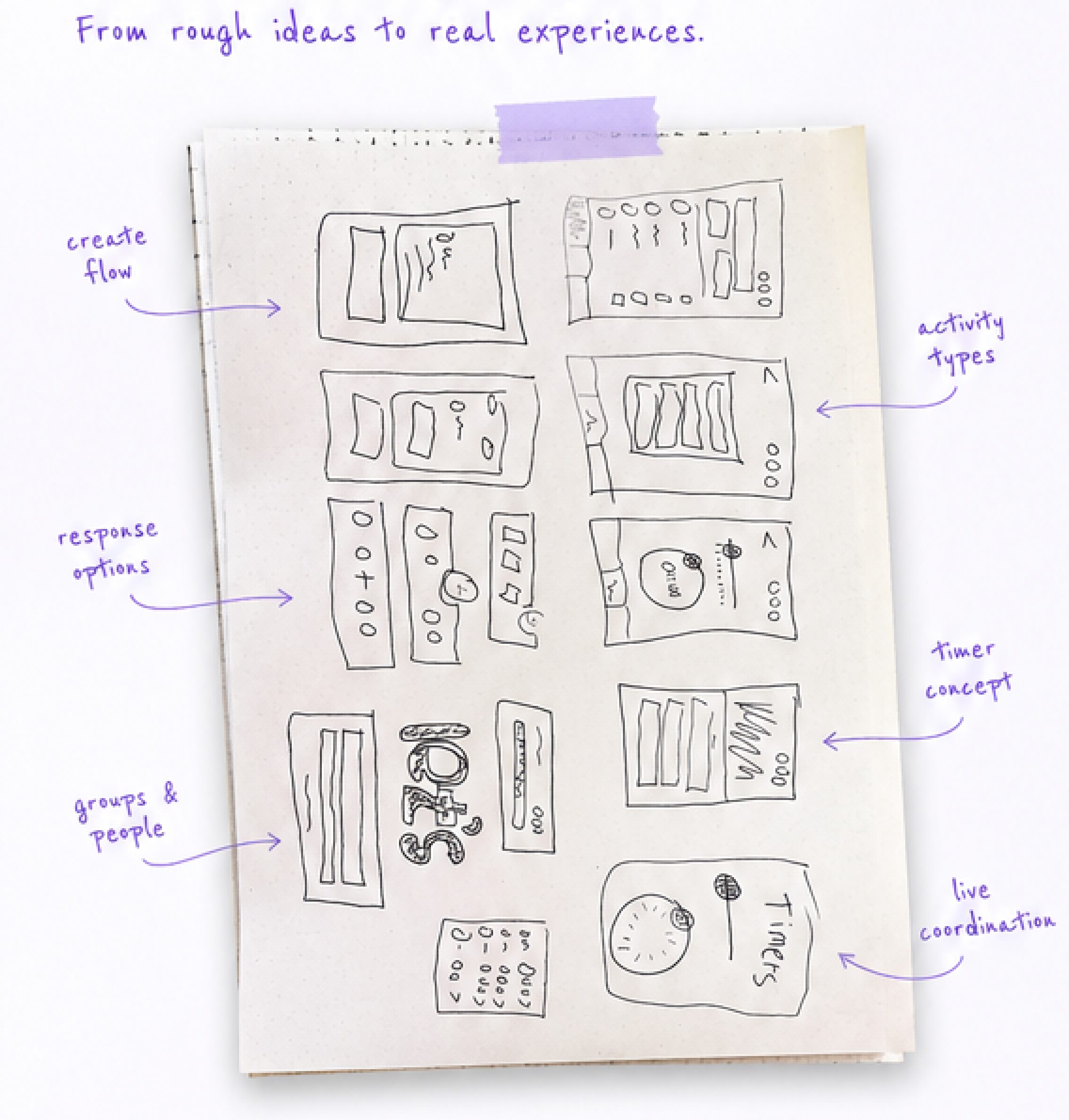
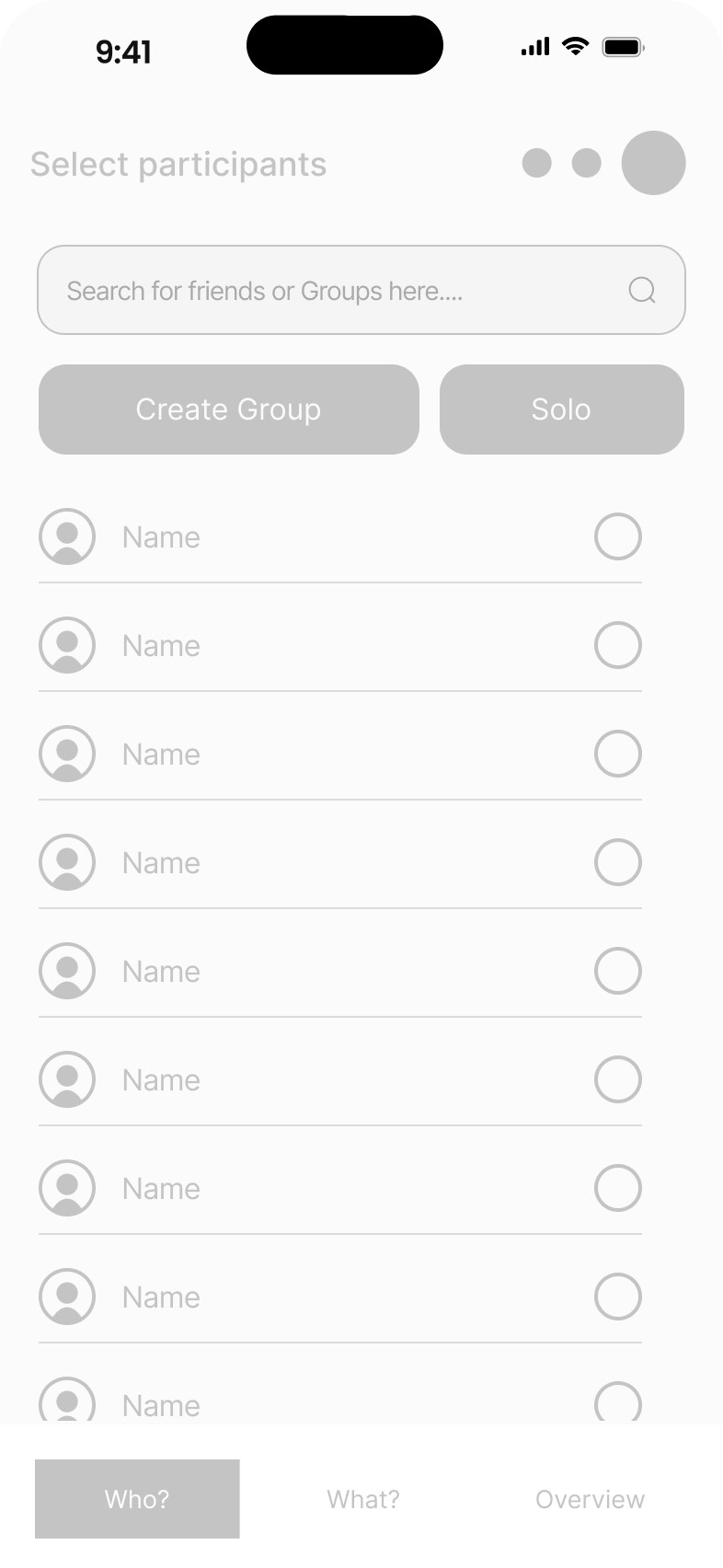
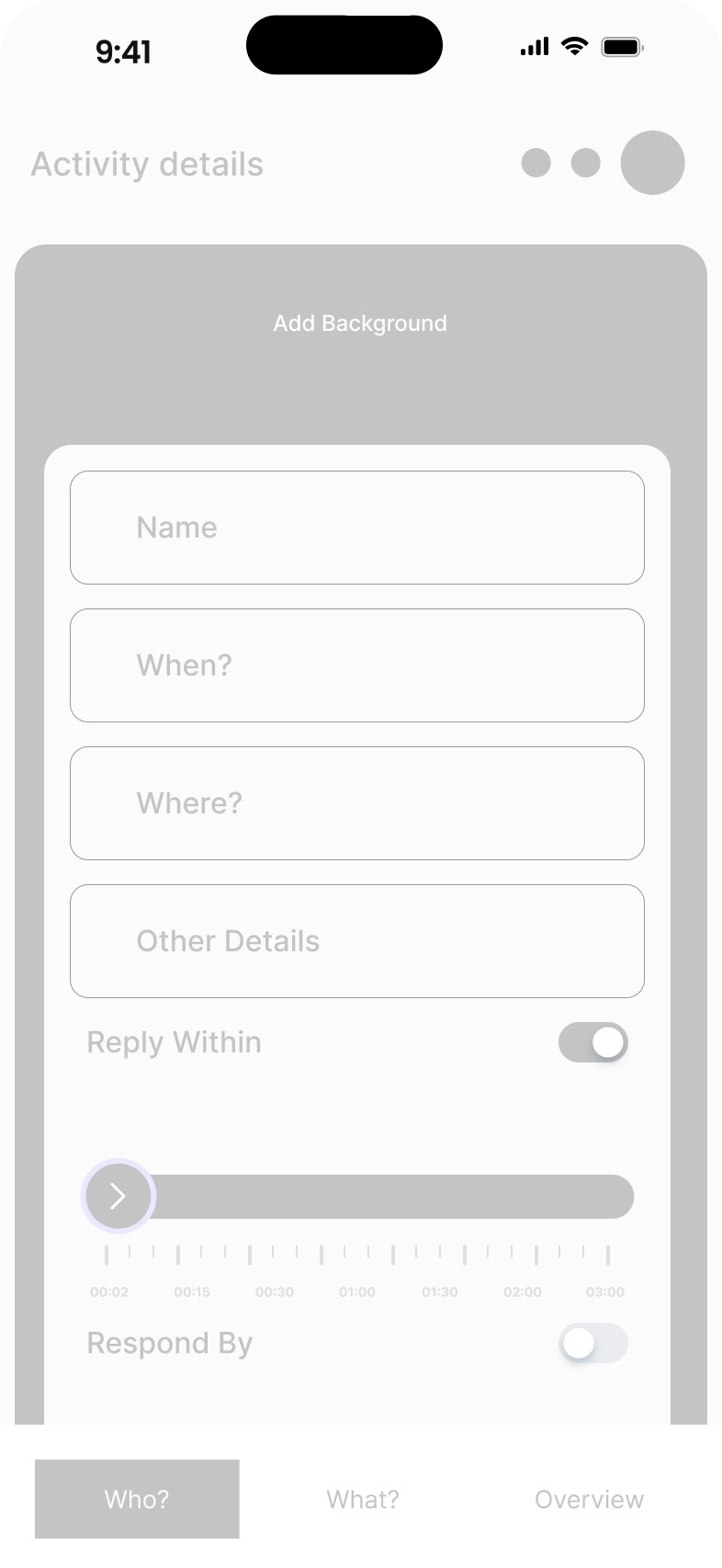
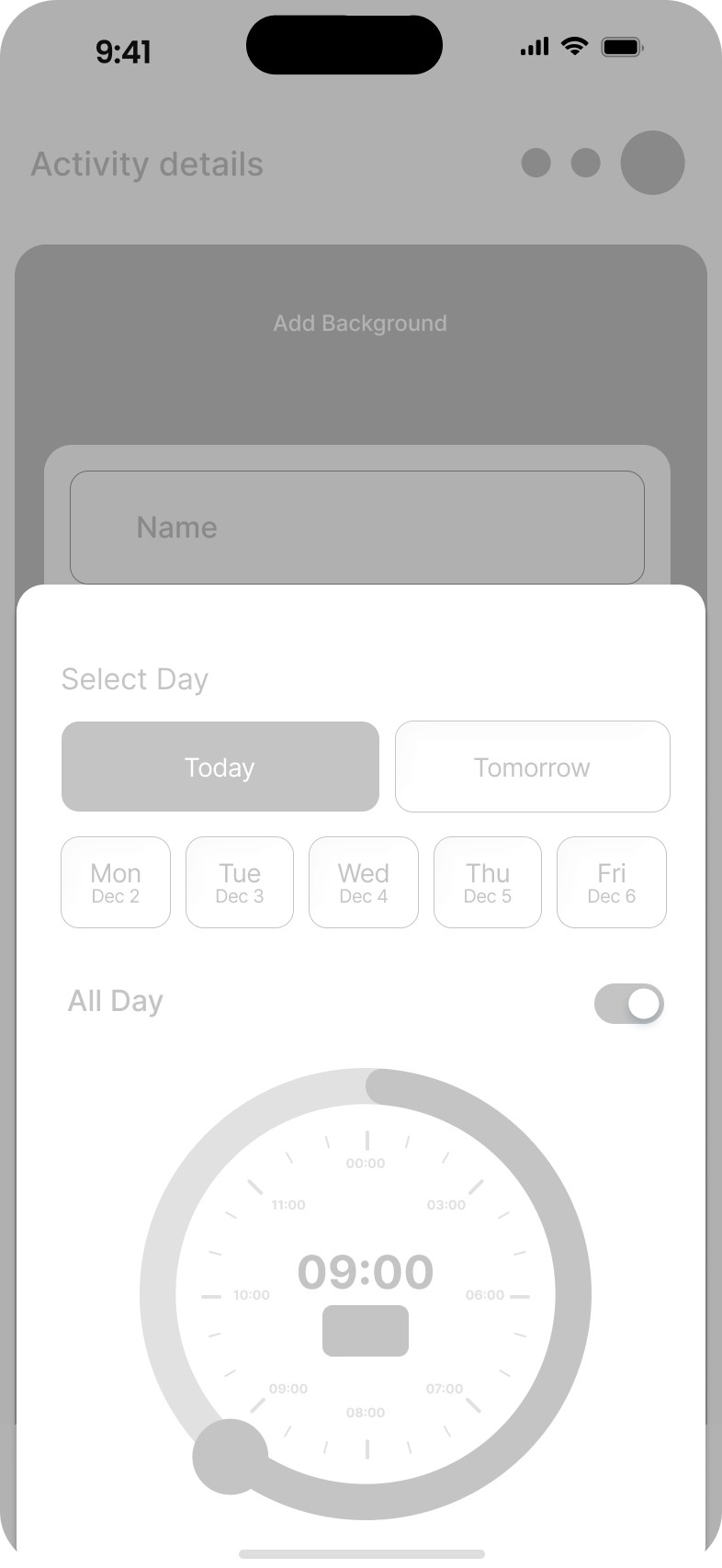
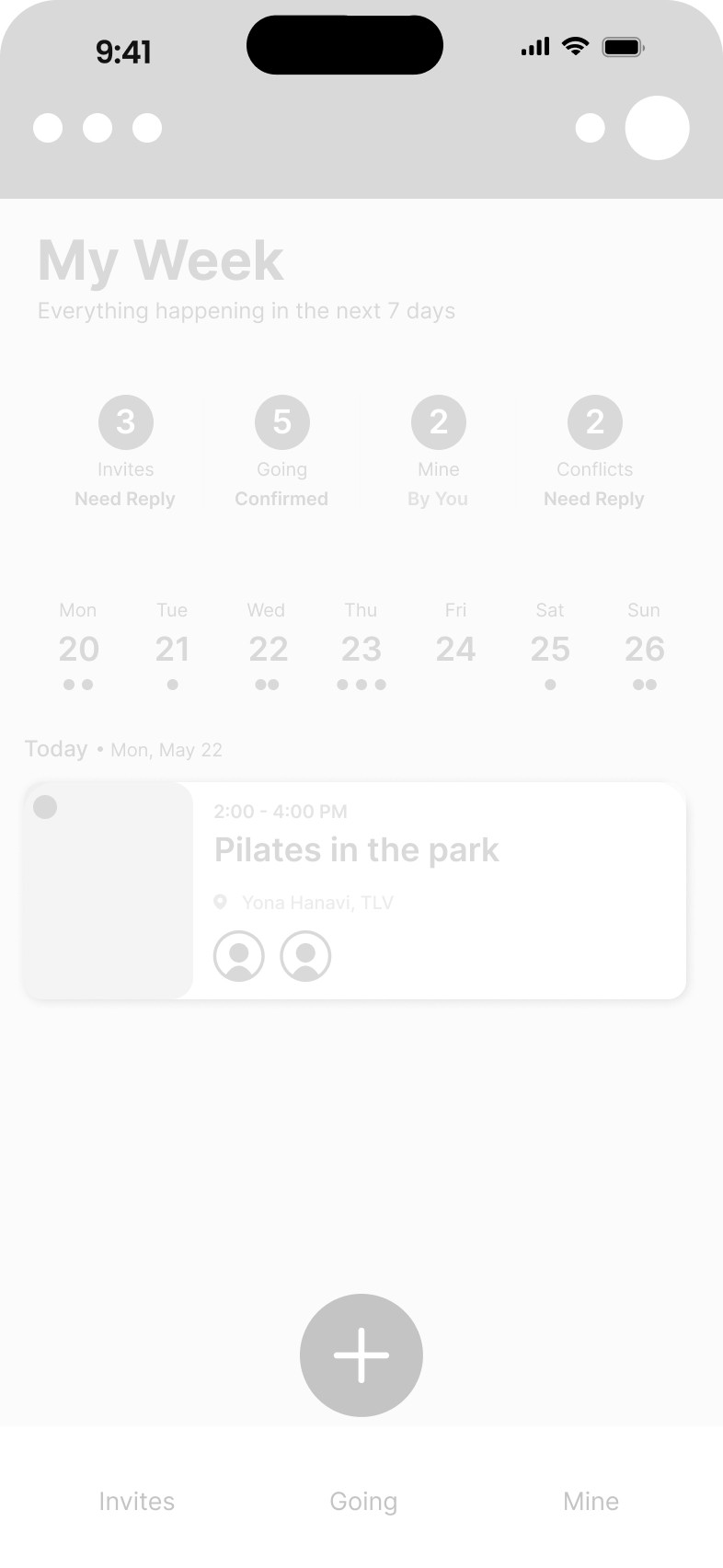
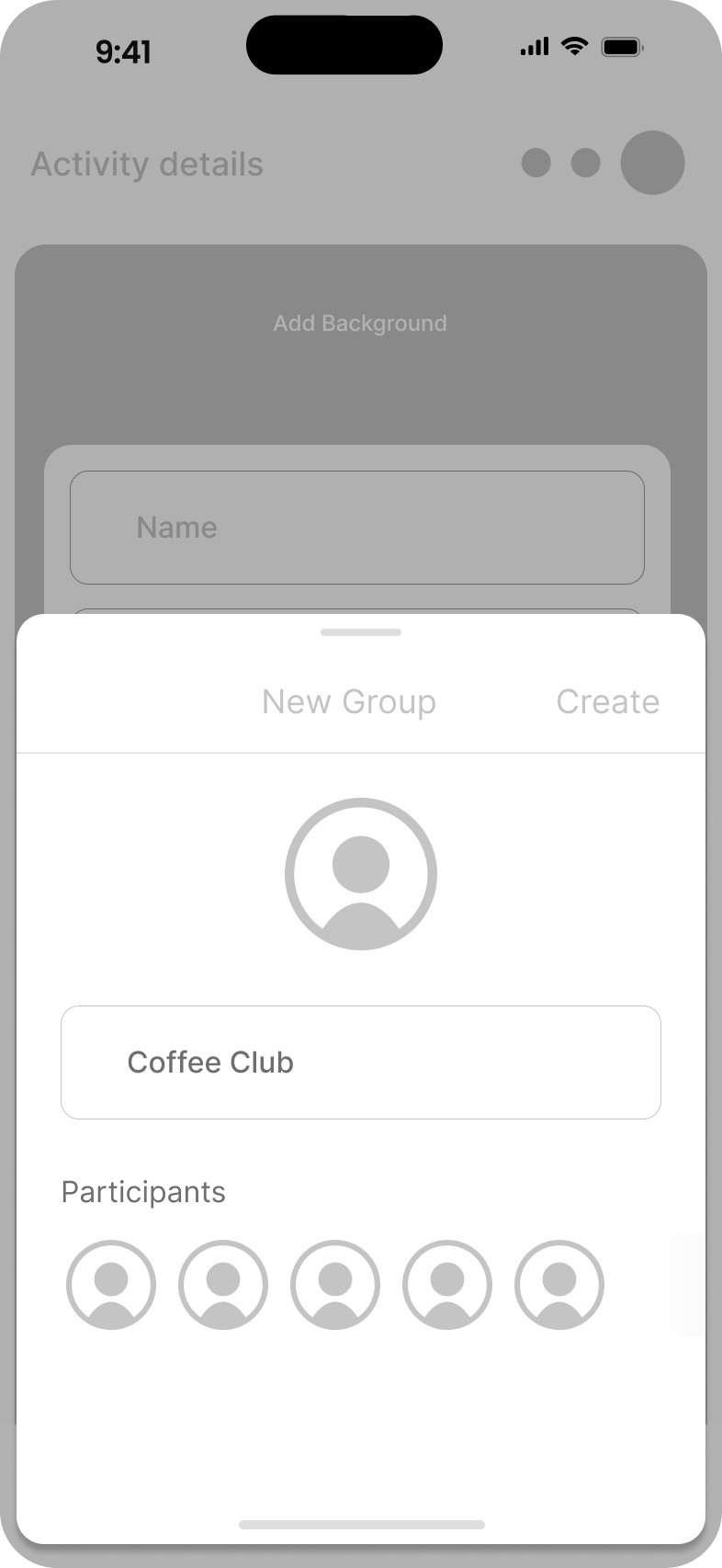
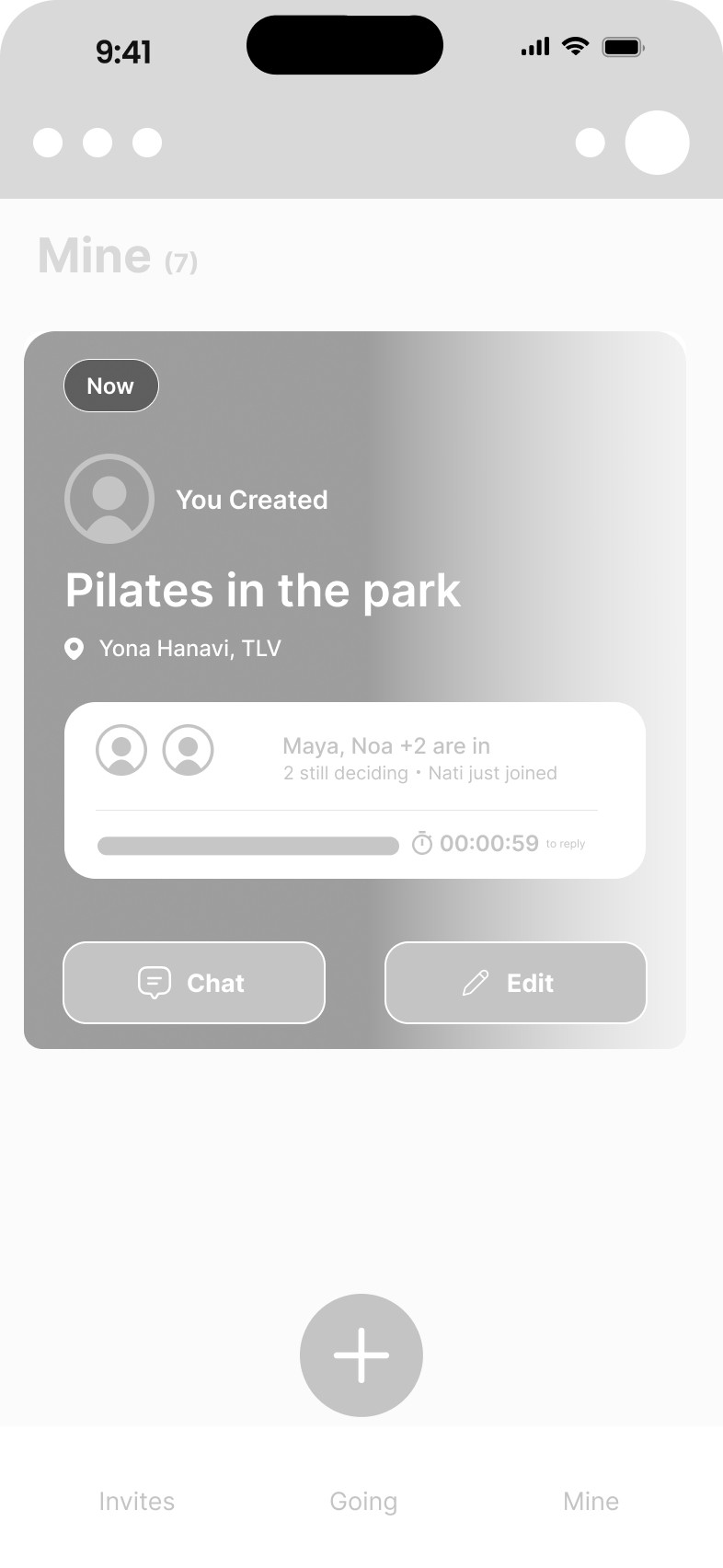
Before moving into polished interfaces, I explored multiple interaction patterns through fast hand-drawn sketches.
The goal was to quickly test different flows, screen hierarchies, and social coordination behaviors without getting distracted by visuals too early.
These early explorations helped define the core structure of the app from activity creation and response timing to live coordination and group interactions.
Early concepts explored:
Activity creation flow
RSVP interactions
Response timer mechanics
Group coordination patterns
Navigation hierarchy
Solo vs group activities
From Sketch
To Wireframe
Turning ideas into structure
09. LOW-FIDELITY EXPLORATION
From rough ideas
to
structured experiences
Before moving into polished interfaces, I explored multiple interaction patterns through fast hand-drawn sketches.
The goal was to quickly test different flows, screen hierarchies, and social coordination behaviors without getting distracted by visuals too early.
These early explorations helped define the core structure of the app from activity creation and response timing to live coordination and group interactions.
Early concepts explored:
Activity creation flow
RSVP interactions
Response timer mechanics
Group coordination patterns
Navigation hierarchy
Solo vs group activities
From Sketch
To Wireframe
Turning ideas into structure
09. LOW-FIDELITY EXPLORATION
From rough ideas to
structured experiences
Before moving into polished interfaces, I explored multiple interaction patterns through fast hand-drawn sketches.
The goal was to quickly test different flows, screen hierarchies, and social coordination behaviors without getting distracted by visuals too early.
These early explorations helped define the core structure of the app from activity creation and response timing to live coordination and group interactions.
Early concepts explored:
Activity creation flow
RSVP interactions
Response timer mechanics
Group coordination patterns
Navigation hierarchy
Solo vs group activities
From Sketch
To Wireframe
Turning ideas into structure
10. THE SOLUTION
Making spontaneous
plans finally feel
effortless
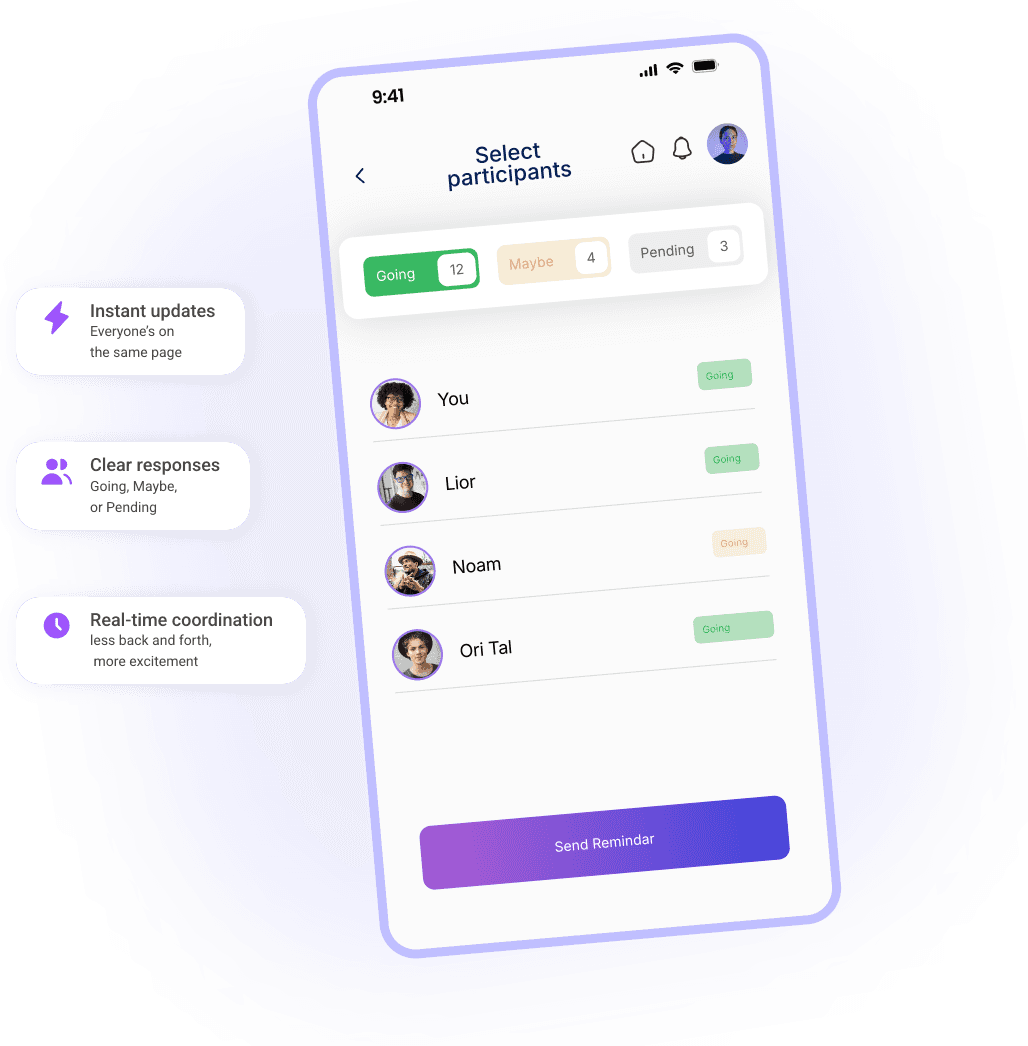
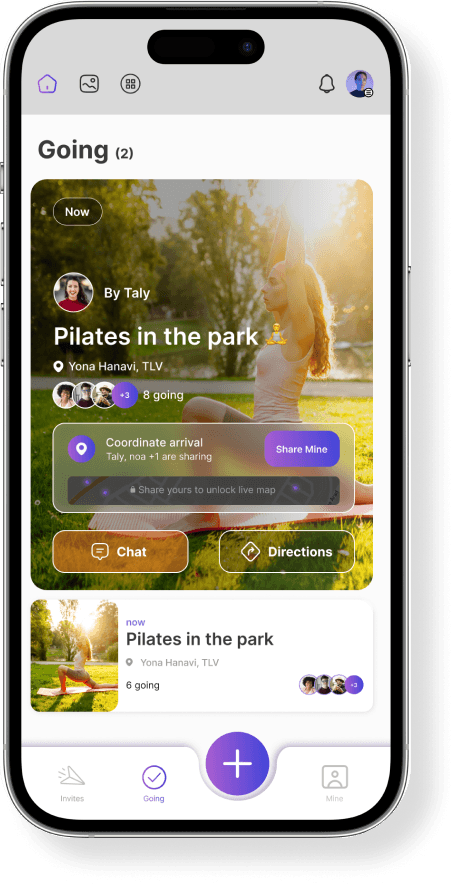
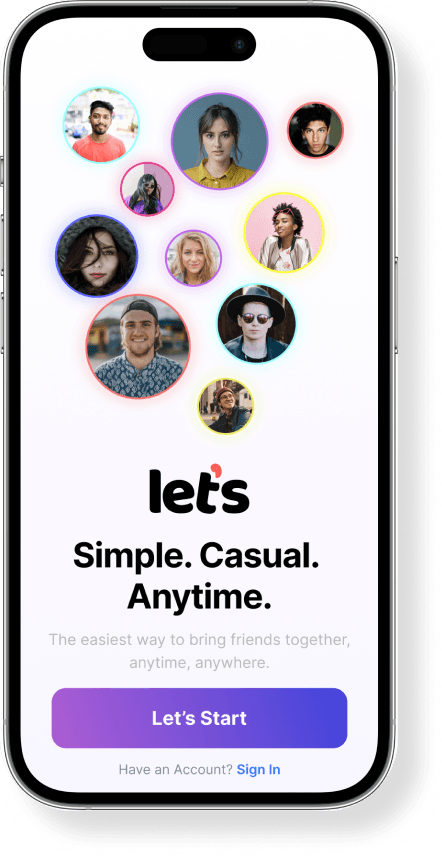
A single space for creating plans, coordinating responses, and turning scattered conversations into real meetups.
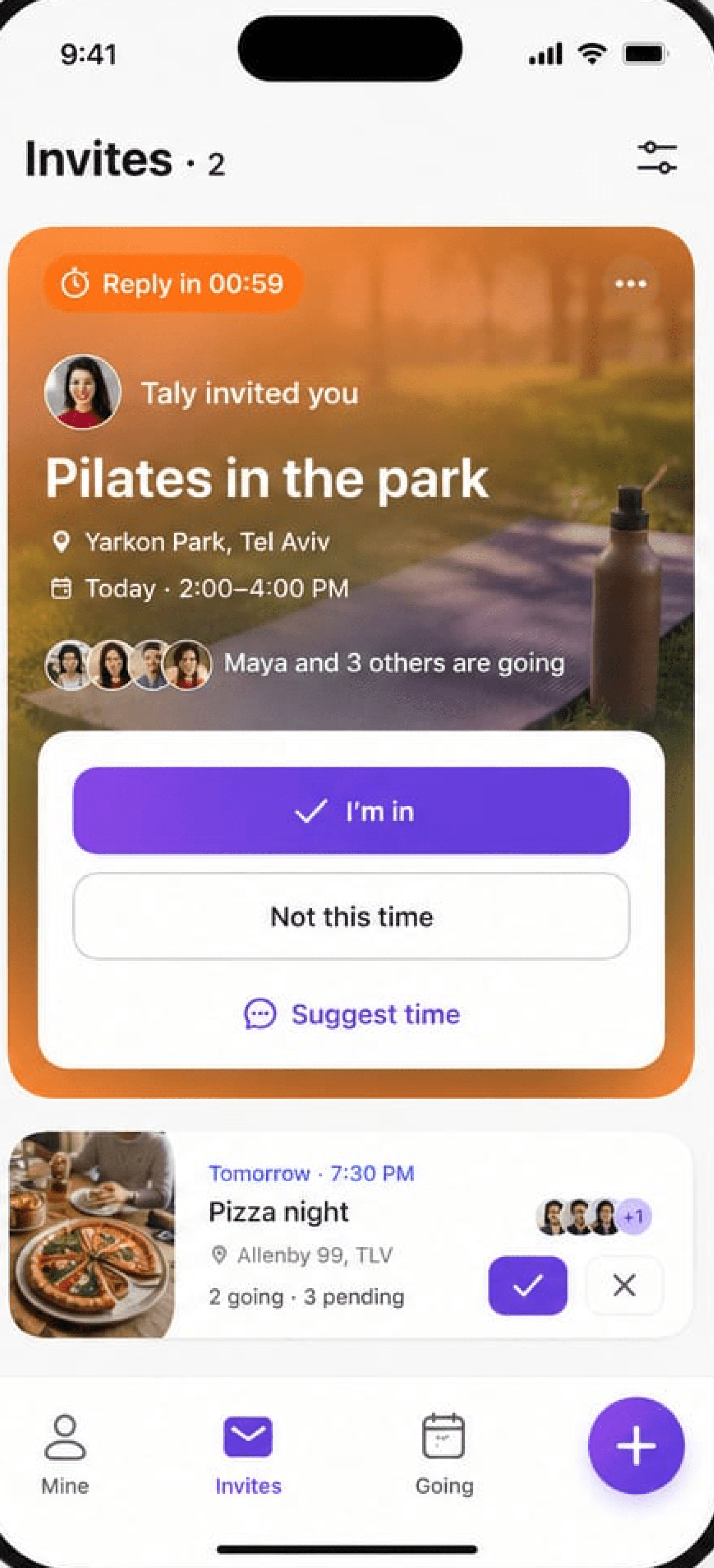
let’s was designed to simplify the entire social coordination experience from creating an activity, to getting responses, tracking attendance, chatting, sharing live locations, and staying updated in real time.
Instead of relying on fragmented group chats, unanswered messages, calendars, and constant follow ups, the platform brings everything into one lightweight and intuitive flow.
Every interaction was designed to reduce friction, remove uncertainty, and help people spend less time coordinating and more time actually meeting.
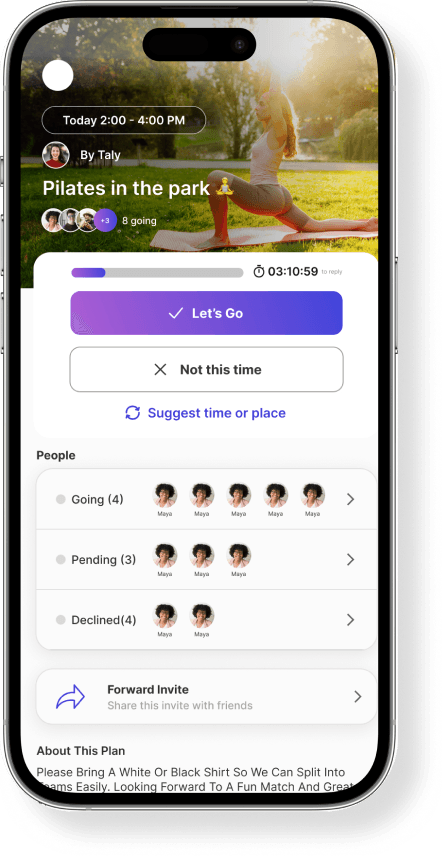
Create plans in seconds
Description Get your ideas out
and see who’s in.
Coordinate with ease
Responses, updates and chat all in
one place.
Meet effortlessly
Share locations, stay updated and
enjoy the moment.
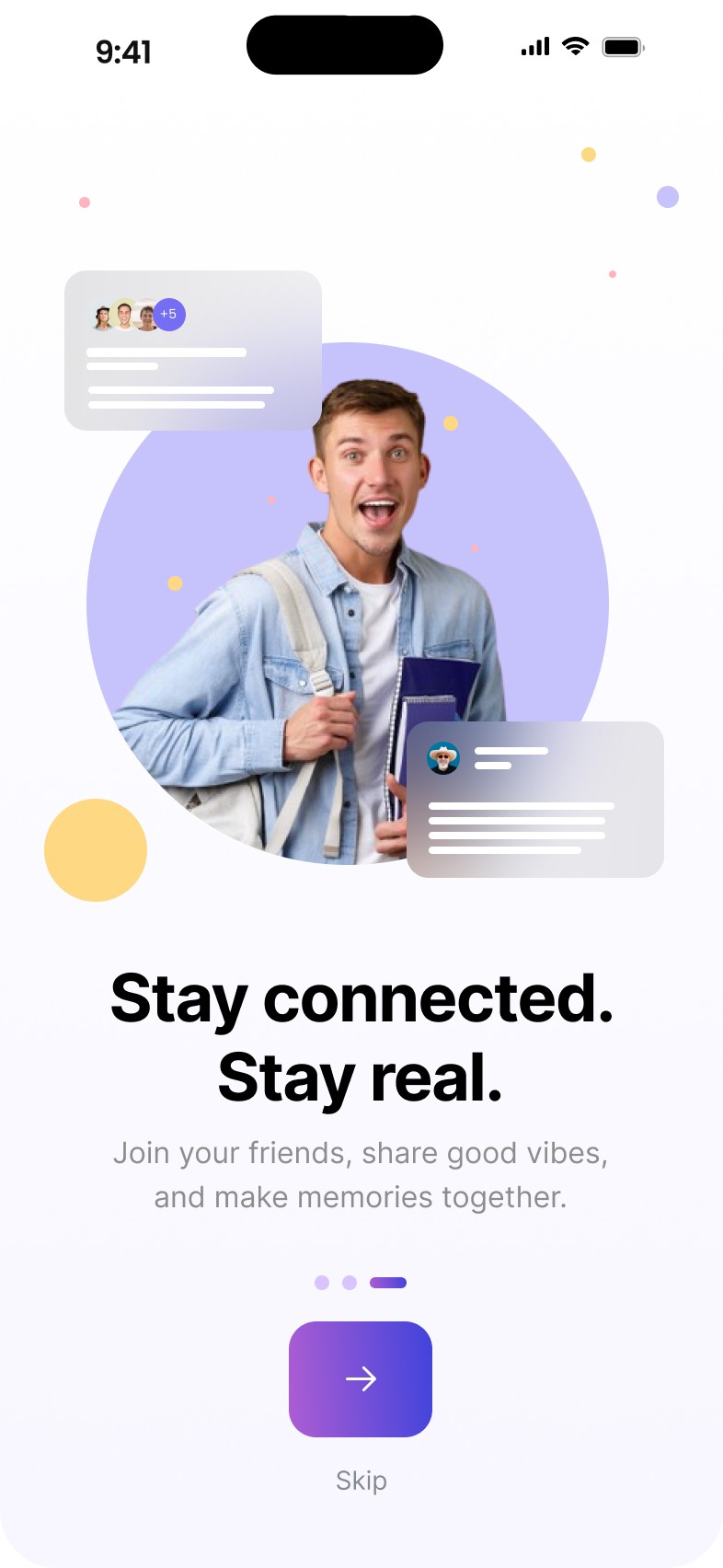
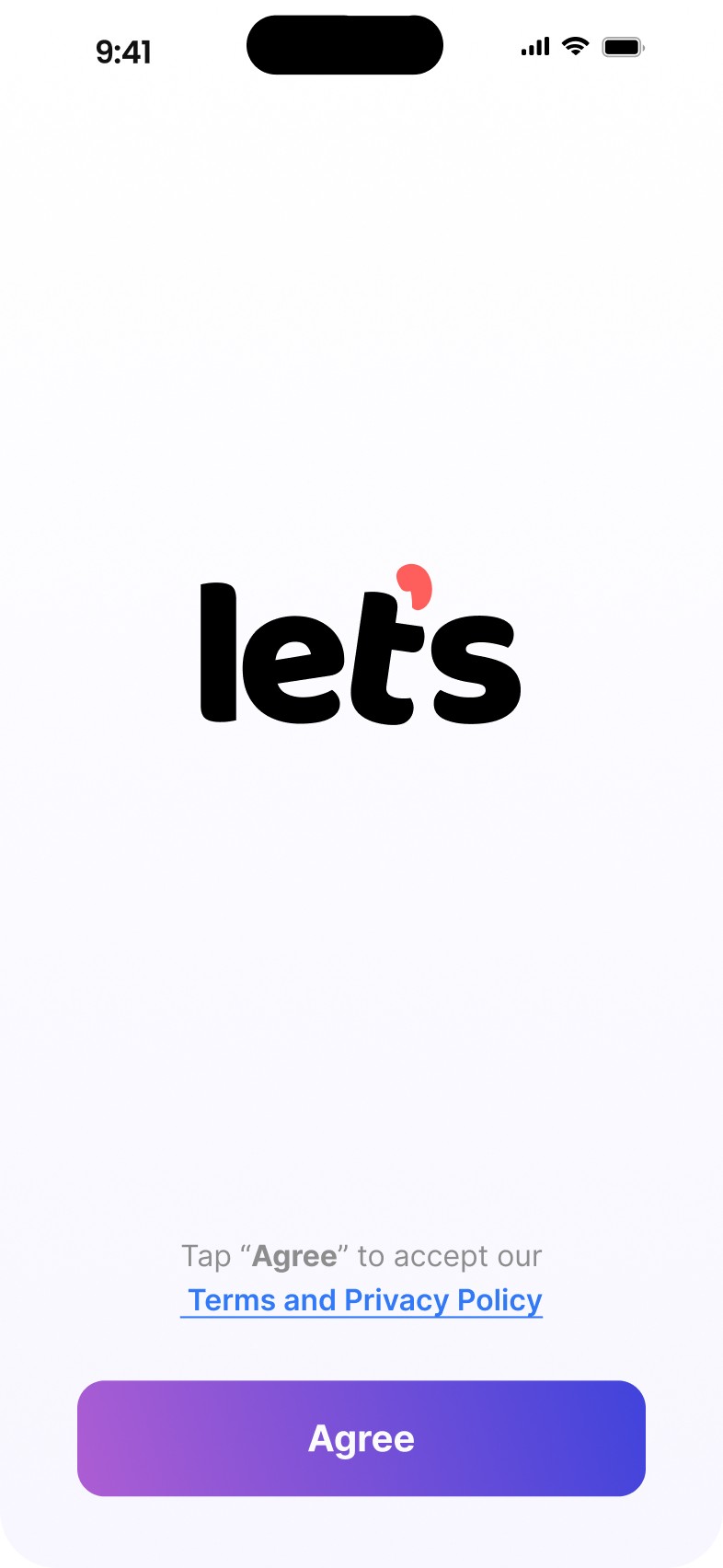
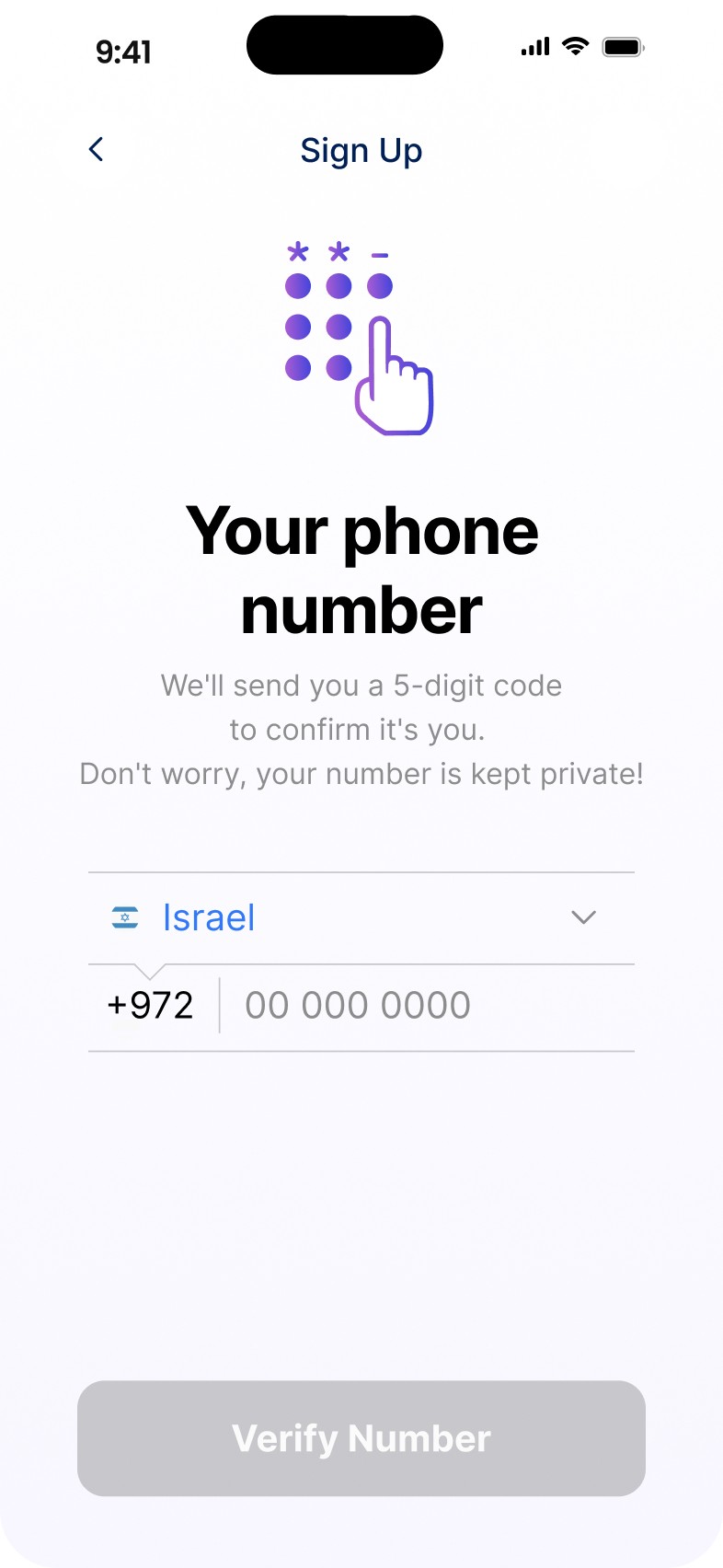
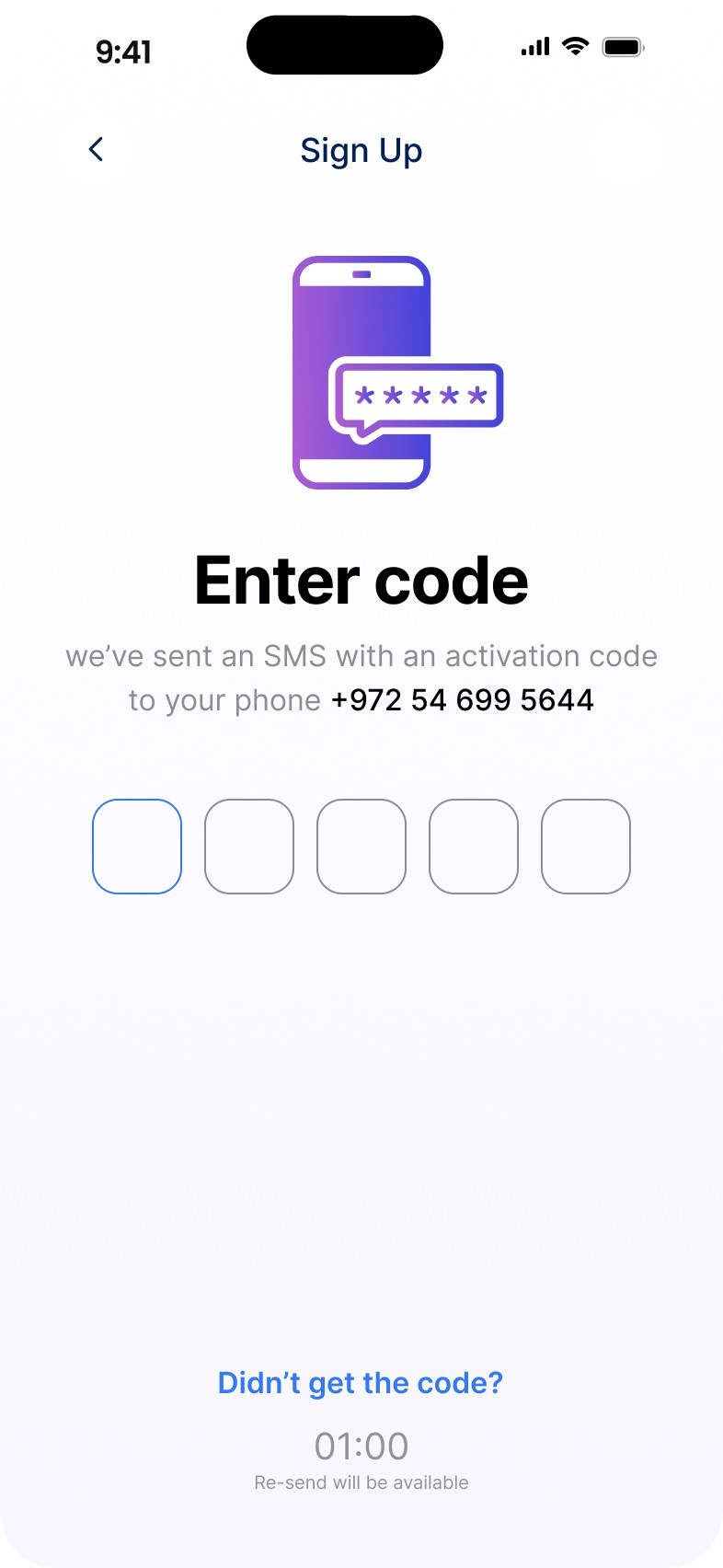
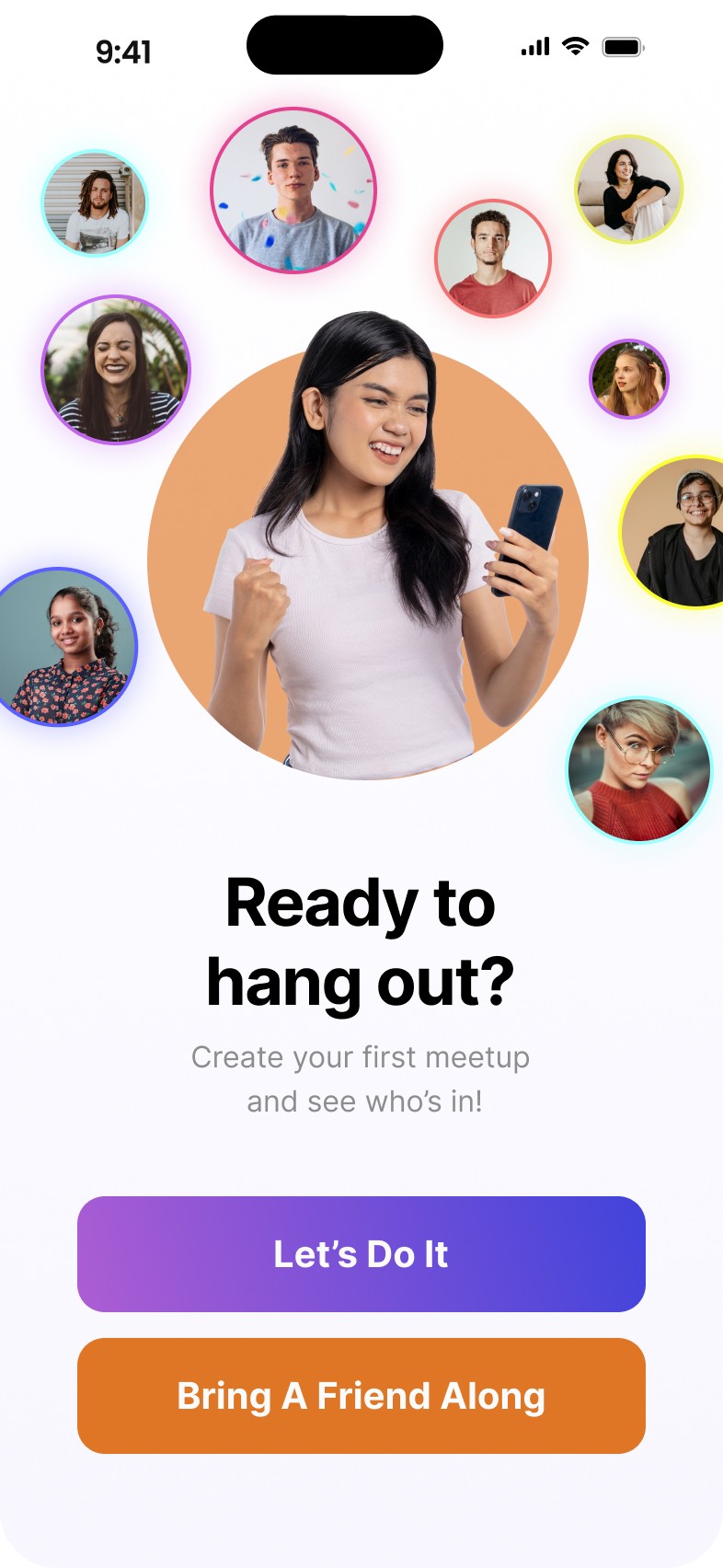
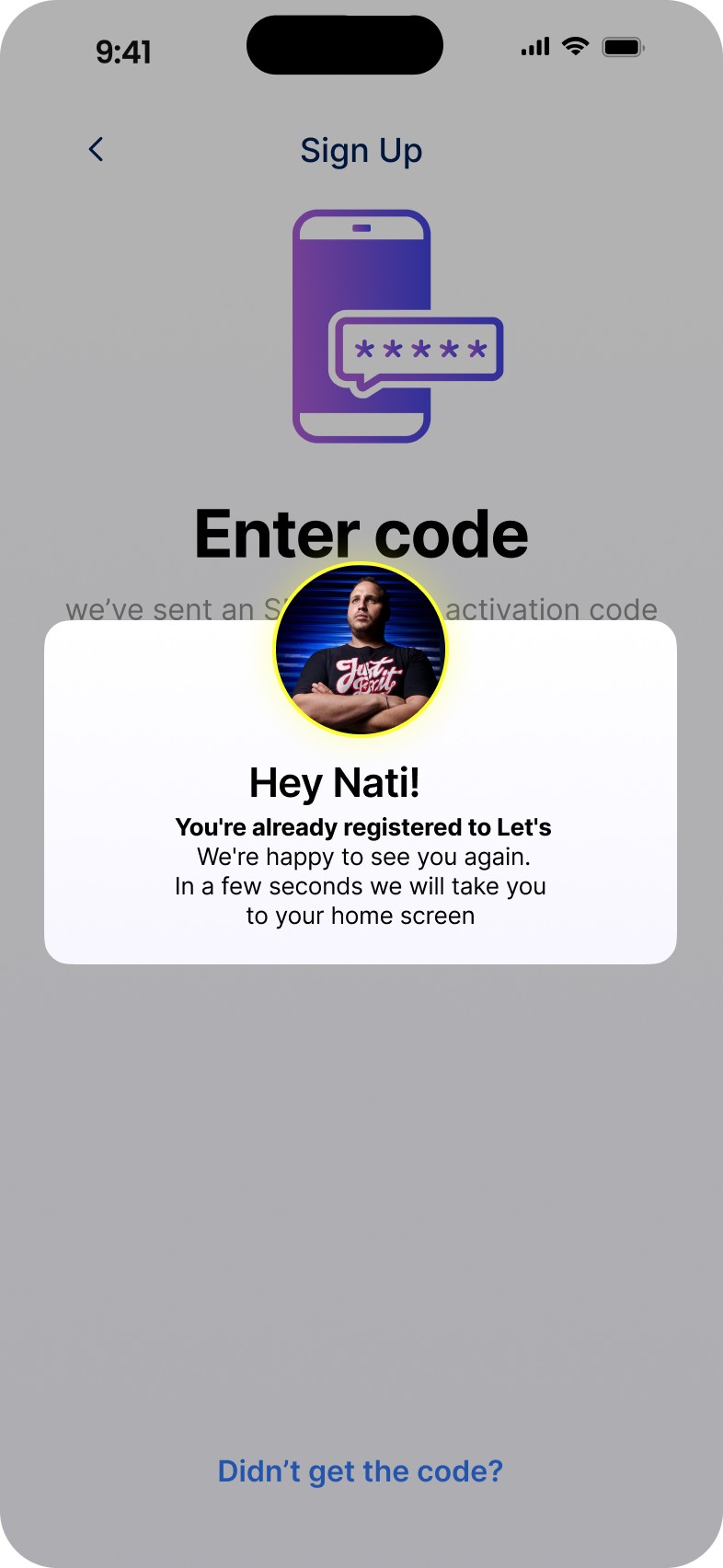
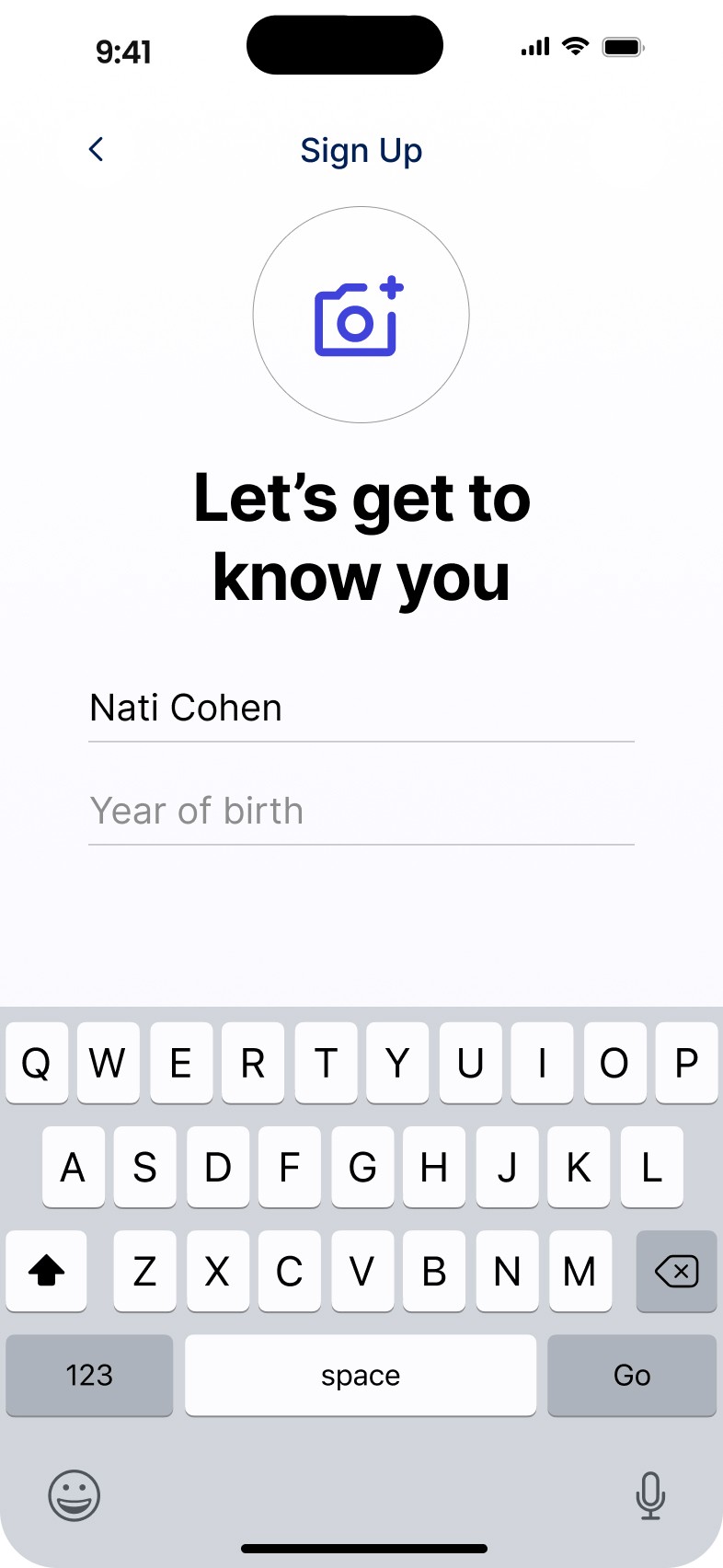
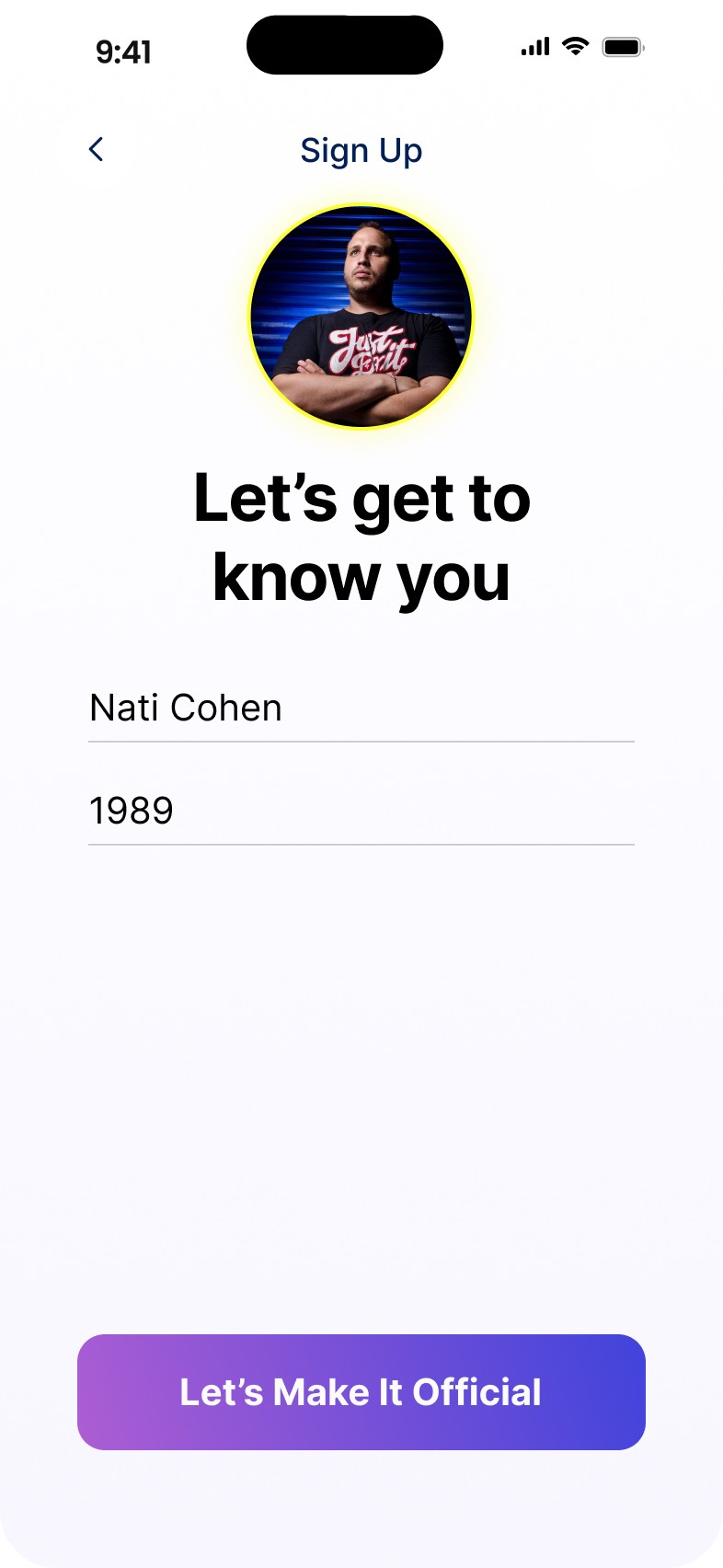
FLOW 1
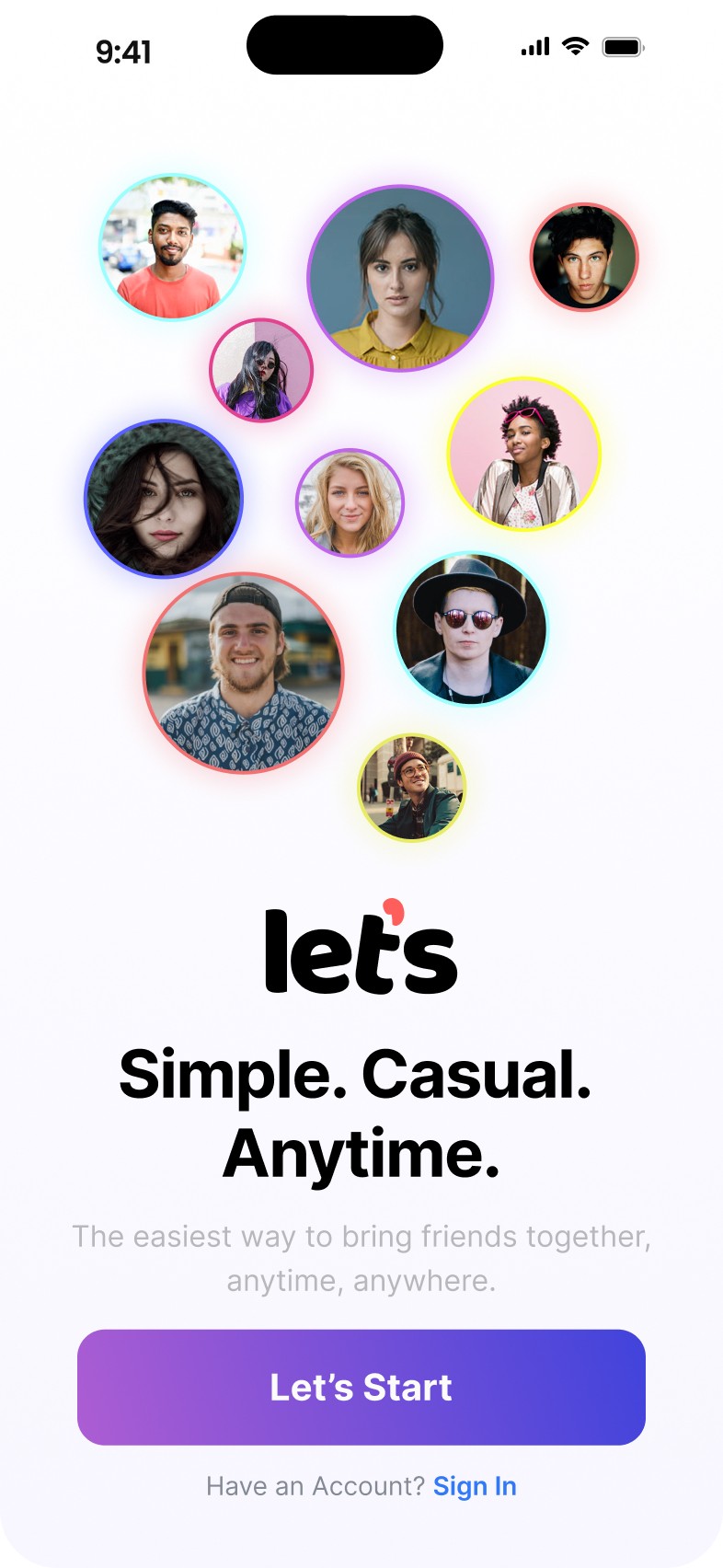
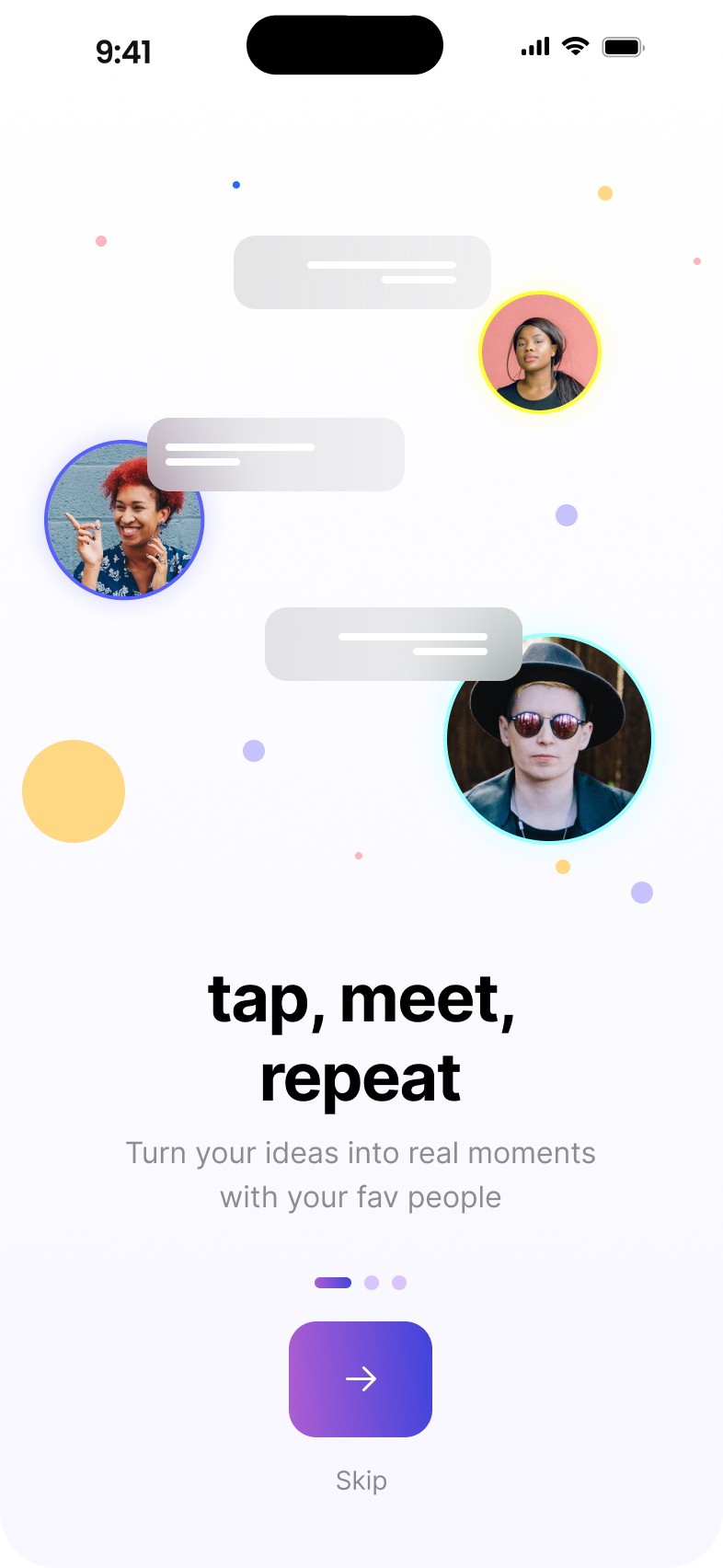
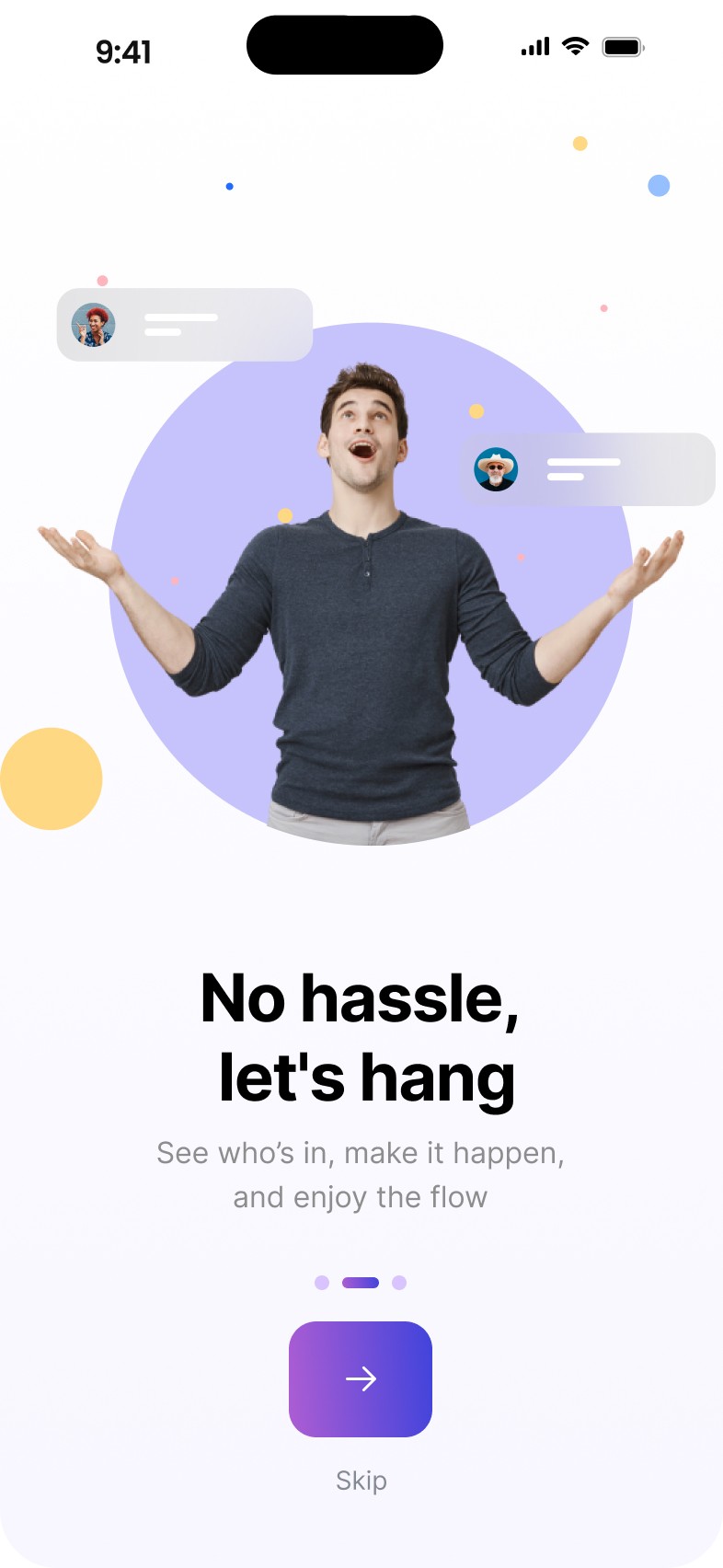
From signup to meetup in minutes
The onboarding experience focuses on speed, clarity, and simplicity
helping users verify their account, personalize their profile, and start planning instantly.
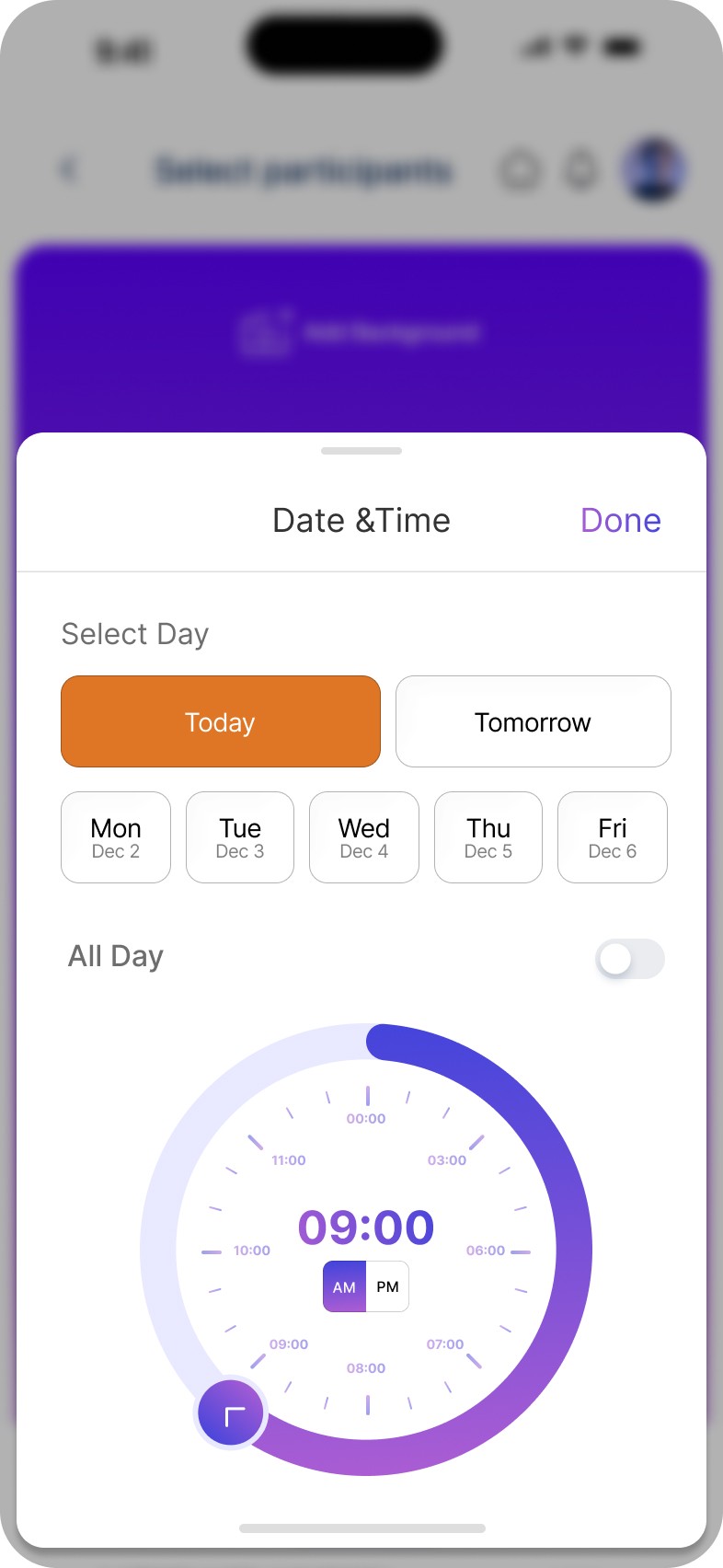
FLOW 2
Planning something together should feel effortless
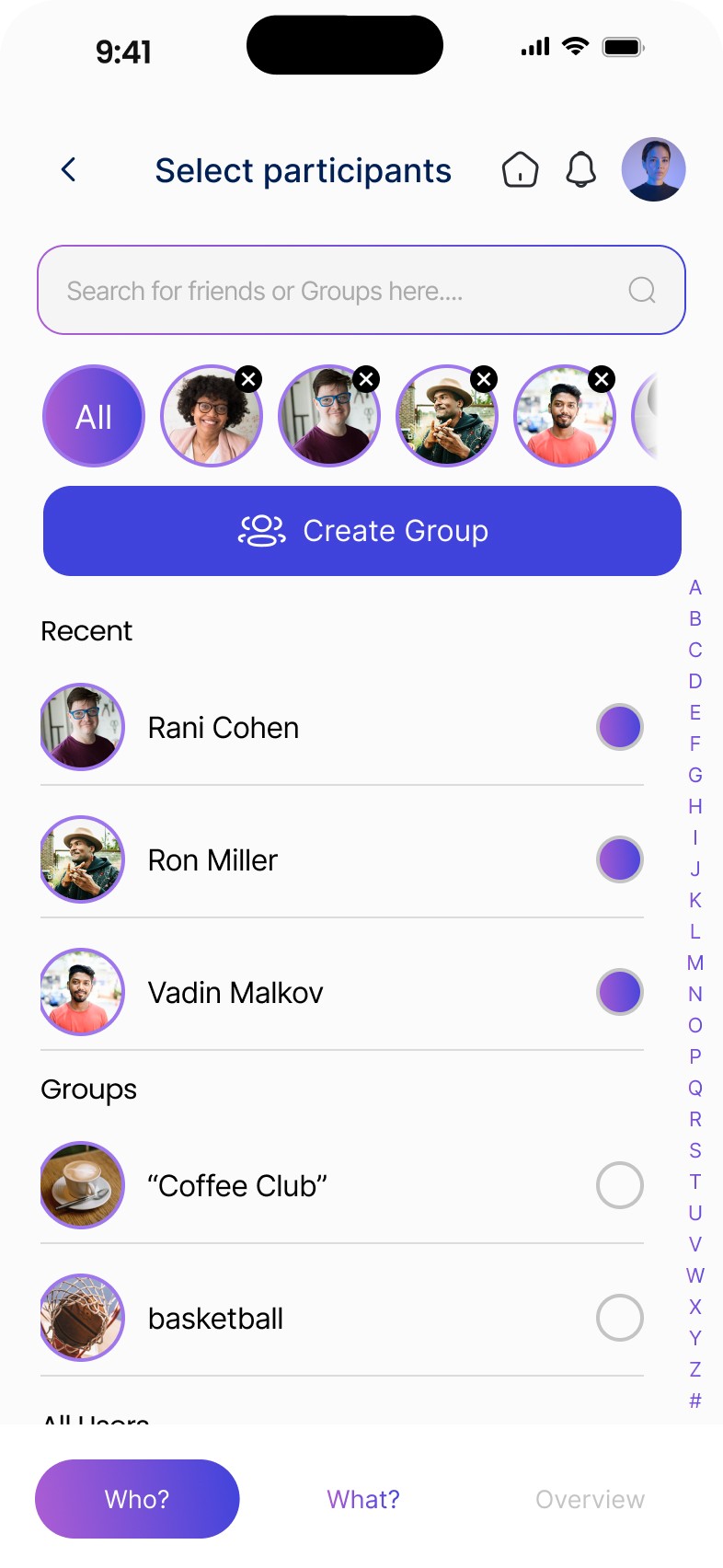
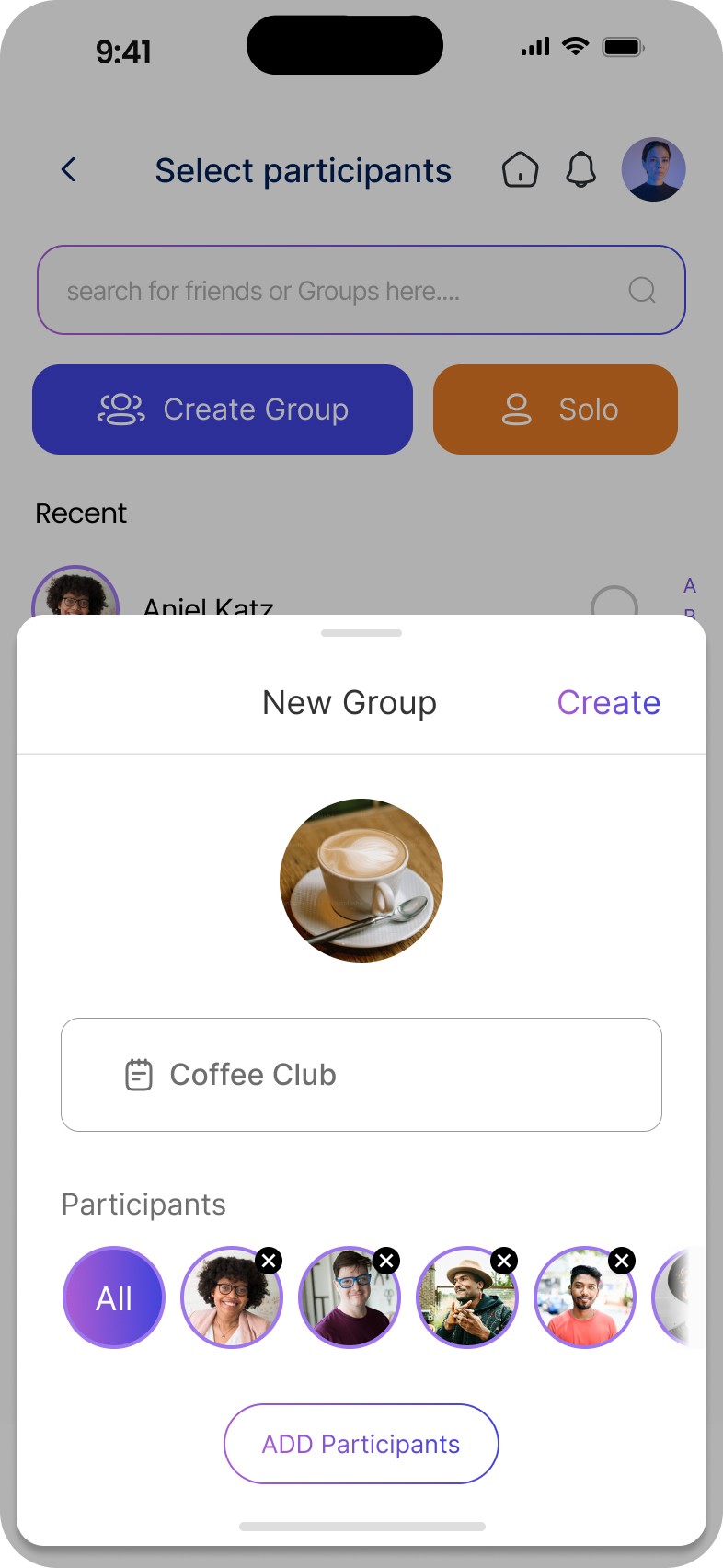
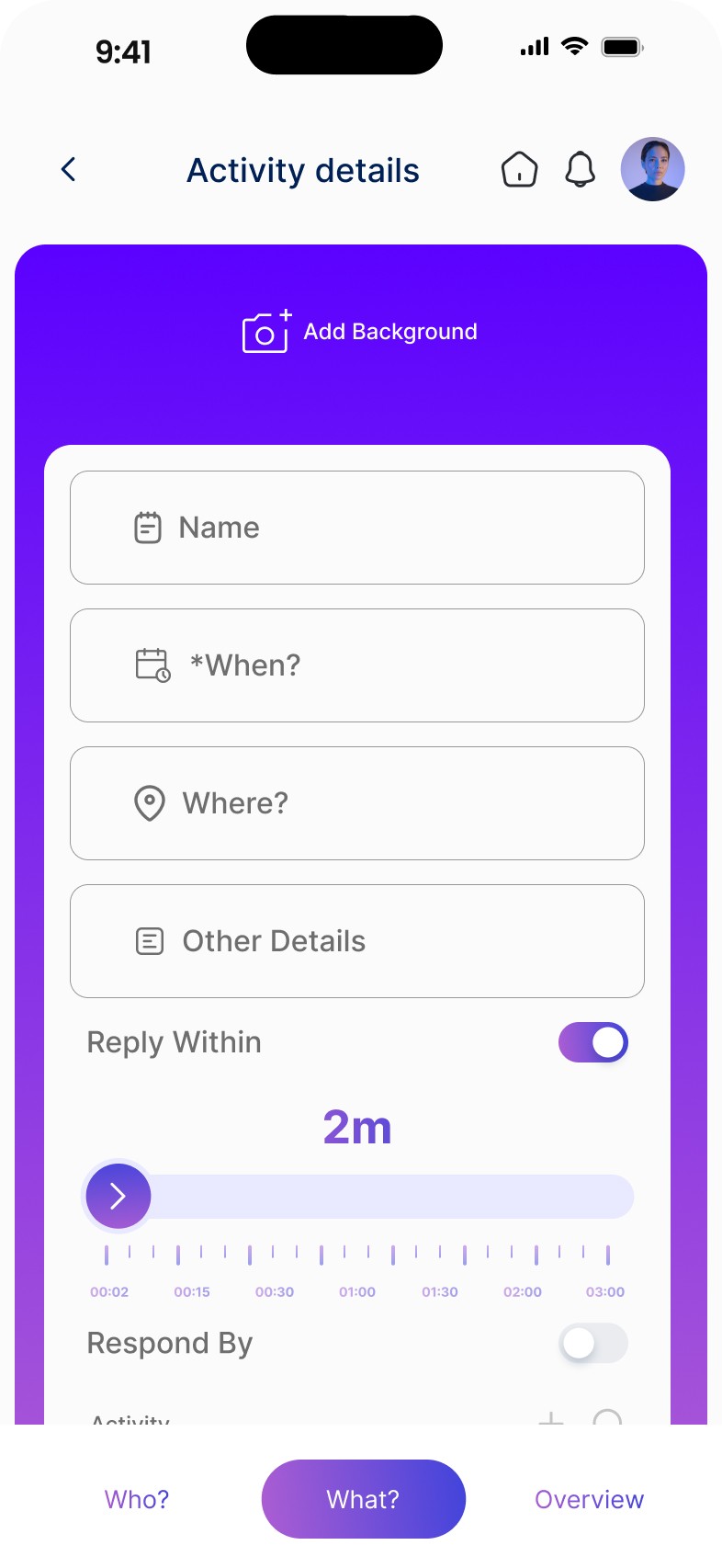
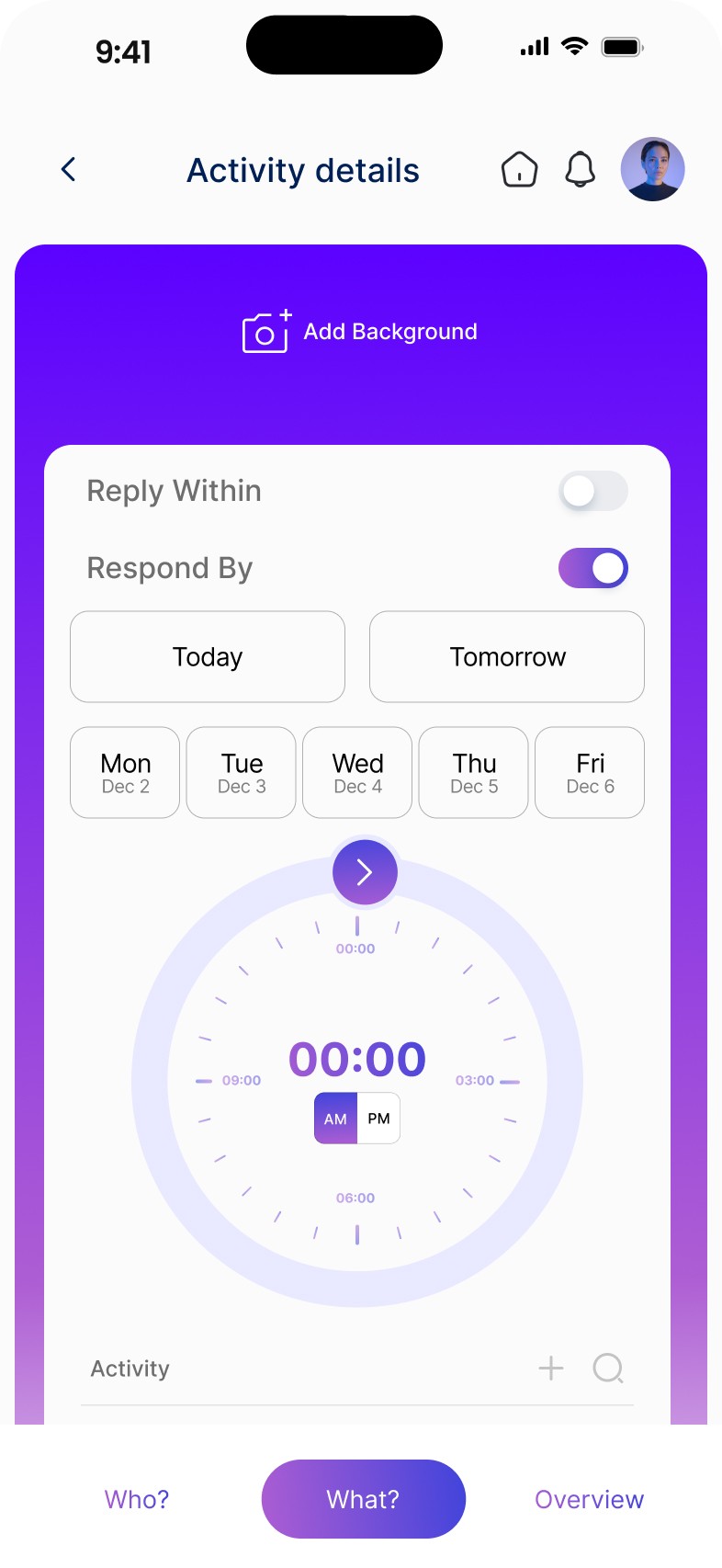
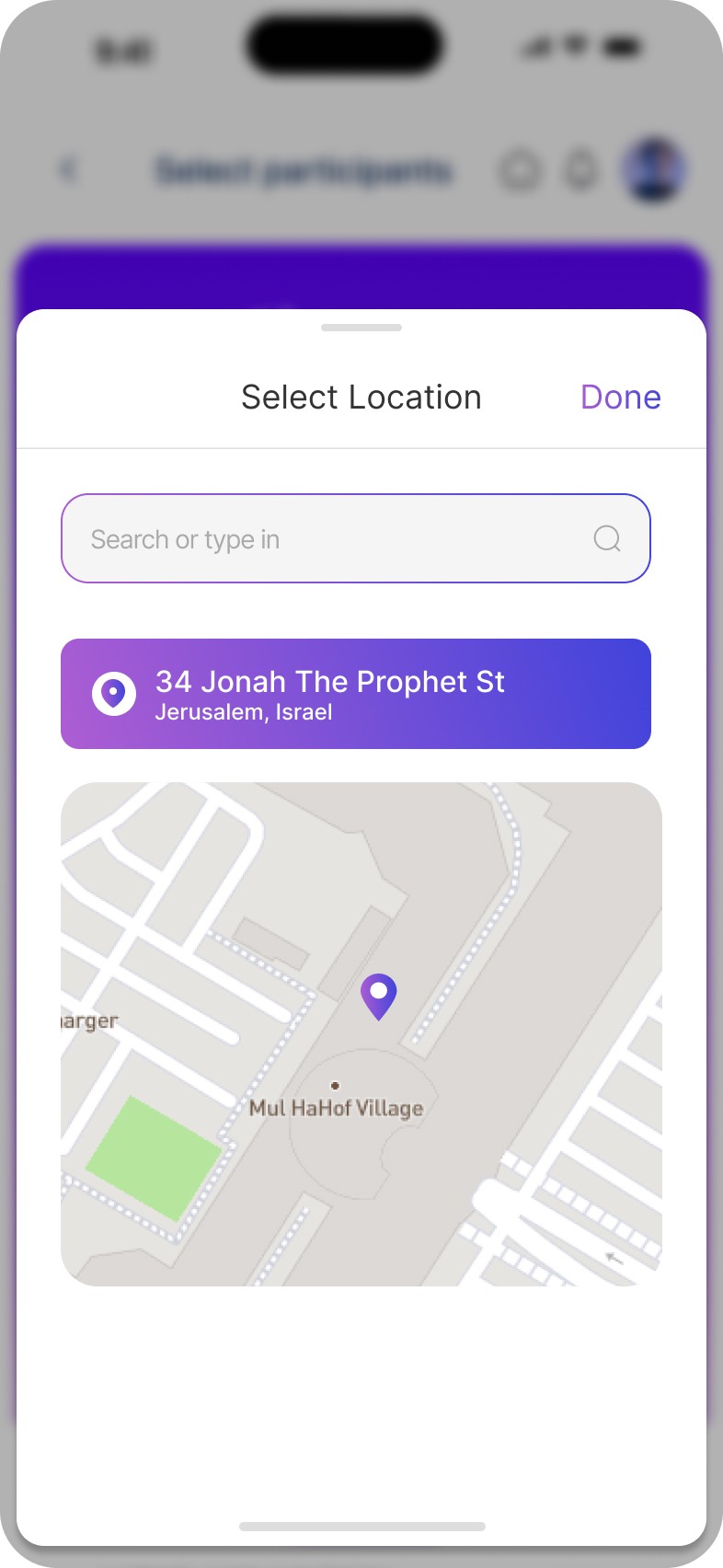
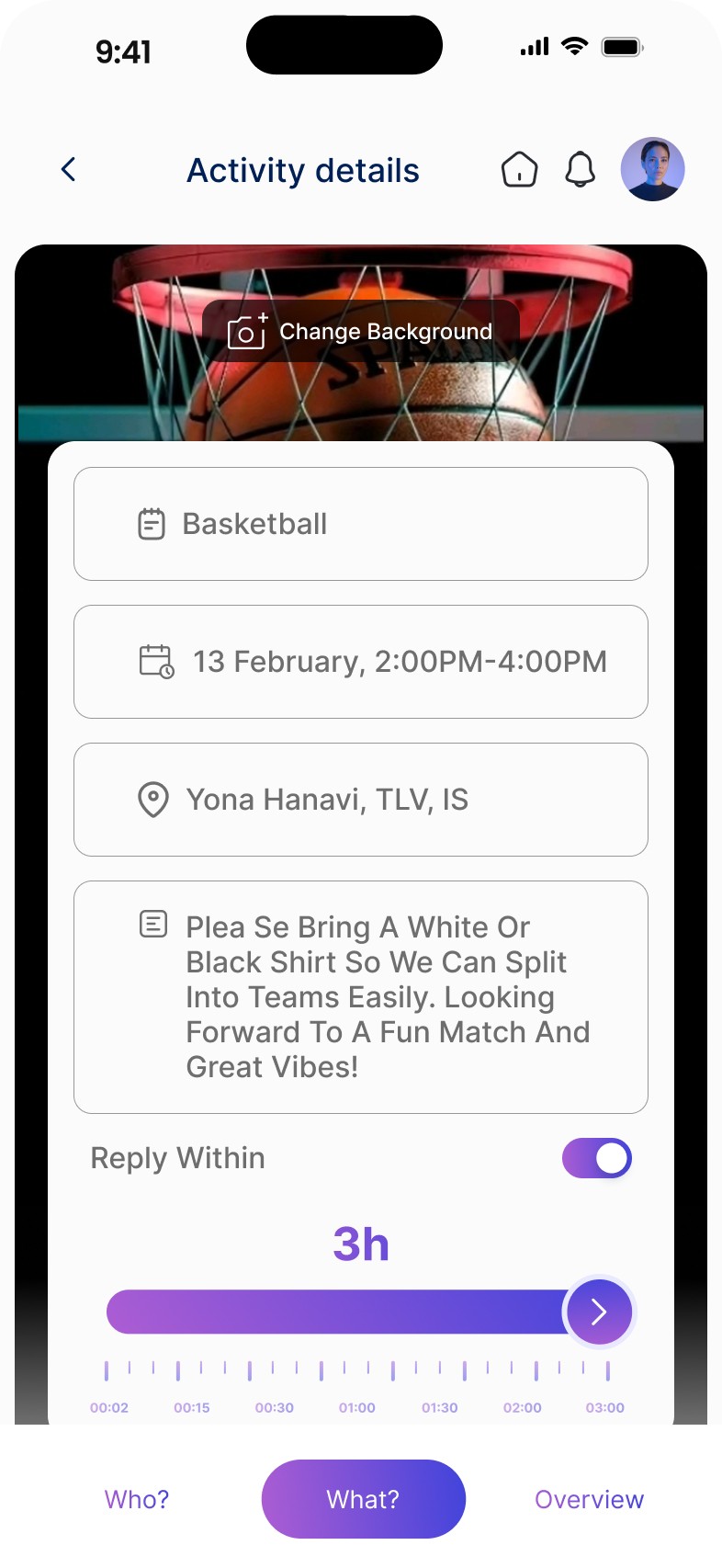
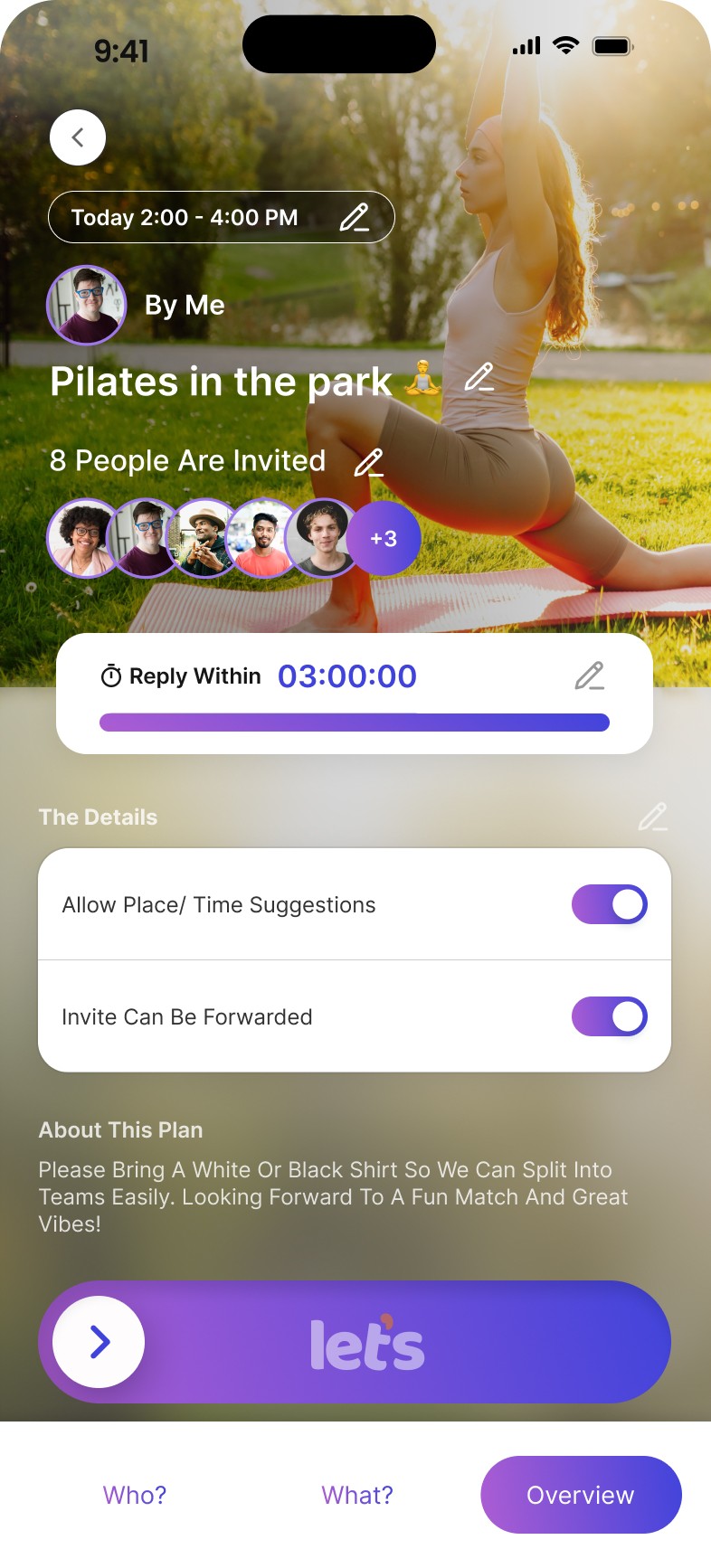
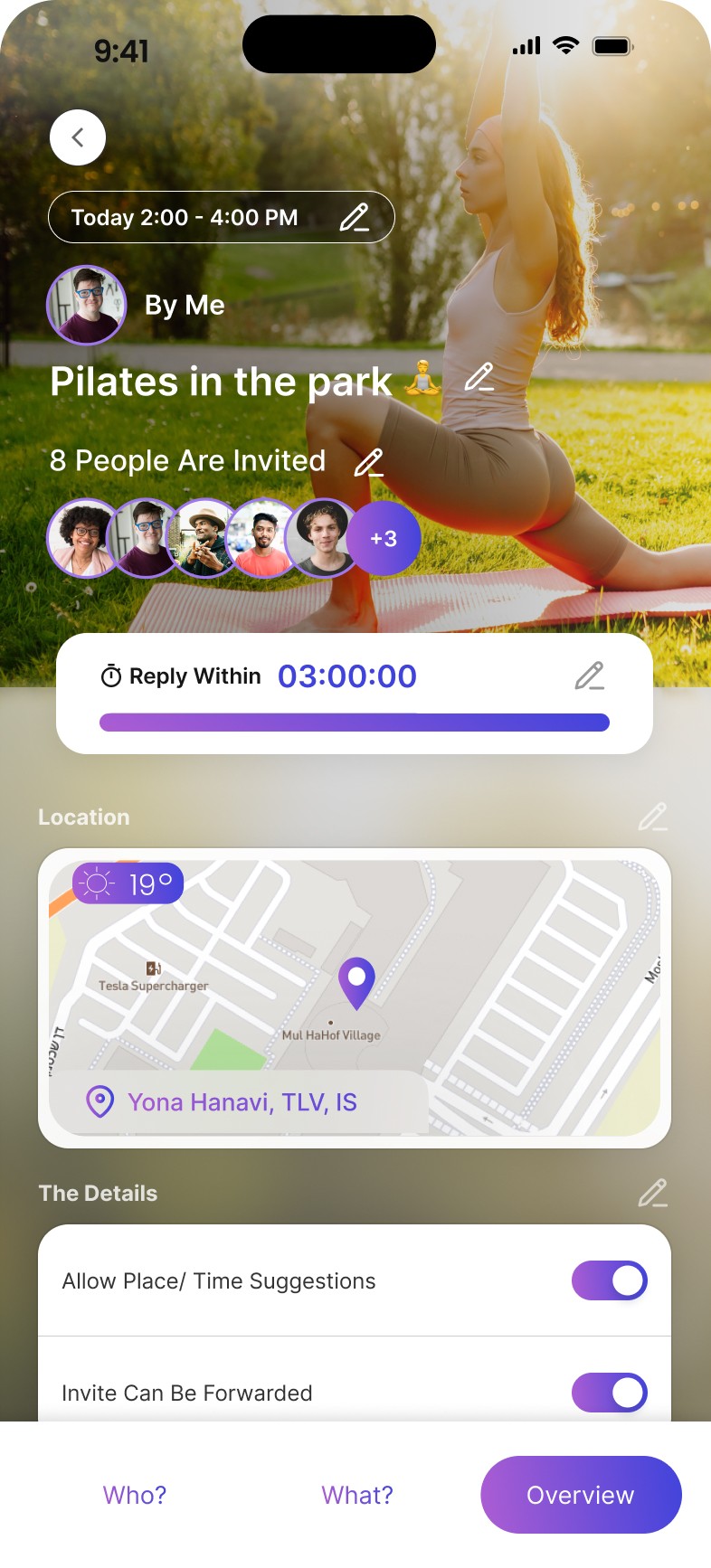
Create activities in just a few taps from choosing people and setting the time, to sharing the final plan.
The flow was designed to stay fast, visual, and lightweight, so organizing casual meetups feels simple instead of overwhelming.
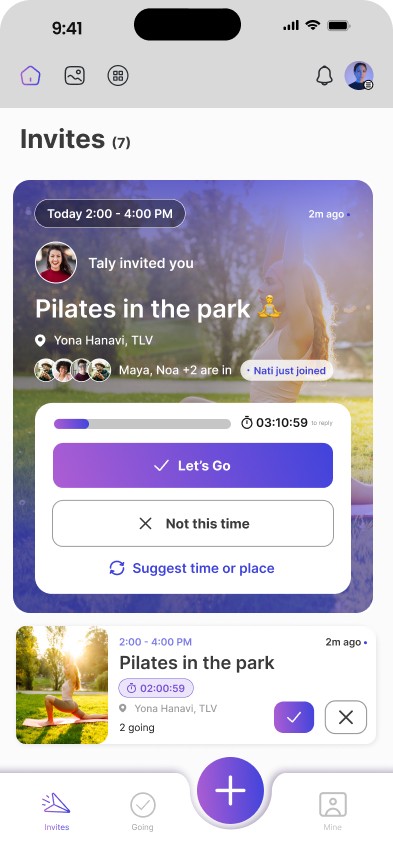
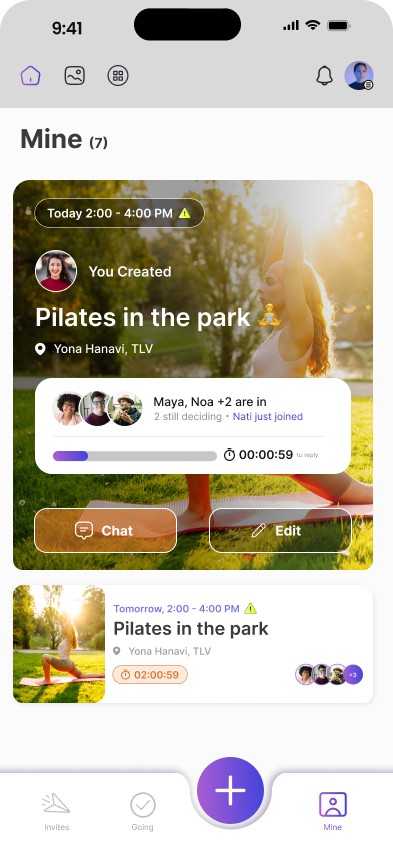
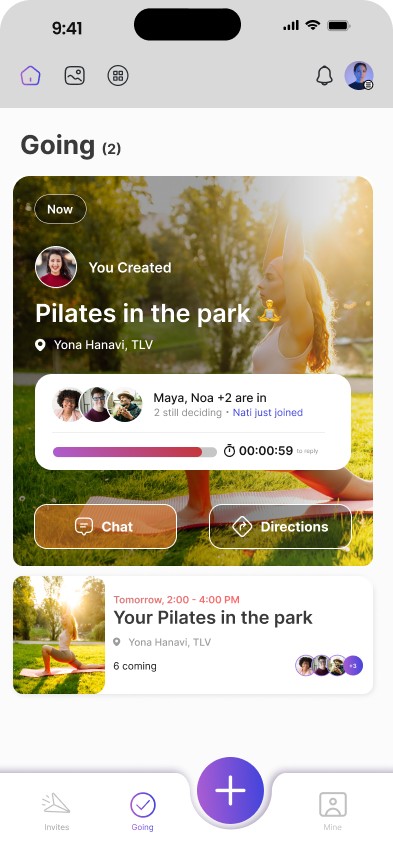
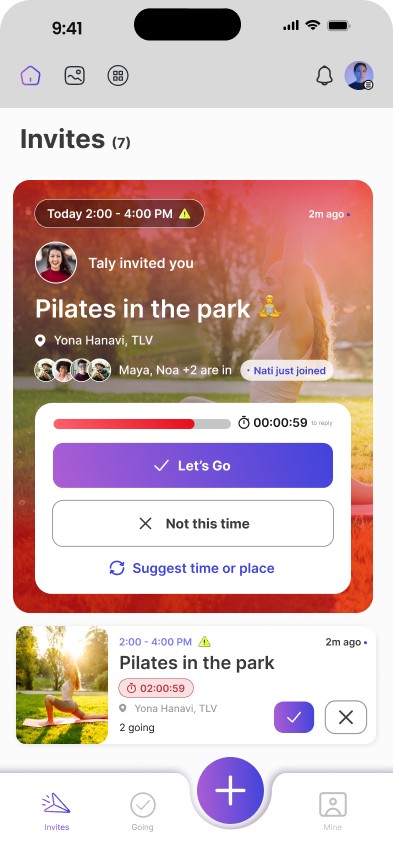
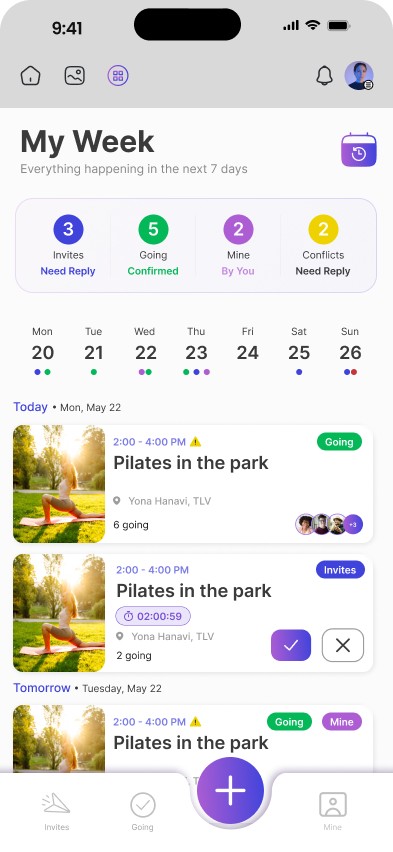
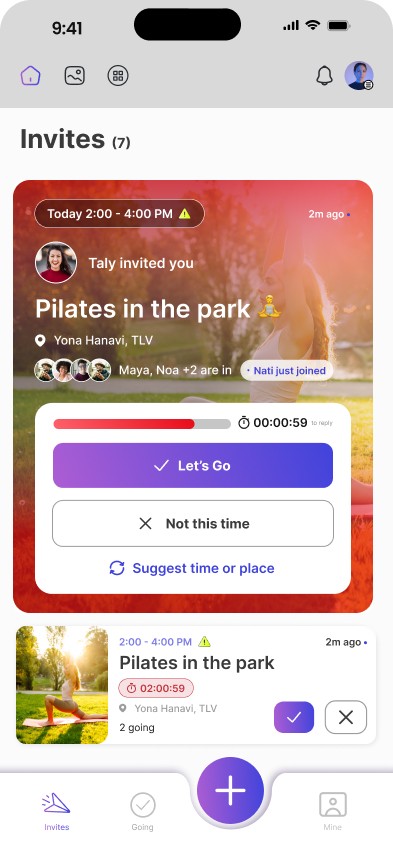
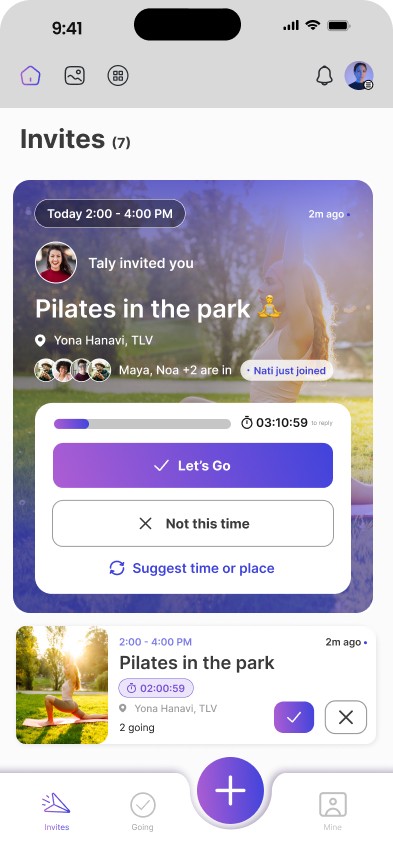
FLOW 3
Everything happening around you in one clear place.
The home experience helps users quickly understand what needs attention, what’s already confirmed, and what’s coming next.
Instead of scattered chats and forgotten plans, activities are organized into clear, action-focused spaces.
10. THE SOLUTION
Making spontaneous
plans finally feel
effortless
A single space for creating plans, coordinating responses, and turning scattered conversations into real meetups.
let’s was designed to simplify the entire social coordination experience from creating an activity, to getting responses, tracking attendance, chatting, sharing live locations, and staying updated in real time.
Instead of relying on fragmented group chats, unanswered messages, calendars, and constant follow ups, the platform brings everything into one lightweight and intuitive flow.
Every interaction was designed to reduce friction, remove uncertainty, and help people spend less time coordinating and more time actually meeting.
Create plans in seconds
Description Get your ideas out
and see who’s in.
Coordinate with ease
Responses, updates and chat all in
one place.
Meet effortlessly
Share locations, stay updated and
enjoy the moment.
FLOW 1
From signup to meetup in minutes
The onboarding experience focuses on speed, clarity, and simplicity
helping users verify their account, personalize their profile, and start planning instantly.
FLOW 2
Planning something together should feel effortless
Create activities in just a few taps from choosing people and setting the time, to sharing the final plan.
The flow was designed to stay fast, visual, and lightweight, so organizing casual meetups feels simple instead of overwhelming.
FLOW 3
Everything happening around you in one clear place.
The home experience helps users quickly understand what needs attention, what’s already confirmed, and what’s coming next.
Instead of scattered chats and forgotten plans, activities are organized into clear, action-focused spaces.
10. THE SOLUTION
Making spontaneous
plans finally feel
effortless
A single space for creating plans, coordinating responses, and turning scattered conversations into real meetups.
let’s was designed to simplify the entire social coordination experience from creating an activity, to getting responses, tracking attendance, chatting, sharing live locations, and staying updated in real time.
Instead of relying on fragmented group chats, unanswered messages, calendars, and constant follow ups, the platform brings everything into one lightweight and intuitive flow.
Every interaction was designed to reduce friction, remove uncertainty, and help people spend less time coordinating and more time actually meeting.
Create plans in seconds
Description Get your ideas out
and see who’s in.
Coordinate with ease
Responses, updates and chat all in
one place.
Meet effortlessly
Share locations, stay updated and
enjoy the moment.
FLOW 1
From signup to meetup
in minutes
The onboarding experience focuses on speed, clarity, and simplicity
helping users verify their account, personalize their profile, and start planning instantly.
FLOW 2
Planning something
together should
feel effortless
Create activities in just a few taps from choosing people and setting the time, to sharing the final plan.
The flow was designed to stay fast, visual, and lightweight, so organizing casual meetups feels simple instead of overwhelming.
FLOW 3
Everything happening
around you in one
clear place.
The home experience helps users quickly understand what needs attention, what’s already confirmed, and what’s coming next.
Instead of scattered chats and forgotten plans, activities are organized into clear, action-focused spaces.
10. SELF REFLECTION
Designing connection
in a
disconnected reality.
This project became much more than a product exercise.
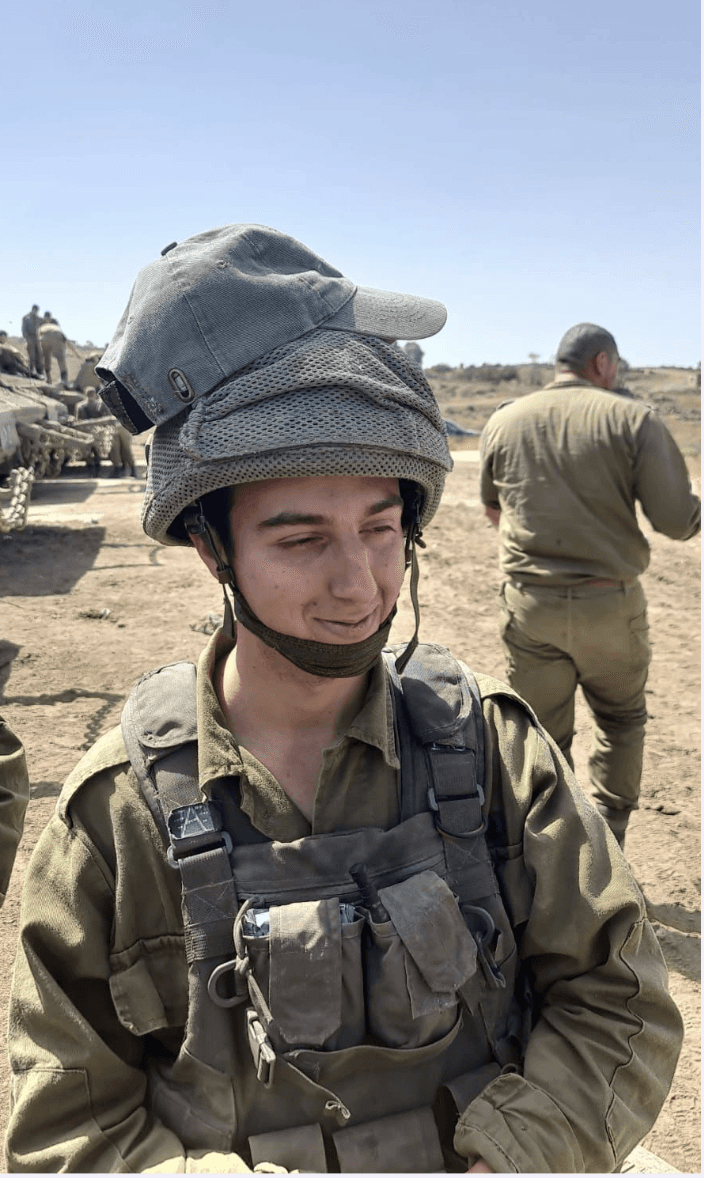
It became part of a broader memorial initiative dedicated to soldiers who lost their lives during the Iron Swords war.
The app was created in memory of Sergeant Ido Ovadia ז״ל
a soldier remembered for his warmth, kindness, and ability to bring people together.
That spirit shaped the project from the very beginning.
In memory of
Sergeant Ido Ovadia ז״ל
Born: 4 February 2004
Tel Aviv, Israel
Enlisted: August 2022
Combat Engineering Corps
Fell in battle: 31 October 2023
During operations in the Gaza Strip
His smile, his heart, and the way he always looked out for others will stay with us forever.

10. SELF REFLECTION
Designing connection
in a
disconnected reality.
This project became much more than a product exercise.
It became part of a broader memorial initiative dedicated to soldiers who lost their lives during the Iron Swords war.
The app was created in memory of Sergeant Ido Ovadia ז״ל
a soldier remembered for his warmth, kindness, and ability to bring people together.
That spirit shaped the project from the very beginning.
In memory of
Sergeant Ido Ovadia ז״ל
Born: 4 February 2004
Tel Aviv, Israel
Enlisted: August 2022
Combat Engineering Corps
Fell in battle: 31 October 2023
During operations in the Gaza Strip
His smile, his heart, and the way he always looked out for others will stay with us forever.
10. SELF REFLECTION
Designing connection
in a
disconnected
reality.
This project became much more than a product exercise.
It became part of a broader memorial initiative dedicated to soldiers who lost their lives during the Iron Swords war.
The app was created in memory of Sergeant Ido Ovadia ז״ל
a soldier remembered for his warmth, kindness, and ability to bring people together.
That spirit shaped the project from the very beginning.
What this project taught me?
1
Designing for real human moments
Not every product solves productivity problems. Some products exist to strengthen connection, belonging, and presence between people.
2
Simplicity creates emotional clarity
Reducing friction wasn’t only about UX it was about making social interaction feel lighter, easier, and more natural.
3
Small interactions can carry meaning
Inviting friends, coordinating plans, and showing up together may seem simple but during difficult times, those moments become deeply valuable.
What this project taught me?
1
Designing for real human moments
Not every product solves productivity problems. Some products exist to strengthen connection, belonging, and presence between people.
2
Simplicity creates emotional clarity
Reducing friction wasn’t only about UX it was about making social interaction feel lighter, easier, and more natural.
3
Small interactions can carry meaning
Inviting friends, coordinating plans, and showing up together may seem simple but during difficult times, those moments become deeply valuable.
What this project
taught me?
1
Designing for real human moments
Not every product solves productivity problems. Some products exist to strengthen connection, belonging, and presence between people.
2
Simplicity creates emotional clarity
Reducing friction wasn’t only about UX it was about making social interaction feel lighter, easier, and more natural.
3
Small interactions can carry meaning
Inviting friends, coordinating plans, and showing up together may seem simple but during difficult times, those moments become deeply valuable.
Good design doesn’t only organize information. Sometimes, it helps people feel closer to each other.
Good design doesn’t only organize information.
Sometimes, it helps people feel closer to each other.
Good design doesn’t only organize information. Sometimes, it helps people feel closer to each other.
In memory of
Sergeant Ido
Ovadia ז״ל
Born: 4 February 2004
Tel Aviv, Israel
Enlisted: August 2022
Combat Engineering Corps
Fell in battle: 31 October 2023
During operations in the Gaza Strip
His smile, his heart, and the way he always looked out for others will stay with us forever.
View Hivo project
View Hivo project
Still scrolling?
Good. There’s more
Still scrolling?
Good. There’s more
View Quork project
View Quork project