UX/UI CASE STUDY
HIVO - Smarter Community Management
Empowering community leaders to organize, support, and respond effectively
Product
B2B SaaS
Target Audience
Community managers
Project
Personal project
Design process
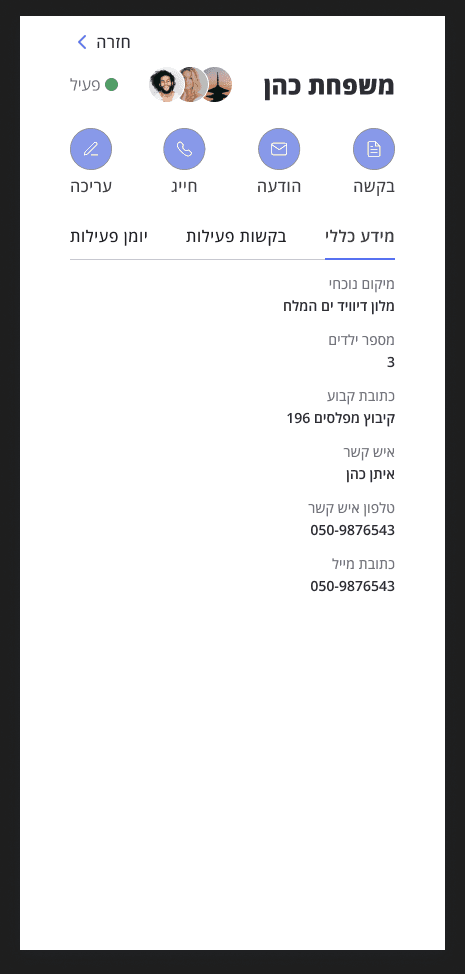
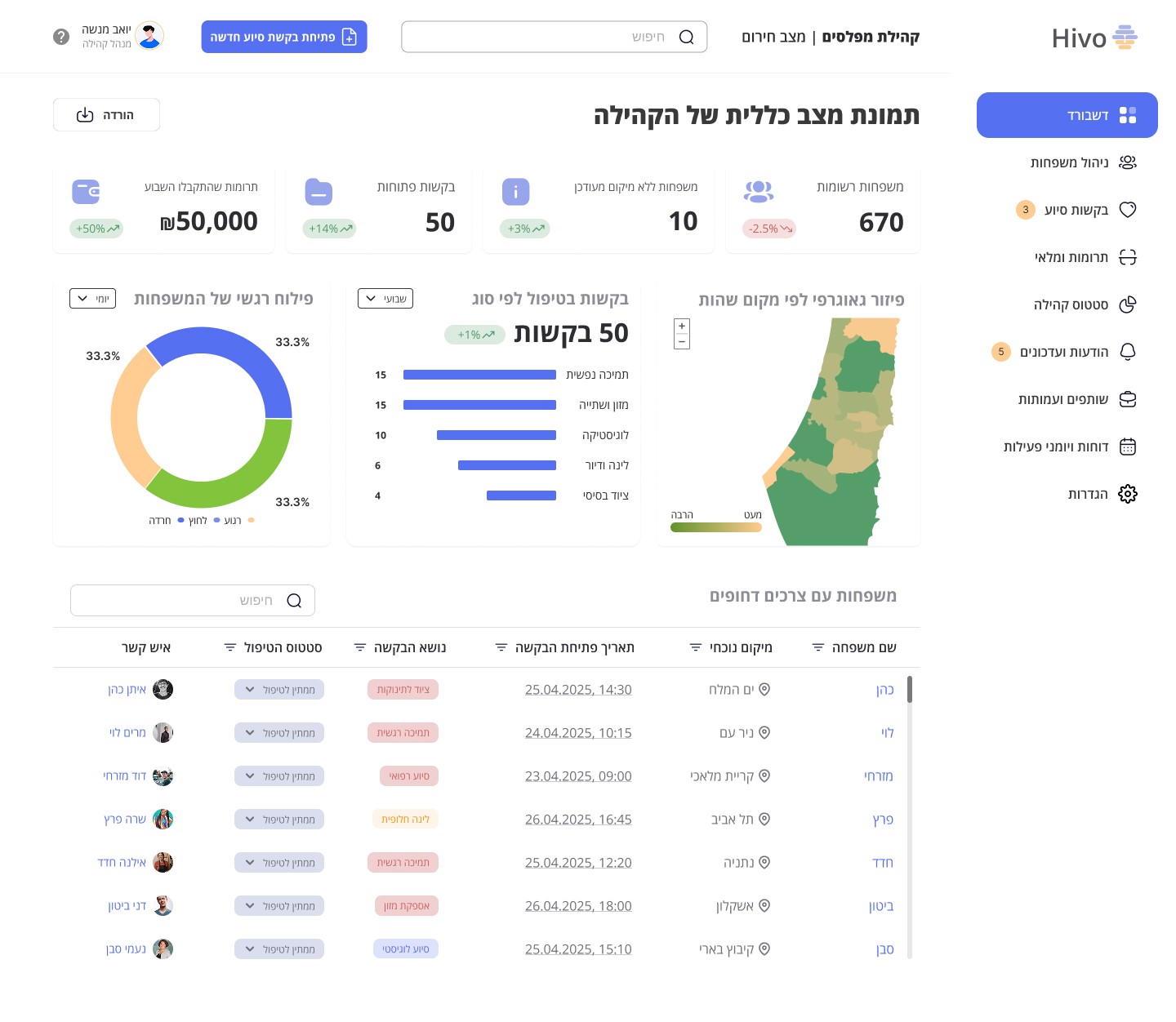
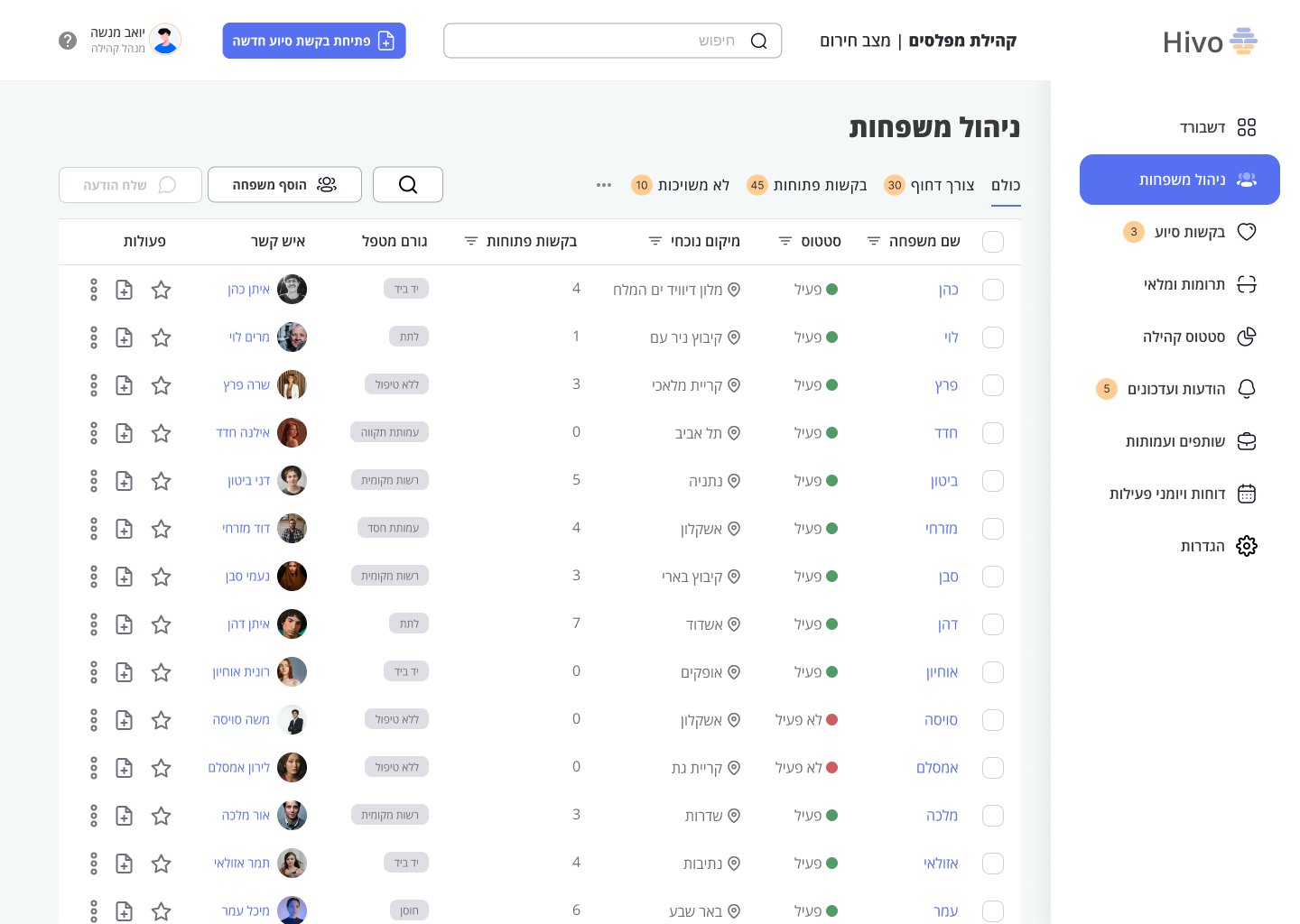
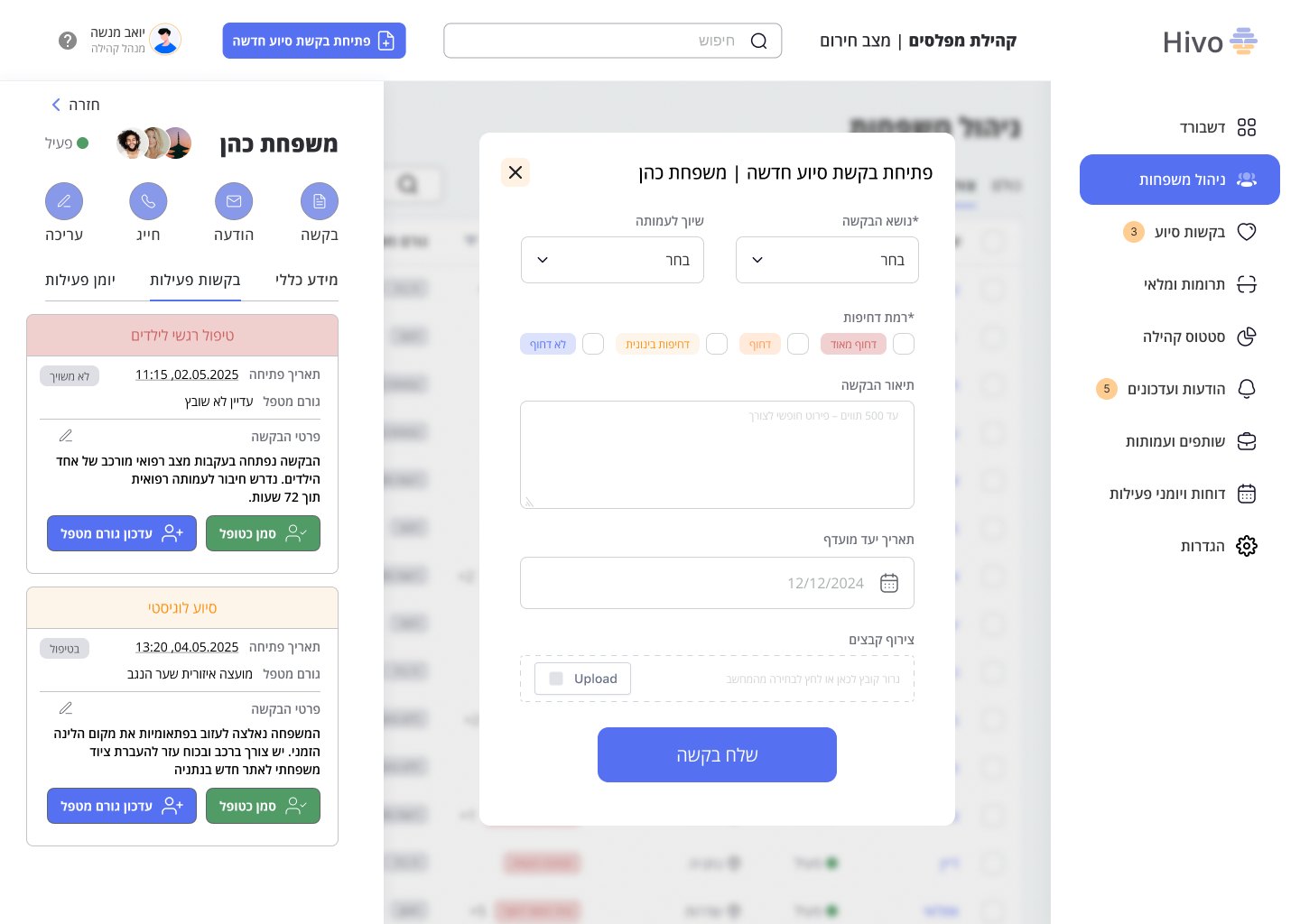
Final Design
“I didn’t need more WhatsApp groups.
I needed one clear system
to rely on.”
01. Background
When Urgency Meets Disorganization
It all began with a deeply personal experience. After October 7th, entire communities were suddenly displaced, forced to rebuild their routines in just days. As an evacuee myself, I witnessed the confusion firsthand: scattered Excel sheets, endless WhatsApp threads, and hundreds of people searching for clarity,
who’s handling food? who’s managing medical needs?
who’s talking to the authorities?
That’s when the idea emerged: if businesses rely on CRMs to manage customers,
why shouldn’t communities have a dedicated system to manage themselves, organized, responsive, and above all, human?
02. The Problem
Communities in Chaos,
Leaders Without Tools
Community managers face overwhelming amounts of information, shifting needs, and constant pressure, especially during emergencies. Existing tools like Excel sheets, WhatsApp groups and scattered phone calls are fragmented and unreliable, leading to mistakes, miscommunication and delays in response.
As a result, critical needs fall through the cracks, trust erodes and communities
are left without clear or effective support.
“I had no clear way to
track who got help.”
“We needed a system that works for people,
not against them.”
03. The Challenge
Powerful, Yet Human
How do you design a technological system that can handle hundreds of families, countless needs and real time data without feeling cold or detached?
The challenge was to create a tool that speaks the language of community managers, not data engineers.
A platform that shows the big picture while still making it easy
to dive into details,
and instead of adding complexity, actually lightens the daily workload.
04. COMPETITORS ANALYSIS
Are Existing Tools Truly Built for Communities?
Most available platforms are either designed for businesses or political organizations, not for real community needs. While they offer powerful features, they often miss the emotional, social, and human aspects that make community management unique. Hivo was built to fill this gap by combining organizational strength with empathy and simplicity.
Feature
Community Fit
Emotional
& Social Needs
Ease of Use
& Flexibility

Flexible for projects,
not specific to communities
No emotional or family
based tracking
User-friendly
with templates

Adapted for nonprofits
but requires experts
Heavy, complex system
with no emotional focus
Complex, requires
technical setup

Focused on political campaigns,
not daily communities
No personal tracking
beyond campaigns
Structured for politics,
limited customization
Hivo
Built specifically for
community management
Supports emotional,
family, and urgent needs
Simple, intuitive, and
adaptive to real needs
This sign represents a very limited feature
05. USER RESEARCH
Are Current Tools Really
Supporting Community Leaders?
I designed this research to uncover what community managers and NGOs actually need, not just what existing tools assume. The hardest part? Asking the right questions and listening to the real challenges behind the spreadsheets and endless WhatsApp groups.
“How can I track urgent needs without drowning in spreadsheets?”
Goal
I designed this research to uncover what community managers and NGOs actually need, not just what existing tools assume. The hardest part? Asking the right questions and listening to the real challenges behind the spreadsheets and endless WhatsApp groups.
Method & Tools
25 question survey combining open-ended, scaled, and multiple-choice questions. It was distributed via WhatsApp groups and community mailing lists, collected through Google Forms, and analyzed using ChatGPT.
“How can I track urgent needs without drowning in spreadsheets?”
“Whose voices in the community are being missed?”
Participants
30 community managers from displaced communities and NGOs. Top roles: Local coordinators (40%), NGO liaisons (25%).
gr
06. KEY INSIGHTS
So, What Stood Out?
The research revealed key gaps in how community managers currently operate. Many struggle to track urgent needs, manage scattered information, and communicate efficiently. These insights shaped a solution built on clarity, simplicity,
and community-focused workflows.
What’s Still Missing?
😟
72%
Struggling to track family
needs in one place.
Lack of Visibility
Managers can’t see a clear picture of who needs what and when.
📊
58%
Frustrated with manual updates in Excel and WhatsApp.
Scattered Information
Critical details are lost across
multiple tools.
⏱
46%
Feel they don’t have time to learn complex systems.
Ease of Use
Crisis situations require intuitive and fast tools, not heavy platforms.
07. PERSONA
Behind Every Community, There’s a Manager
To better understand how to design a solution for real community needs, I created a persona based on research insights and interviews with community leaders. This profile reflects daily frustrations, motivations, and behaviors, helping to focus the solution on what truly matters.

Yoav, 47
Community Manager
“If I had one system to track families’ needs in real time, my life would be so much easier.”
Goal: Keep full visibility of family needs and provide quick, accurate support.
Behavior: Juggles WhatsApp groups, Excel sheets and phone calls daily.
Pain Points: Scattered information, constant stress of missing urgent needs, no single source of truth.
07. USER FLOW
How community managers move from scattered information to structured, actionable workflows.
Community managers don’t need more tools, they need a clear path.
The flow was designed to reduce cognitive load and guide users through a simple process:
from identifying a need, to organizing it, to taking action.
Every step removes friction and makes decision-making faster and more confident.