WHAT I HEARD
Family needs were difficult to track in one place.
WHAT IT CHANGED
Urgent needs first
Surface urgent needs on the dashboard, with a clear route to the relevant family.

B2B SAAS
PRODUCT CONCEPT


I designed Hivo during my evacuation from Kibbutz Mefalsim. Four months turning a problem I saw around me into a product concept.
Built from a need close to home.After October 7th, displaced communities had to rebuild their routines in days. Community managers tracked families, needs and volunteers across Excel sheets, WhatsApp threads and phone calls. Requests slipped, nobody had the full picture, and trust eroded when help came late. I saw it firsthand, as an evacuee from Kibbutz Mefalsim.
“I had no clear way to track who got help.”
Community manager
Who’s coordinating the medical needs?
Has anyone followed up?
More context to piece together.
Open, scaled and multiple-choice questions, shared through WhatsApp groups and community mailing lists.
Respondents came from displaced communities and NGOs. Alongside the survey, I talked with managers about how they actually work.
I used ChatGPT to help sort the open answers. The recurring themes below shaped the design.
Information was scattered across WhatsApp groups, spreadsheets and phone calls.
Managers struggled to track who needed help and what had already been done.
Urgent requests were difficult to distinguish from everyday updates.
“I didn’t need more WhatsApp groups. I needed one clear system to rely on.”
Community manager
“How can I track urgent needs without drowning in spreadsheets?”
Community manager
I compared project management, nonprofit case management and community organizing. The design opportunity was to bring the family, its needs and the next action together in a focused workflow.
 monday.com
 Salesforce Nonprofits
 NationBuilder
| Platform | Starting point | People and context | Design implication |
|---|---|---|---|
| monday.com | ✓ Flexible work and project management | Limited: depends on how boards are configured | Make the next action explicit |
| Salesforce Nonprofits | ✓ Nonprofit programs and case management | ✓ Participants, households and relationships | Keep the family model focused on this workflow |
| NationBuilder | ✓ Organizing people and community engagement | ✓ People profiles and relationship history | Keep communication connected to a need |
Hivo concept | Concept: community needs and family records | Concept: family context connected to each request | Aim for a guided flow with clear ownership; ease of use needs testing |
✓ Existing capability · Limited: relevant with constraints · Concept: proposed direction, not a tested result.
Surface urgent needs on the dashboard, with a clear route to the relevant family.
Keep communication, requests and history connected to one family profile.
Use a guided request flow, then test whether it gives enough context without help.
Yoav is a composite based on the survey and conversations with community managers. His goals and daily work helped frame the design.
Information lives in separate conversations and records. A request can lose the context of the family behind it.
To know where attention is needed, find the right household and understand enough to act.
A community overview leads into a family record, then into a request. The family is the connecting point.
Return to tracking progress.
Keep the history with the family.
If the need is unresolved, support continues and progress is reviewed again. The current prototype covers finding a family, creating a request and confirming it; follow-up remains future work.
Three decisions connect the wider community picture to the person behind each request. Each makes the next step clearer, with a trade-off to manage.
Give urgent family needs a clear place in the overview, with a route to the full record.
Explore the decisionConnect requests to people, so the next action begins with the household’s context.
Explore the decisionKeep the list scannable. Open the family story one layer deeper, without losing your place.
Explore the decisionI organized people, locations and requests around the household, so managers can follow a need back to the family it concerns.
The shared point of reference.
Family members and contact details belong to the same family context. A manager should not have to reconstruct that connection from separate conversations.
Try a request for this familyConceptual information model based on the designed flow.
Each layer answers a different question. The choice is what to show now, and what to make easy to reach next.
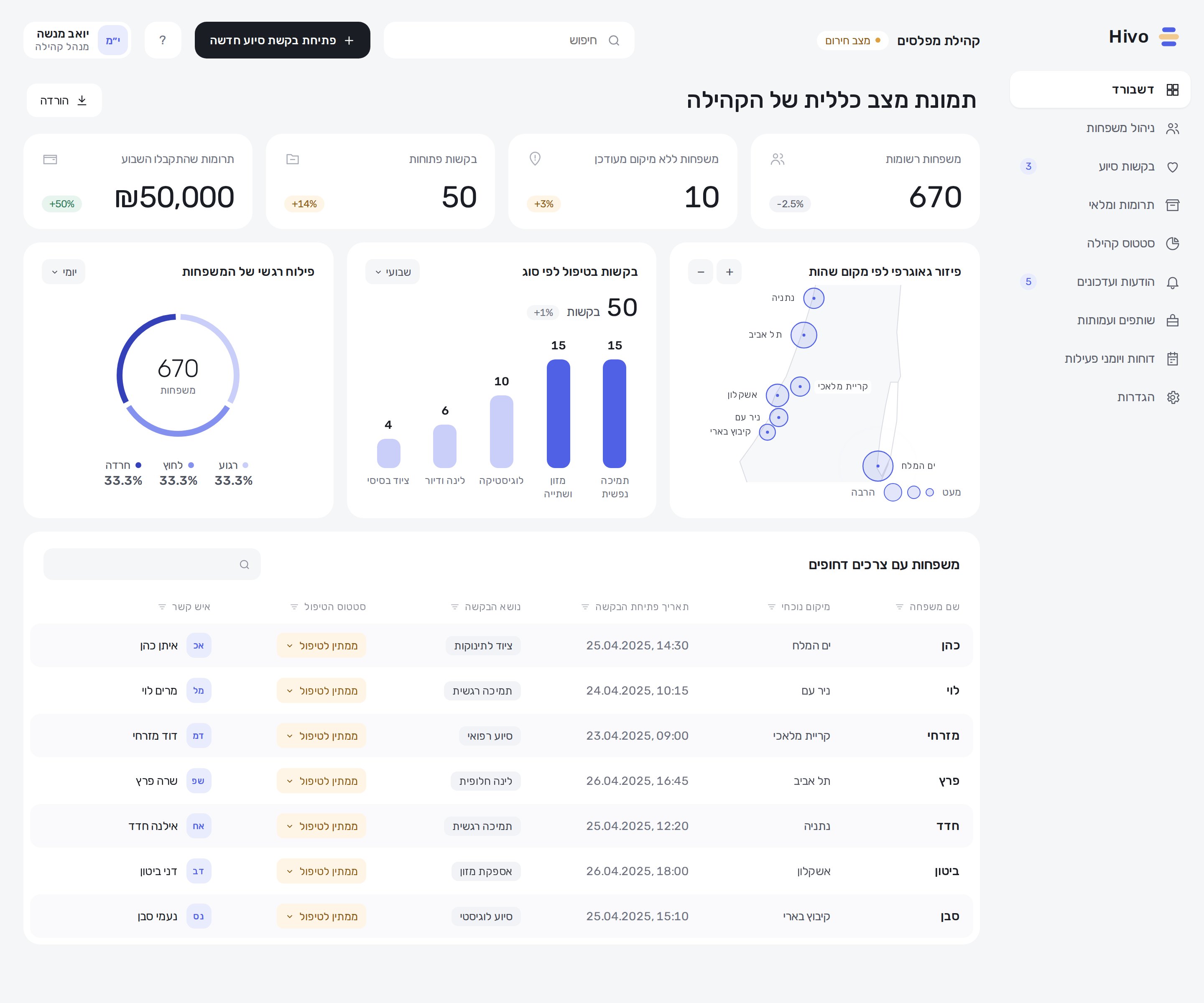
The community picture comes first, with a dedicated area for needs that require attention.
Keep individual contact details in the family record.
The manager needs enough detail to act and a clear way back to the list. A side panel balances those needs, with limits of its own.
A comparison explaining the design decision, not a claim that these alternatives were tested.
Follow one designed path through four screens of the redesigned system. The information becomes more specific as the manager moves closer to action.
Which family needs my attention first?
A dedicated section highlights needs that require attention alongside the community overview. The manager can choose where to look before opening individual records.
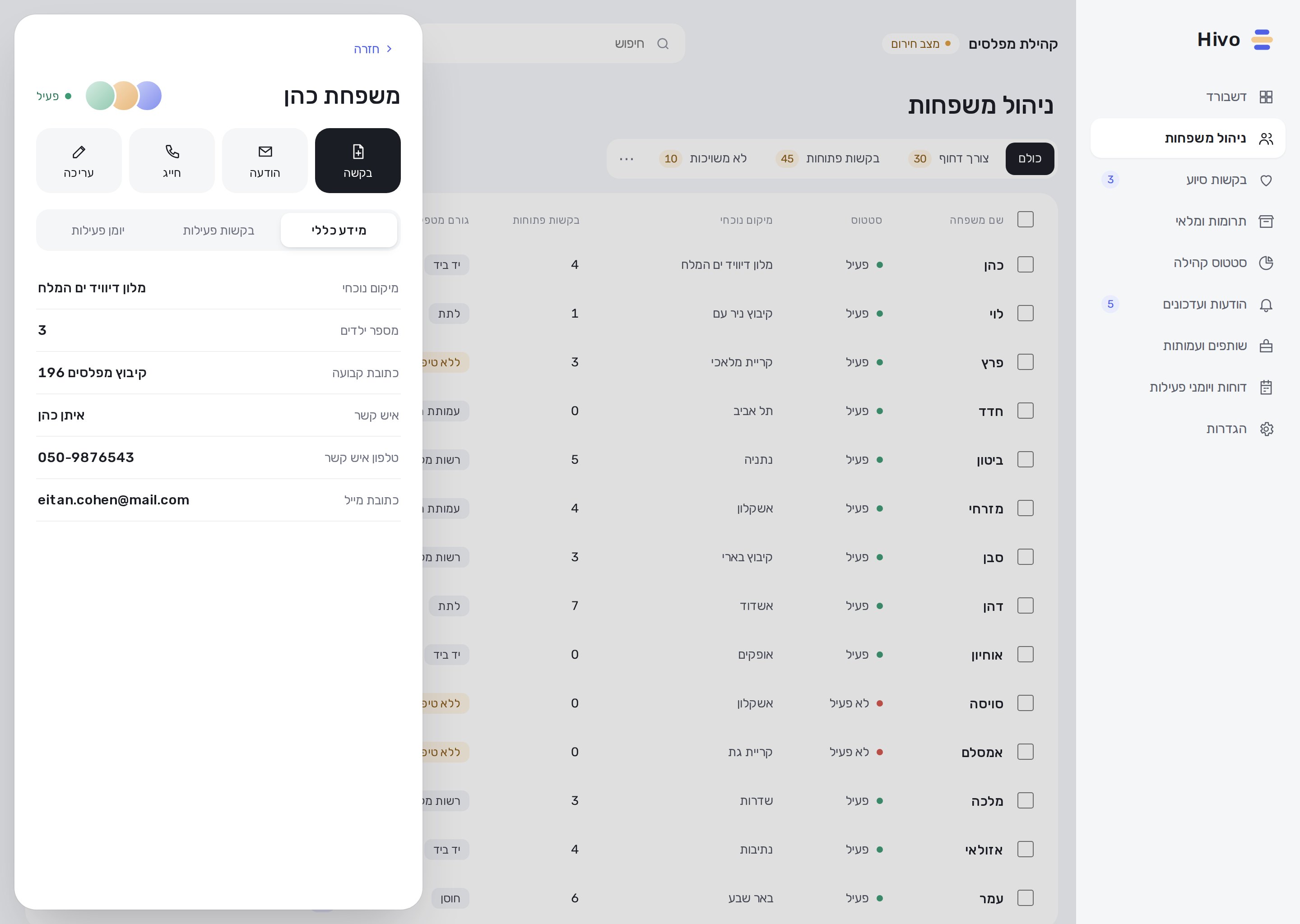
Have I found the right household?
The family list connects a household to its location, contacts and requests. A need stays attached to the people it concerns.
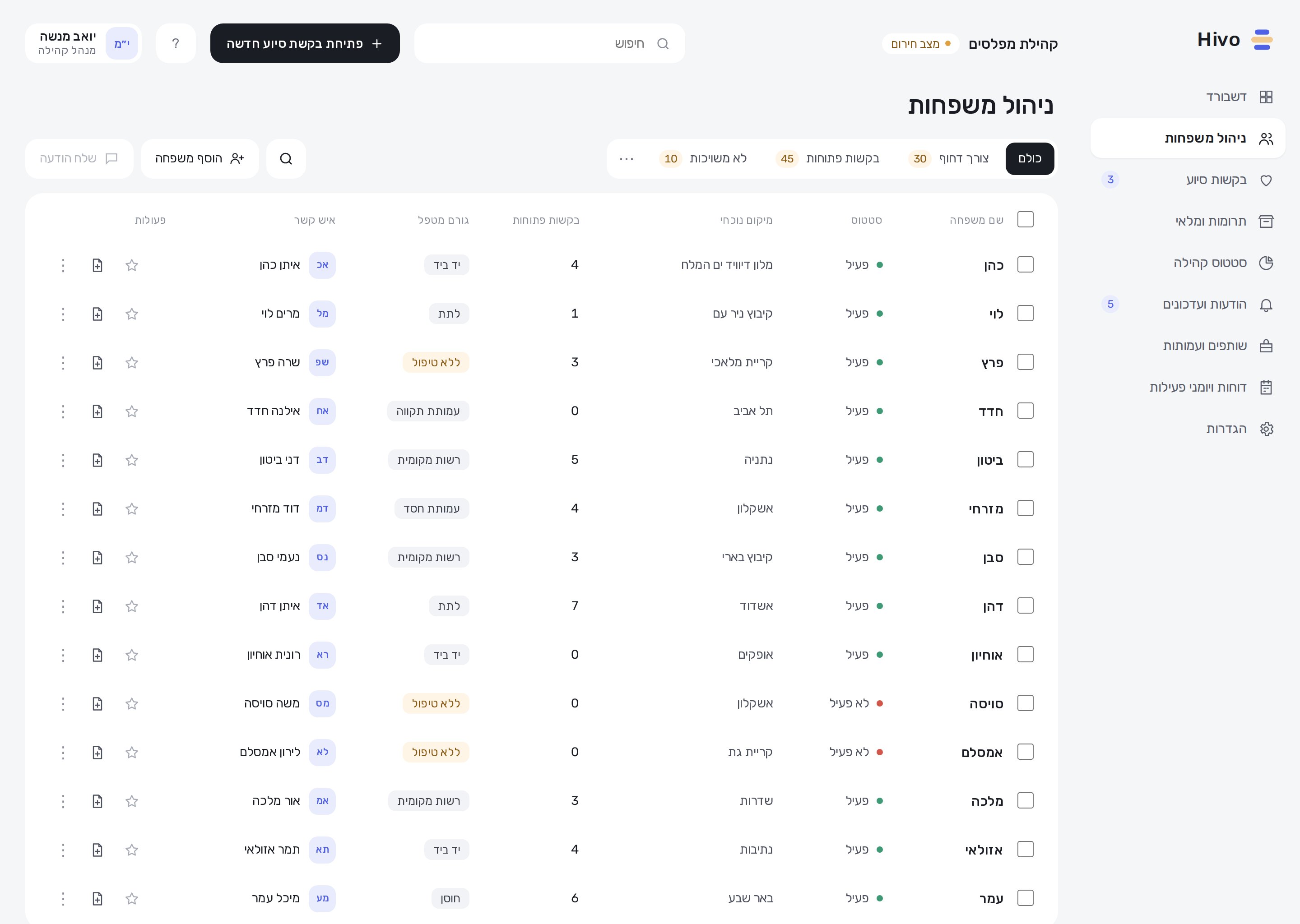
What do I need to know before acting?
A side panel shows the family’s details beside the list, giving the manager enough information to act without crowding every row.
How do I turn this need into a request?
The request form opens from the family context. The redesign adds a confirmation: the new request appears in the family record. Tracking over time remains open.
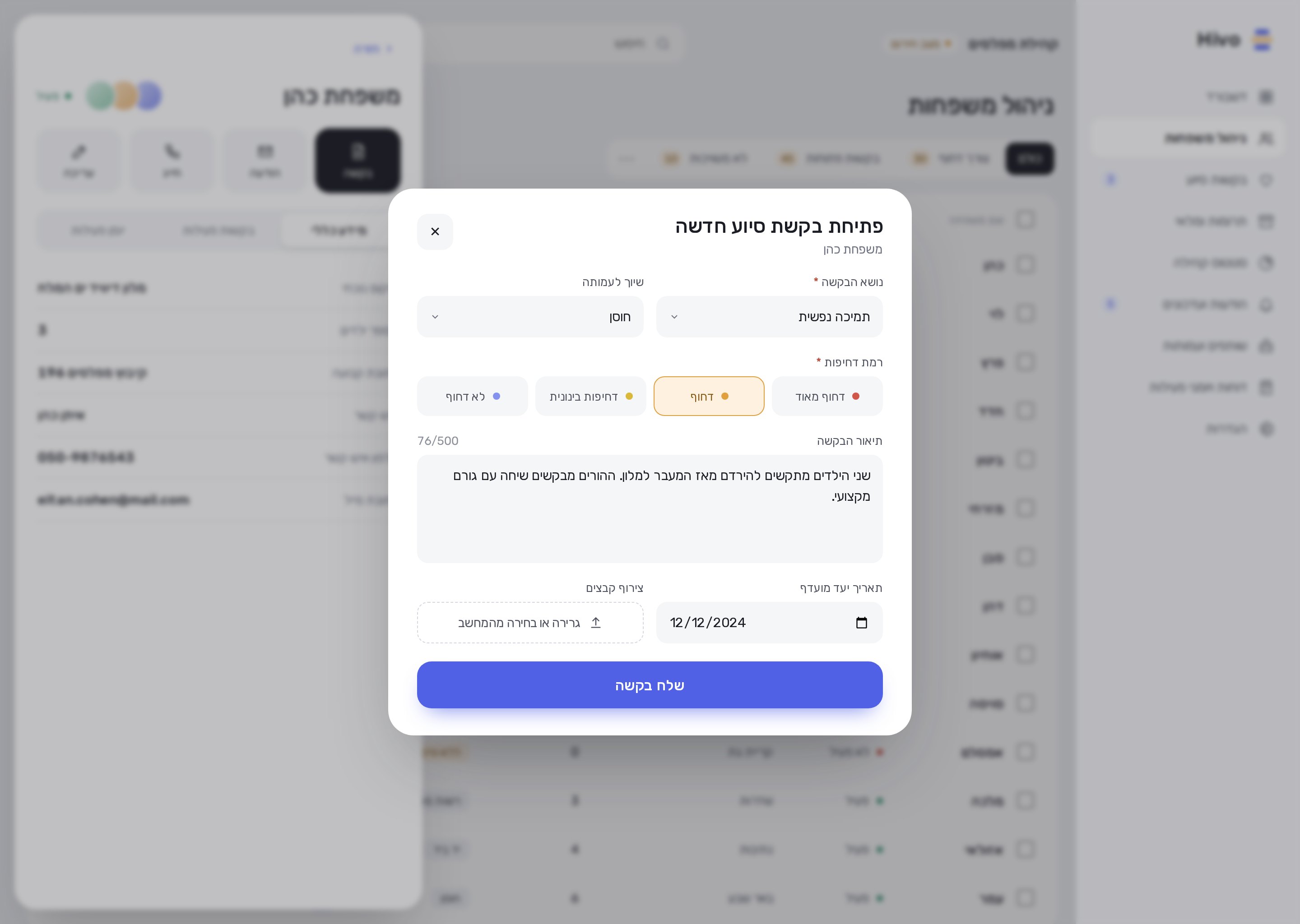
Designed concept, ending when a request is created and confirmed. No completed aid delivery or measured service outcomes are shown.
Try the family-to-request flow yourself. This simplified model uses the redesigned visual language and fictional records. Nothing is sent or saved.
Your task Find the Cohen family at North residence, then send a request for school supplies.
Two households share a surname. Location and a family identifier help distinguish them before a request begins.
Reducing visible detail creates a responsibility: make the route back to that detail clear. The hierarchy and the next action have to work together.
Can a community manager identify a priority, find the right family and begin a request without help?
Wrong-family selections and backtracking, signals that the flow is not giving enough context.
Follow-up and request tracking. The redesign confirms that a request was created, but what happens after that still needs design and validation.
Can a community manager find the most urgent open request on the dashboard in a few seconds?
Does the guided request flow capture what volunteers need, without follow-up calls?
Would managers trust the family profile enough to stop keeping their own spreadsheets?